The Middle East crisis intensifies after the deadly attack on the compound of the Supreme Leader of Iran Ali Khamenei on Saturday that killed him, other family members and senior figures. Iran has launched retaliatory strikes on U.S. targets in the region.
⦿ 17:15 GMT | BREAKING
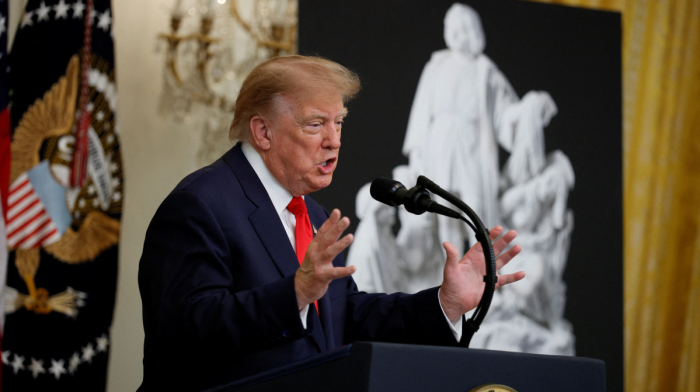
Trump gives update Iran crisis
White House
Speaking at a Medal of Honour ceremony in the White House, Trump says the U.S. has 'knocked out' 10 ships and is carrying out 'large-scale combat operations' in Iran.
⦿ 16:23 GMT | BREAKING
Qatar air defences shoot down two aircraft
Qatar Ministry of Defence
⦿ 15:40 GMT | BREAKING
UK Prime Minister updates MPs
Parliament TV
Prime Minister Sir Keir Starmer is giving an update in the UK Parliament about the crisis:
⦿ 15:21 GMT | UPDATE
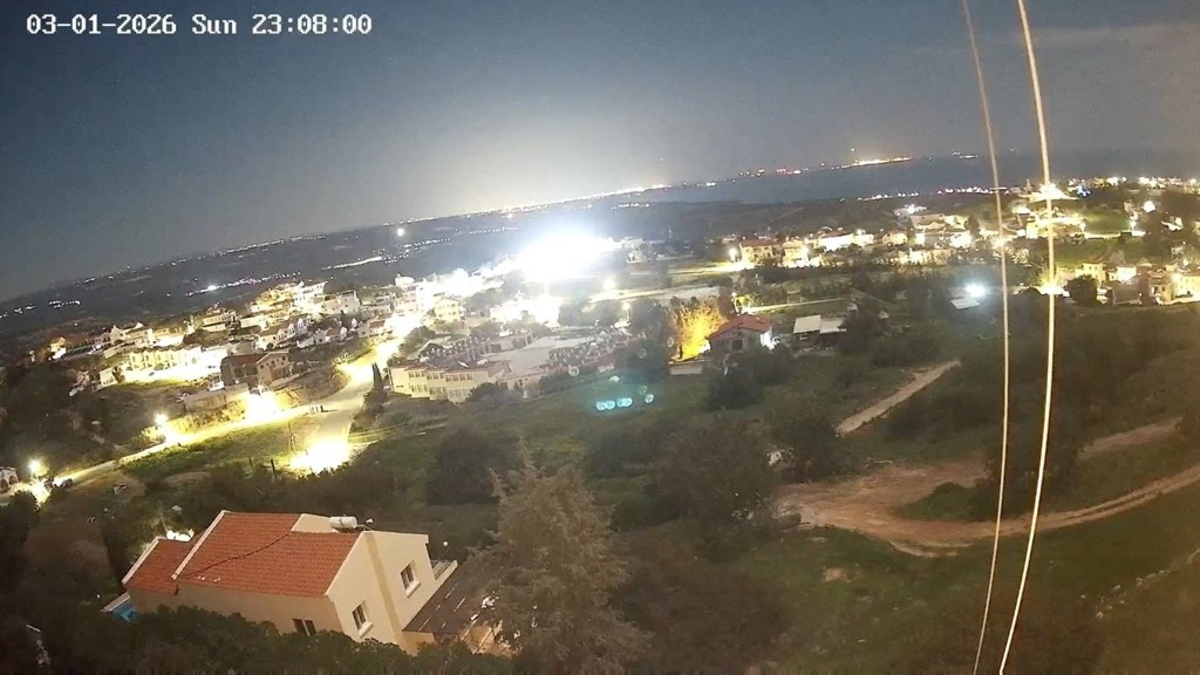
Picture of drone strike in Cyprus
Reuters
Video footage has been released on the drone strike on the RAF Akrotiri base in Cyprus with this still image shows the flash at the exact moment of the attack.
⦿ 14:08 GMT | BREAKING
Ayatollah Khamenei's wife has died
Iranian state media
Iranian state media has said Mansoureh Khojasteh has died of her injuries after the attack that killed her husband on Saturday. They married in 1964.
⦿ 13:57 GMT | UPDATE
Brent crude oil price hits 6 year high
Reuters
Prices of the cruicial oil hits levels last seen in 2020, during the Covid pandemic. More details about oil prices during the conflict on our article here:
⦿ 13:43 GMT | UPDATE
China wants de-escalation
Xinhua, Chinese state media
Chinese Foreign Minister Wang Yi says that China hopes that France will work with them to promote de-escalation of tensions in the Middle East and jointly uphold the basic norms of international relations.
⦿ 13:28 GMT | UPDATE
China backs Iran retaliation
AFP News Agency
State media: China's foreign minister tells Iran counterpart Beijing 'supports Iran in defending its sovereignty, security, territorial integrity'.
⦿ 13:21 GMT | BREAKING
U.S. press conference
U.S. Department of War
At a press conference, U.S. Defence Secretary Pete Hegseth says Iran regime has changed and "the world is better off for it". We will bring you an article with the updates from the press conference shortly.
⦿ 13:01 GMT | UPDATE
U.N. nuclear watchdog release statement about Iran nuclear sites
Reuters
In a press conference, U.N. nuclear watchdog chief Rafael Grossi said there is no indication that Iran's nuclear facilities were damaged or hit in the U.S. and Israeli military strikes on the country.
This counters what Iran's ambassador to the International Atomic Energy Agency said earlier on Monday that the Natanz nuclear facility was attacked (see 10.20 GMT).
⦿ 11:29 GMT | UPDATE
Friendly fire: American fighter jets downed over Kuwait
Reuters
Three U.S. F‑15E Strike Eagle fighter jets were mistakenly shot down by Kuwaiti air defences during ongoing operations related to the Iran conflict, U.S. Central Command said on Monday.
All six crew members ejected safely, were recovered and are in stable condition, the command added, describing the losses as a friendly fire incident amid intense regional combat activity.
⦿ 11:01 GMT | UPDATE
IDF says 'Hezbollah made a huge mistake'
IDF via X
The Israeli military confirmed it carried out overnight retaliatory strikes against multiple Hezbollah targets in Lebanon, including on command and control centres, launch sites and what it described as senior militants.
In a video posted on social media captioned “Hezbollah made a huge mistake,” the Israel Defense Forces said they had prepared for potential attacks from the Iran-aligned group as part of their broader operation against Iran.
The IDF spokesperson added that Israeli aircraft were continuing to strike targets inside Iran, including in Tehran and underground bunkers, and warned that Hezbollah was “entering a fight it cannot win.”
⦿ 10:37 GMT | UPDATE
U.S.,Jordan and Gulf allies issue statement
Reuters
The United States, along with Qatar, Saudi Arabia, Jordan, Bahrain, Kuwait, and the UAE, issued a joint statement denouncing Iran’s recent actions.
“The Islamic Republic’s actions represent a dangerous escalation that violates the sovereignty of multiple states and threatens regional stability. The targeting of civilians and of countries not engaged in hostilities is reckless and destabilising behaviour.”
⦿ 10:20 GMT | UPDATE
Iran's Natanz nuclear site hit
Reuters
Iran’s nuclear facility at Natanz was struck during U.S. and Israeli military operations, the country’s ambassador to the International Atomic Energy Agency said on Monday.
“Again they attacked Iran’s peaceful, safeguarded nuclear facilities yesterday,” Reza Najafi told reporters at the IAEA’s 35-nation board of governors. When asked which sites were hit, he confirmed it was Natanz.
⦿ 09:32 GMT | UPDATE
Calls for United Nations Security Council to meet
Reuters
Several countries, including Iran, have called for a meeting of the United Nations Security Council in response to the escalation in the Middle East. In a historic first, Monday's pre-scheduled assembly was due to be chaired by U.S. First Lady Melania Trump.
⦿ 09:01 GMT | UPDATE
Red Crescent reports Iran death toll
Reuters
The Iranian Red Crescent Society said the joint U.S.-Israeli airstrike campaign on Iran has killed at least 555 people and hit 131 cities across the country so far, marking a significant escalation in the ongoing conflict.
⦿ 08:30 GMT | UPDATE
Israel targets Hezbollah chief
Reuters
Israeli Defence Minister Israel Katz said on Monday that Hezbollah chief Naim Qassem is now a marked target for elimination.
⦿ 08:24 GMT | UPDATE
‘All options on the table’ in Lebanon
Reuters
When asked whether Israel is considering a ground invasion of Lebanon, a military spokesperson said, “All options are on the table.”
⦿ 08:00 GMT | UPDATE
Blasts in Qatar
On Monday morning, “six or seven loud explosions” were heard in Doha, Qatar as Iranian strikes were reported from multiple locations across the Gulf.
⦿ 06:56 GMT | UPDATE
Jets crash in Kuwait
Reuters
A spokesperson for the Kuwait Defence Ministry said on Monday that multiple U.S. military aircraft had crashed earlier in the day, but confirmed that all crew members were safe.
Falling shrapnel hit Kuwait’s Mina Al-Ahmadi oil refinery, wounding two workers, while production and facilities were unaffected and emergency teams activated rapid response measures.
Earlier the U.S. Embassy in Kuwait warned of a continuing threat from missile and unmanned aerial vehicle (UAV) attacks, urging people to avoid the embassy and take cover.
⦿ 05:46 GMT | UPDATE
Iran addresses UN
Reuters
In a letter to the United Nations, Iran's Minister of Foreign Affairs Abbas Araghchi described the attacks as “unprovoked and unjustified acts of aggression” against Iran’s sovereignty and territorial integrity, holding Washington and Tel Aviv fully responsible.
He emphasised that Iran retains its “inherent and inalienable right” to defend itself under Article 51 of the UN Charter. The letter comes as Iran’s top security official Ali Larijani reiterated that Tehran “will not negotiate” with the U.S., signalling a hardening stance amid escalating regional conflict.
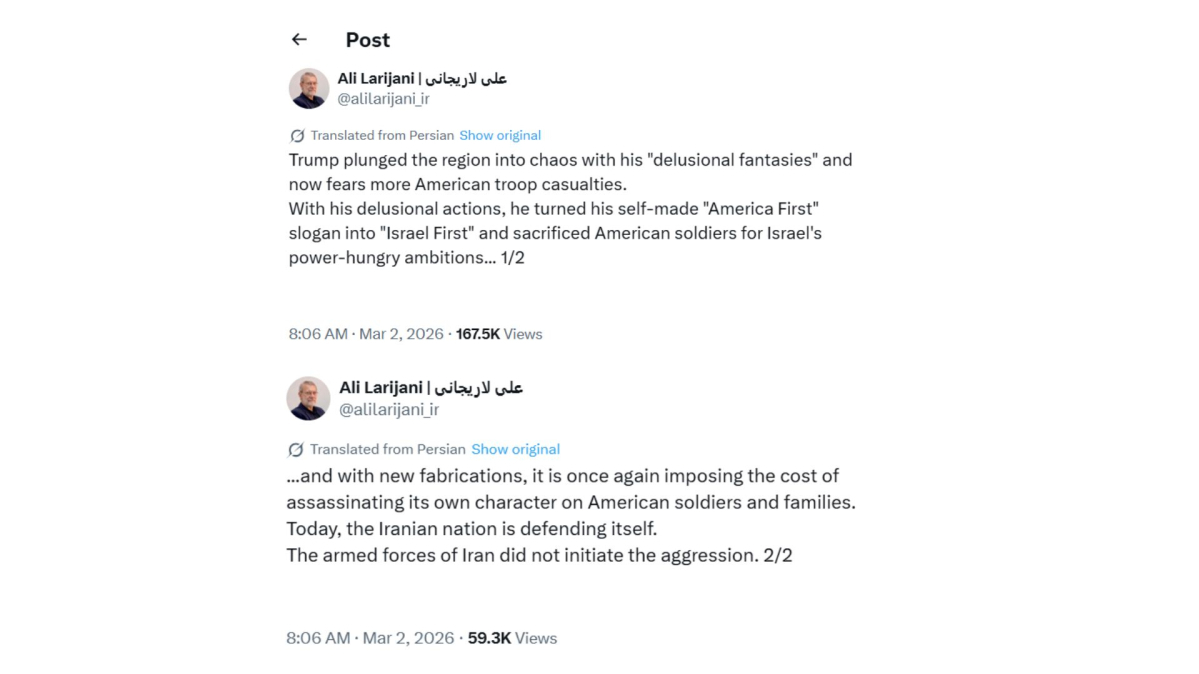
Earlier, Iran’s top national security official Ali Larijani said on Monday (2 March) that Iran “will not negotiate with the United States,” rejecting media speculation that Tehran had sought talks through intermediaries.
Larijani, who leads Iran’s Supreme National Security Council and has been involved in past diplomatic contacts, made the comment on the X platform.
Larijani, a former top adviser to the late Supreme Leader Ayatollah Ali Khamenei, states that Iranian forces “did not start the invasion.”
⦿ 05:29 GMT | UPDATE
Iran targets Gulf states
Anadolu Agency
Loud bangs and sirens were heard across Kuwait on Monday (2 March) witnesses reported to local media, as Iran continued retaliatory strikes on Gulf states following U.S. and Israeli attacks on Tehran which began on Saturday.
Smoke was seen rising from the vicinity of the U.S embassy in Kuwait, and fire fighters and ambulances were seen in the area, a witness told Reuters on Monday.
Kuwait’s civil defence said the country had intercepted incoming drones, and no injuries were reported. Residents described tense scenes as authorities scrambled to manage air defence and civil safety measures.
Tehran’s armed forces declared that U.S. and Israeli targets throughout the Middle East were legitimate targets and fired missiles and drones at bases and military infrastructure in the United Arab Emirates, Bahrain, Kuwait, Qatar, Saudi Arabia and other Gulf nations.
⦿ 05:17 GMT | UPDATE
Lebanon strikes
Reuters
On Monday, Israel launched air strikes against Hezbollah in Beirut following the group’s missile and drone attacks in response to Supreme Leader Ali Khamenei’s death.
Israel strikes Lebanon's Beirut suburbs after Hezbollah attack
More than a dozen explosions shook the southern suburbs. The Israeli military said it struck senior Hezbollah figures and warned dozens of villages in southern and eastern Lebanon to evacuate the area.
⦿ 05:12 GMT | UPDATE
UK backs U.S.
Reuters
British Prime Minister Keir Starmer said on Sunday that the UK has approved U.S. use of British bases for defensive strikes against Iranian missiles, after Tehran’s attacks threatened British citizens across the region.
Starmer stressed that Britain was not involved in the U.S.-Israel air strikes on Iran that killed Supreme Leader Ali Khamenei and would not join further offensive operations.
He said the decision to allow U.S. forces to use UK bases was “specific and limited” to prevent missiles from being launched at allies or British nationals, in line with international law.
⦿ 05:04 GMT | UPDATE
U.S. footage released
Source
U.S. Central Command released video on Sunday (1 March) showing ongoing strikes in Iran, saying American forces are continuing combat operations.
The footage appeared to show stationary fighter jets and drones on the ground being hit in precision strikes.
In a statement accompanying the video, Washington said it was “taking bold action to eliminate imminent threats posed by the Iranian regime”.
Operation 'Epic Fury'
Explosions hit central Tehran at about 9:30am local time on Saturday (28 February) as the United States and Israel launched strikes on Iranian targets, escalating tensions after nuclear talks collapsed and raising fears of wider conflict in the Middle East.
Strong blasts were heard across the Iranian capital, with Iran’s semi-official Fars News Agency reporting at least three explosions in downtown Tehran. Residents described the explosions as similar to last June’s surprise assault on Iranian targets.
In a message posted on Truth Social, Trump said the objective of the operation was to “eliminate imminent threats” posed by the Iranian government.
He accused Tehran of decades of hostility, citing attacks on U.S. forces in Beirut, Iraq and international waters.
Referring to last year’s campaign, President Donald Trump said a previous operation, dubbed “Operation Midnight Hammer”, had “obliterated” Iran’s nuclear facilities at Fordow, Natanz and Isfahan, but claimed Tehran had attempted to rebuild its programme.
“They can never have a nuclear weapon,” he said, adding that the current U.S. strikes sought to “destroy their missiles”, “annihilate their Navy”, and dismantle regional proxy networks.
Trump warned of possible American casualties, calling the operation “a noble mission”, and urged prayers for U.S. troops. He also issued a direct message to Iran’s security forces: “Lay down your weapons and have complete immunity, or face certain death.”
Addressing Iranian citizens, he said, “The hour of your freedom is at hand… stay sheltered. When we are finished, take over your government.”
The Pentagon later confirmed that the latest U.S. strikes were named “Operation Epic Fury”.
Death of Supreme Leader
Iran’s Supreme Leader Ayatollah Ali Khamenei was confirmed dead on 1 March by Iranian state media, following a series of joint United States and Israeli military strikes on Tehran.
State television announced early on 1 March that the 86-year-old leader had died “while performing his assigned duties,” and Iran declared a 40-day national mourning period.
Diplomatic efforts collapse
The escalation follows weeks of diplomatic engagement between Washington and Tehran over Iran’s nuclear ambitions. The most recent round of indirect talks concluded on Thursday (26 February) without agreement, despite earlier reports of progress.
“Iran refused, just as it has for decades and decades,” Trump said.
“They rejected every opportunity to renounce their nuclear ambitions, and we can’t take it any more.”
The renewed confrontation further dims hopes for a negotiated settlement to Tehran’s long-running nuclear dispute with Western powers.
Israel signals long-planned operation
Israel said it had also conducted extensive air strikes on Iranian targets. Defence Minister Israel Katz described the action as a “pre-emptive attack” to remove threats to Israel.
“The State of Israel launched a pre-emptive attack against Iran to remove threats to the State of Israel,” he said.
The Israeli military said it had struck “hundreds of Iranian military targets”, including missile launchers in western Iran, and that operations were continuing to intercept retaliatory fire.
An Israeli defence official said the strike had been planned for months, with the launch date decided weeks ago.
In a video statement, Prime Minister Benjamin Netanyahu thanked Trump “for his historic leadership” and called on Iranians to “cast off the yoke of tyranny and bring about a free and peaceful Iran”. He said the joint operation would help create conditions for Iranians “to take their destiny into their own hands”.
Israel has long argued that any agreement with Iran must dismantle Tehran’s nuclear infrastructure entirely and include restrictions on its ballistic missile programme.
Iranian response
Iran’s Islamic Revolutionary Guard Corps said it had launched the first wave of missile and drone attacks against Israel in response to recent strikes on Iranian territory, according to the Tasnim news agency. The Israeli military later reported additional missiles fired towards Israel.
Iran’s Foreign Minister, Abbas Araghchi, described the confrontation as “wholly unprovoked, illegal, and illegitimate”.
Tehran previously responded to U.S. and Israeli strikes in June 2025 by launching missiles at the Al Udeid air base in Qatar, the largest American military facility in the Middle East.
Wider regional impact
Western governments have long argued that Iran’s ballistic missile arsenal threatens regional stability and could eventually serve as a delivery system for nuclear weapons, a claim Tehran denies.
The latest strikes push the Middle East into renewed military confrontation and significantly increase the risk of broader escalation involving regional actors and proxy forces.
This is a developing story.










What is your opinion on this topic?
Leave the first comment