The United States and Israel have carried out large-scale strikes on Iranian leadership and military targets, with Iranian state media confirming that Supreme Leader Ayatollah Ali Khamenei was killed.
Tehran has responded with missile and drone attacks targeting Israel and U.S.-linked sites across the Middle East, raising fears of a wider regional conflict.
Strikes on Beirut
Israel carried out new air strikes on Hezbollah positions in Beirut on Monday (2 March) after the group fired missiles and drones in retaliation for Supreme Leader Ali Khamenei’s killing.
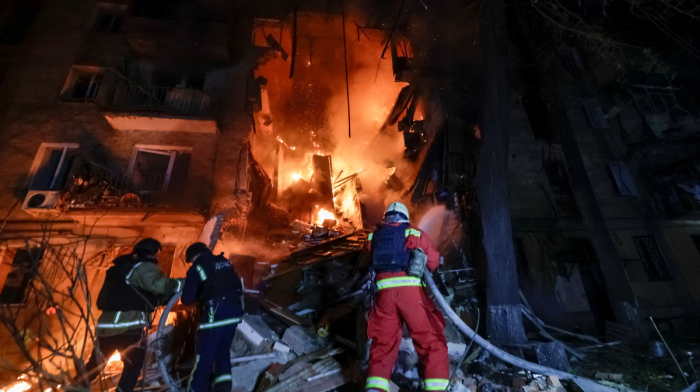
More than a dozen explosions rocked the southern suburbs, prompting residents to flee on foot and by car, clogging roads.
The Israeli military said it targeted senior Hezbollah militants and warned dozens of villages in southern and eastern Lebanon to evacuate.
IRGC commander appointed
Iran has appointed Ahmad Vahidi as the new commander-in-chief of the Islamic Revolutionary Guard Corps. His appointment follows the reported killing of Gen Mohammad Pakpour.
Vahidi previously served as defence and interior minister and is under U.S. sanctions over the 2022 protest crackdown.
Khamenei confirmed dead
Iranian state media confirmed that Supreme Leader Ayatollah Ali Khamenei was killed in strikes on his office. U.S. President Donald Trump said he believed the reports were accurate and declared that Khamenei “is dead”.
Russian President Vladimir Putin described the killing as “a cynical violation of all norms of human morality and international law”.
Khamenei had led Iran for 36 years.
Senior Officials Reported Killed
Iranian media reported that several senior defence figures were killed, including:
- Armed Forces Chief of Staff Abdolrahim Mousavi
- Defence Minister Aziz Nasirzadeh
- Defence Council secretary Ali Shamkhani
Israeli officials said at least 40 Iranian “commanders” were killed. These claims have not been independently verified.
Interim leadership council formed
Ayatollah Alireza Arafi has been appointed as the jurist member of Iran’s temporary leadership council, according to state news agency ISNA.
Under Iran’s constitution, a provisional three-member council assumes the duties of the Supreme Leader until the Assembly of Experts selects a successor.
Casualties and damage
U.S. casualties
U.S. Central Command confirmed that three U.S. service members were killed in action during Iranian retaliatory strikes. Five others were seriously wounded, while several sustained minor injuries.
Israel casualties
Officials said Iranian missile strikes damaged buildings in Tel Aviv and surrounding areas.
Emergency services reported that at least nine people were killed in Beit Shemesh, with dozens injured. Air defence systems intercepted many incoming missiles.
Civilian casualties in Iran
Iranian media, citing the Red Crescent, said more than 200 people were killed and at least 747 injured across 24 provinces.
The Tehran Province Red Crescent reported 57 deaths in attacks on the capital within 24 hours.
A local prosecutor in southern Iran said nearly 150 people died in an explosion at a girls’ school near a military base. The U.S.-based Human Rights Activists News Agency reported at least 133 civilians killed and 200 injured.
These figures could not be independently verified.
Strait of Hormuz tensions
Ships reported radio messages purporting to be from the Iranian navy warning that transit through the Strait of Hormuz was banned. There has been no formal confirmation from Tehran.
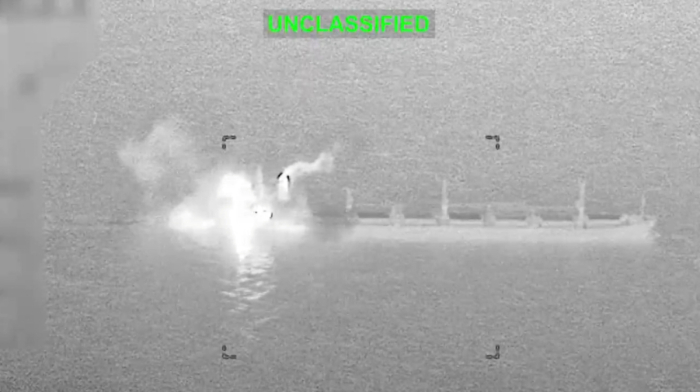
Iran confirmed it struck a Palau-flagged oil tanker near the strait for “illegally attempting” to cross. Oman said four people were injured and all 20 crew members were evacuated.
International reaction
Trump warned that any further Iranian retaliation would be met with “a force that has never been seen before” and urged Iranians to “take back their country”.
UK Defence Secretary John Healey said Iranian missiles and drones had landed within a few hundred yards of British troops at a base in Bahrain.
Cyprus’s president said Prime Minister Keir Starmer had confirmed the island was not a target.
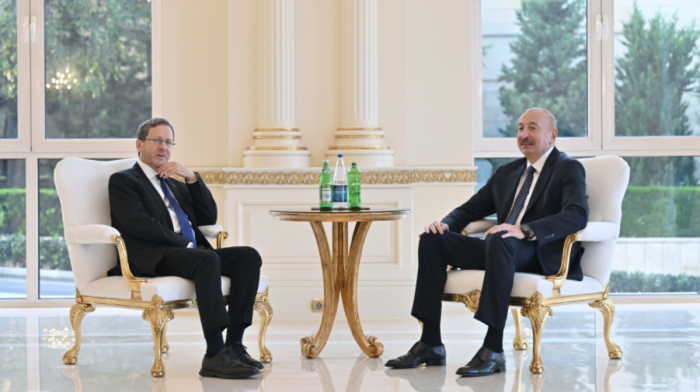
President Ilham Aliyev of Azerbaijan sent condolences to his Iranian counterpart Masoud Pezeshkian, wishing stability and security to the neighbouring country.
Air travel disruption
More than 1,400 flights have been cancelled or diverted as Israel, Iran, Qatar, Syria, Iraq, Kuwait and Bahrain closed or restricted their airspace.
Airlines including Emirates, British Airways, Lufthansa, Virgin Atlantic and Air India have suspended or rerouted services.
What remains unclear
The total number of casualties, the full extent of military damage and the scale of further retaliation remain uncertain as strikes and counter-strikes continue across the region.








What is your opinion on this topic?
Leave the first comment