Ayatollah Ali Khamenei, Iran’s supreme leader for 36 years and the country’s highest political and religious authority, has died aged 86 following joint Israeli and U.S. strikes on his compound in Tehran.
Iranian state media confirmed his death early on Sunday and declared 40 days of national mourning. Israeli Prime Minister Benjamin Netanyahu said a day earlier that Khamenei’s residence had been destroyed in what he described as a major operation targeting Iran’s leadership.
A senior Israeli official told Reuters that his body had been recovered from the site.
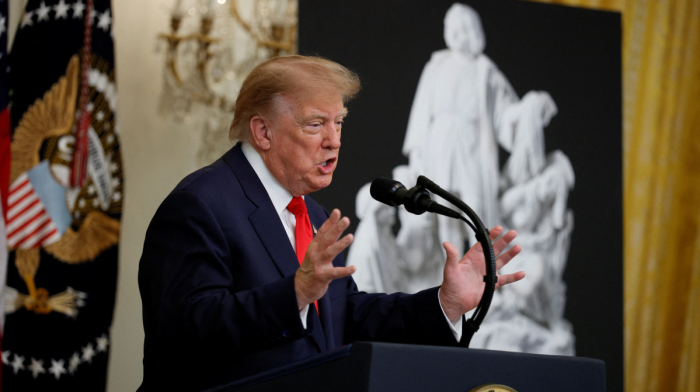
U.S. President Donald Trump later confirmed that American forces had coordinated with Israel. Iran condemned the attack as “unprovoked and illegal” and launched retaliatory missile and drone strikes against Israel and countries hosting U.S. military bases. The Pentagon said there were no American casualties.
Khamenei’s death marks a turning point for the Islamic Republic at a moment of military escalation and diplomatic uncertainty.
For more than three decades, Ayatollah Ali Khamenei was the ultimate decision-maker in Iran, a cleric who rose from revolutionary activist to commander-in-chief, shaping the country’s domestic politics, regional strategy and fraught relationship with the West.
To supporters, he embodied resistance to foreign pressure and continuity of the Islamic Republic’s ideology. To critics, his tenure was defined by political repression, constrained civil liberties and confrontation abroad.
His rule spanned war, sanctions, uprisings and nuclear diplomacy, and ended in the most dramatic of circumstances.
Early life and revolutionary activism
Ali Hosseini Khamenei was born on 19 April 1939 in Mashhad, north-eastern Iran, into a religious family of modest means.
He studied theology in Mashhad and later in Qom, one of Shia Islam’s most important centres of scholarship, where he became influenced by Ayatollah Ruhollah Khomeini’s opposition to Shah Mohammad Reza Pahlavi.
During the 1960s and 1970s, he was repeatedly detained by SAVAK, the Shah’s intelligence service, for organising protests and distributing anti-government literature. He spent time in prison and internal exile.
The 1979 revolution transformed his fortunes. As part of the clerical circle around Khomeini, he helped consolidate the newly formed Islamic Republic.
Presidency during war
Khamenei survived an assassination attempt in 1981 when a bomb hidden in a tape recorder exploded during a speech, severely injuring his right arm.
Later that year, following the assassination of President Mohammad Ali Rajai, he was elected president.
His two terms, from 1981 to 1989, coincided with the Iran–Iraq War, a devastating conflict that shaped the new republic’s security doctrine and entrenched its suspicion of Western powers.
Although the presidency was constitutionally subordinate to the supreme leader, the war years elevated Khamenei’s profile within the leadership.
Becoming supreme leader
Following Ayatollah Khomeini’s death in June 1989, Iran’s Assembly of Experts appointed Khamenei as supreme leader.
Constitutional amendments later reinforced the powers of the office. Although he did not initially hold the highest clerical rank, he gradually consolidated authority within the state structure.
As supreme leader, he became head of state and commander-in-chief of the armed forces. His remit extended over the Islamic Revolutionary Guard Corps (IRGC), the judiciary, state broadcasting and the country’s broad strategic direction. Over time, the office emerged as the decisive centre of power in Iran.
Nuclear diplomacy and confrontation
Iran’s nuclear programme dominated much of Khamenei’s later years.
He insisted that nuclear technology was Iran’s legitimate right under international law. Western governments accused Tehran of seeking weapons capability and imposed sweeping sanctions.
In 2015, Iran signed the Joint Comprehensive Plan of Action (JCPOA), agreeing to limit parts of its nuclear programme in return for sanctions relief. Khamenei authorised the negotiations but warned against trusting the United States.
The accord began to unravel after Washington withdrew in 2018 and reimposed sanctions. Iran subsequently reduced compliance while continuing uranium enrichment.
Indirect talks between Tehran and Washington were under way at the time of his death.
Regional influence
Under Khamenei, Iran expanded its regional reach through alliances with non-state armed groups and governments across the Middle East.
Iran backed Hezbollah in Lebanon, supported the Syrian government during its civil war, cultivated powerful militias in Iraq and provided assistance to armed groups in Yemen. Officials described this network as the “Axis of Resistance”.
Tensions with the United States escalated sharply in 2020 after the U.S. killing of Iranian commander Qasem Soleimani. Iran responded with missile strikes on bases hosting U.S. troops.
Confrontations with Israel intensified in later years, including a 12-day exchange in June 2025 that raised fears of wider regional war.
Domestic dissent
Khamenei’s tenure also saw repeated domestic unrest.
The disputed 2009 presidential election triggered mass protests known as the Green Movement. Security forces suppressed the demonstrations and opposition leaders were placed under house arrest.
In 2022, nationwide protests followed the death of Jina Mahsa Amini in morality police custody, drawing international attention and condemnation.
Further demonstrations in 2025 began over economic grievances and widened into broader anti-government protests. Iranian authorities reported more than 3,100 deaths during that period.
Human rights organisations accused the state of heavy-handed repression, restrictions on media and political freedoms, and the detention of activists. Officials defended their actions as necessary to preserve order and the Islamic Republic.
Public opinion remained deeply polarised.
Timeline: Key moments in Khamenei’s life
- 1939 – Born in Mashhad
- 1963–78 – Arrested multiple times for opposition activity
- 1979 – Islamic Revolution establishes the Islamic Republic
- 1981 – Survives assassination attempt; elected president
- 1980–88 – Iran–Iraq War
- 1989 – Appointed supreme leader
- 2009 – Green Movement protests
- 2015 – Nuclear deal (JCPOA) signed
- 2018 – U.S. withdraws from nuclear agreement
- 2020 – Retaliation after killing of Qasem Soleimani
- 2022 – Protests after death of Jina Mahsa Amini
- 2026 – Killed following Israeli and U.S. strikes
What happens next?
Khamenei’s death creates a rare moment of institutional uncertainty in Iran.
Under the constitution, the Assembly of Experts is responsible for appointing a new supreme leader. In the interim, senior clerical and political figures are expected to manage continuity.
The transition comes amid open confrontation with Israel and heightened tensions with the United States. Regional allies will be watching closely for signs of either escalation or recalibration.
Domestically, the succession process may expose divisions within Iran’s political establishment between hardline and more pragmatic factions. However, the system was designed to ensure institutional continuity rather than abrupt change.
For now, the immediate priority for Tehran is stability, both at home and across a region already on edge.









What is your opinion on this topic?
Leave the first comment