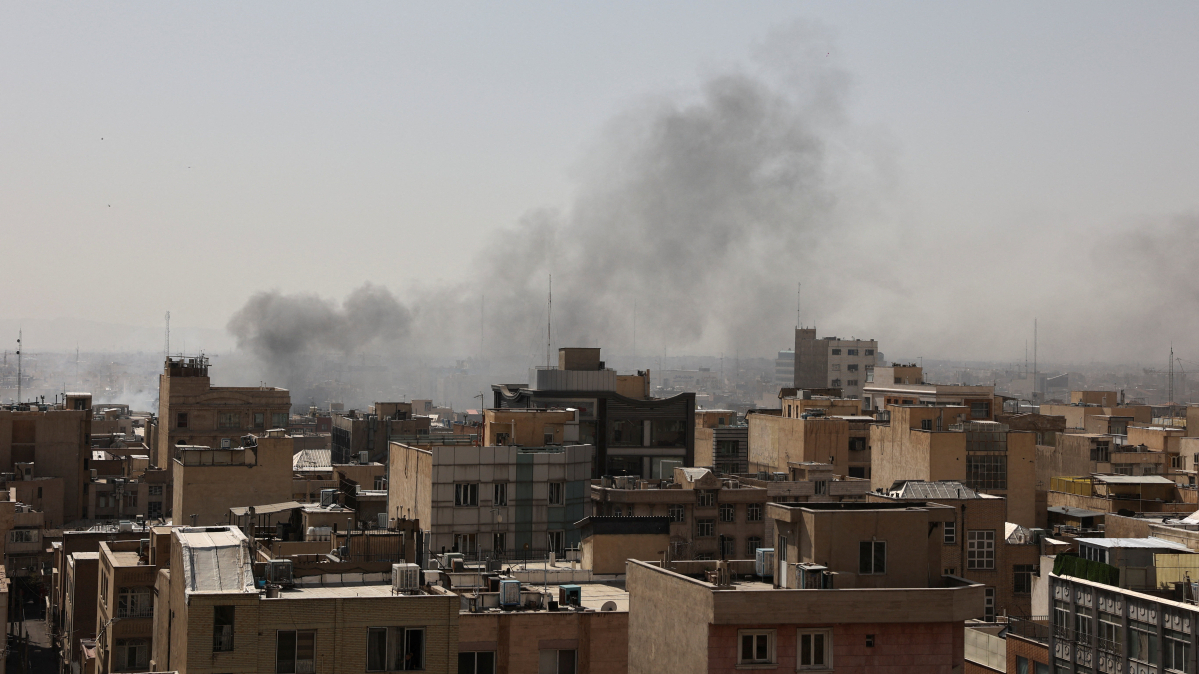
The international reaction to the U.S. and Israel’s strikes on Iran came in fast and strong.
Leaders of the European Union issued a joint statement calling for “maximum restraint” and the full respect of international law.
European Commission President Ursula von der Leyen and European Council President António Costa said:
“Ensuring nuclear safety and preventing any actions that could further escalate tensions or undermine the global non-proliferation regime is of critical importance.”
While noting that the EU had consistently pressed for a diplomatic solution to the “critical issues”, they also highlighted the “extensive sanctions” the bloc has imposed on Tehran “in response to the actions of Iran’s murderous regime and the Revolutionary Guards”.
They added that citizens of EU member states in the Middle East were receiving support.
Türkiye offers mediation role
Türkiye’s foreign ministry urged all sides to “cease the attacks immediately,” stressing that the issues facing the region “should be resolved through peaceful means.”
It said Türkiye is ready to provide “the necessary support in mediation” and warned that recent developments pose risks to both regional and global stability.
The ministry also condemned what it described as provocations that could further escalate violence.
Zelenskyy says iran conflict must not widen
Ukraine's President Volodymyr Zelenskiy, addressing U.S. strikes in Iran on Saturday, said it is important that Washington acts decisively, but also that hostilities do not escalate into a wider war.
"Whenever there is American resolve, global criminals weaken," he wrote on social media.
Ukraine’s foreign ministry attributed the instability to Iran’s domestic policies.
“The cause of the current events is precisely the violence and impunity of the Iranian regime, in particular the killings and repression of peaceful protesters, which have become particularly widespread in recent months,” the ministry said.
Macron calls for urgent UN Security Council meeting
French President Emmanuel Macron urged an emergency meeting of the United Nations Security Council, stating that the outbreak of a war involving the United States, Israel and Iran carries “serious consequences” for global stability.
Macron wrote on X that “the current escalation is dangerous for everyone. It must stop.”
He said Iran “must understand that it now has no other option but to engage in good-faith negotiations to end its nuclear and ballistic missile programmes, as well as its actions to destabilise the region,” calling such steps “absolutely essential for the security of everyone in the Middle East.”
Canada supports U.S.
Canadian Prime Minister Mark Carney said Canada supports the U.S. “acting to prevent Iran from obtaining a nuclear weapon and to prevent its regime from further threatening international peace and security”.
UK says Iran must be stopped from nuclear arms
Britain said Iran must “never be allowed to develop a nuclear weapon” and that London is ready to defend its interests after U.S.-Israeli strikes on Iran. A government source confirmed the UK did not take part in the operation and that Prime Minister Keir Starmer convened an emergency response meeting, with calls planned to France and Germany.
A government spokesperson said: “Iran must never be allowed to develop a nuclear weapon and that is why we have continually supported efforts to reach a negotiated solution.”
The spokesperson added that the UK has “a range of defensive capabilities in the region, which we have recently bolstered. We stand ready to protect our interests,” while stressing that Britain does not want further escalation.
London said its immediate priority is the safety of British nationals and pledged consular support. It also issued new travel guidance, advising against all travel to Israel and the Palestinian territories.
Spain urges de-escalation
Spanish Prime Minister Pedro Sanchez said Spain “demand immediate de-escalation and full respect for international law,” a position later reinforced by Foreign Minister José Manuel Albares.
Albares wrote on X that Madrid supports “those who are receiving the strikes” and reiterated that “the attacks must stop,” calling for dialogue and restraint.
Egypt calls for 'diplomacy and dialogue'
Cairo says the "serious military escalation" in the Middle East is a cause for "deep concern".
The Egyptian foreign ministry said in a statement that the escalation risks expanding the conflict, and could prompt “comprehensive chaos” across the region. "Diplomacy and dialogue" is the only option for stability and security in the Middle East, the statement said, while a military solution would only lead to further violence.
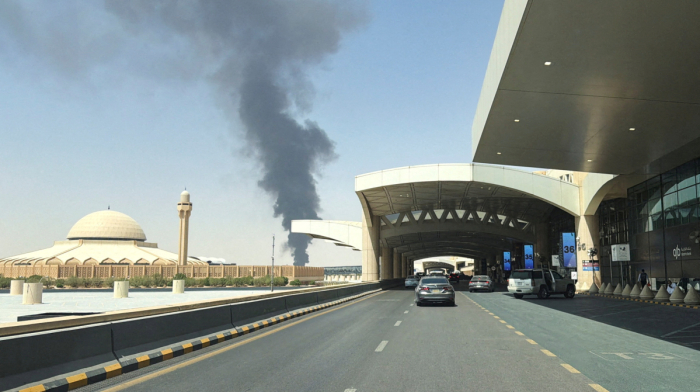
The Foreign Ministry also condemned attacks by Iran on Gulf countries.
ICAN condemns the strikes
Meanwhile, the International Campaign to Abolish Nuclear Weapons (ICAN) condemned the U.S. and Israel over the attack on Iran. The Nobel Prize-winning group’s Executive Director, Melissa Parke, said:
“These attacks are totally irresponsible and risk provoking further escalation as well as increasing the danger of nuclear proliferation and the use of nuclear weapons.”
“Military action is not a viable or long-term solution to prevent nuclear proliferation. All military action must stop immediately,” she added.
Russia says 'halt immediately'
Russia has called for "a return to a political and diplomatic settlement" while urging an immediate stop to U.S. and Israeli attacks on Iran.
The Foreign Ministry issued a statement saying the international community should deliver an objective assessment of the situation, and warning that further action risks destabilising the region.
Moscow said that it is ready to assist efforts to find "peaceful solutions based on international law, mutual respect and a balance of interests."










What is your opinion on this topic?
Leave the first comment