Georgia’s parliament speaker has accused Britain of “blatant hypocrisy” after London quietly allowed Russian-origin oil products into the country - a move UK officials had reportedly urged Tbilisi to avoid.
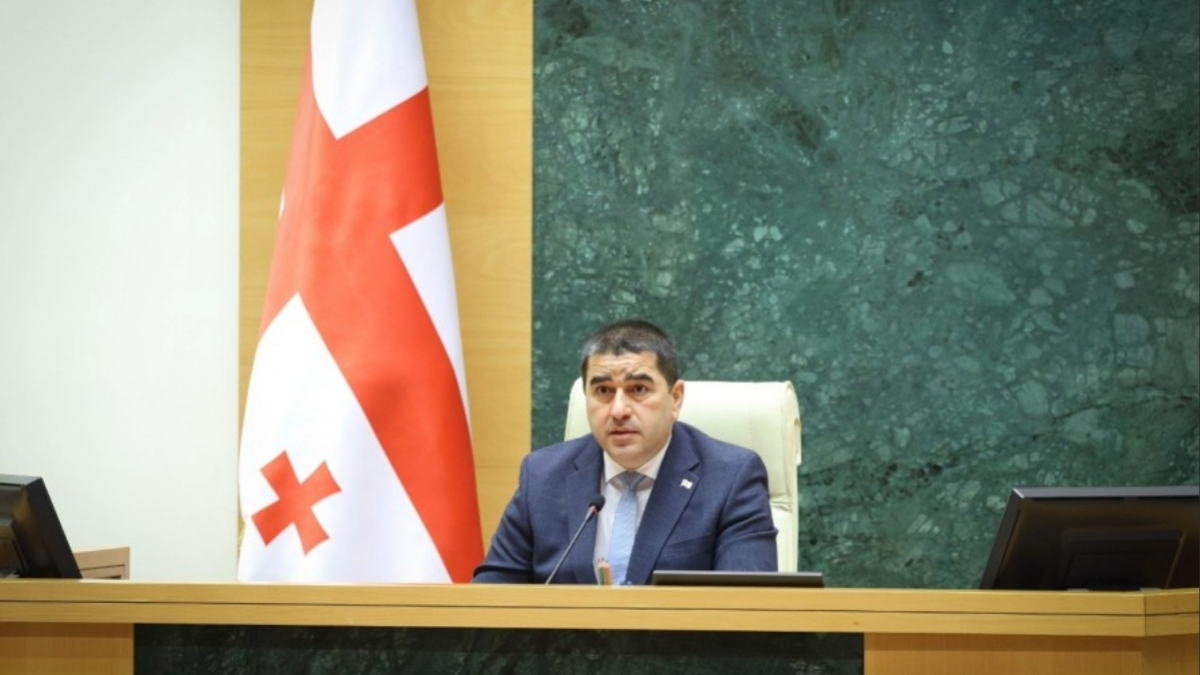
When news broke on 20 May that Britain had issued a trade licence allowing diesel and jet fuel refined from Russian crude to enter the UK, Georgia’s Parliament Speaker, Shalva Papuashvili, was quick to respond - and quick to make it personal.
According to Papuashvili, the British ambassador to Georgia had spent months visiting parliamentary offices and pressing Georgian officials to stop importing Russian oil products entirely.
The ambassador reportedly suggested the government should lean directly on private businesses to cut Russian trade ties, without going through the formality of official sanctions.
When Georgian officials warned this would push up fuel prices for ordinary households, the ambassador’s response, Papuashvili claims, was straightforward: British citizens would face the same, and Georgia should accept that too.
“If we had listened to the British ambassador, we would have had a ruined economy today,” Papuashvili said.
It is a striking account. It is also one that has not been independently verified, and to which the British side has not publicly responded. What is not in dispute is the headline fact: Britain has eased sanctions on Russian-origin oil products, and Georgia’s most senior parliamentary official has chosen to say so publicly.
Britain frames move as temporary and pragmatic
London has been careful to frame the decision narrowly. Prime Minister Keir Starmer described it as two targeted, short-term licences intended to phase in new sanctions gradually and protect UK consumers from sharply rising energy prices linked to the conflict in the Middle East.
Junior Treasury Minister Dan Tomlinson called it a “sensible decision” for energy security, while stressing that Britain’s broader Russia sanctions regime - covering more than 3,200 individuals, businesses and ships since 2022 - remains fully in place.
Britain is not alone in this recalibration. The United States extended a similar waiver on Russian seaborne oil this week, also citing supply disruptions linked to the Iran conflict and the partial closure of the Strait of Hormuz. Brent crude is trading at around $110 a barrel.
Both governments have presented the measures as pragmatic, time-limited responses to genuine economic pressure rather than signals of weakening political support for Ukraine. Critics in Britain and Ukraine, however, have argued that the distinction matters less than it appears, given that Moscow profits from its crude regardless of where it is processed.
Georgia’s balancing act with Russia
Papuashvili’s intervention raises a question that is legitimate on its face: whether pressure applied to Georgia over Russian trade was applied consistently by those imposing it. But that question sits alongside Georgia’s own record.
Tbilisi has maintained economic ties with Russia throughout the war in Ukraine, drawing sustained criticism from Western partners. Georgian officials have consistently described this as pragmatism - Georgia is not a NATO member and has no formal obligation to impose sanctions on Moscow.
That argument, however, exists alongside a set of facts that complicate it. Twenty per cent of Georgian territory remains under Russian occupation.
Georgia has also been navigating a hybrid conflict with Russia for nearly two decades. Polling has consistently shown majority public support for EU membership - a path that carries its own geopolitical expectations.
Whether economic pragmatism and that broader direction are ultimately compatible is a debate that extends well beyond this week’s developments, and one on which Georgians themselves remain divided.
The wider question behind the row
Stripped of the political noise on all sides, the events of 20 May illuminate something that is rarely stated plainly in diplomatic language.
Sanctions are a tool - and, like any tool, their application has always been shaped as much by domestic economic conditions as by geopolitical principle. When the cost is manageable, the principle holds firm. When it becomes inconvenient, workarounds tend to emerge.
That observation does not vindicate any single government’s position in this story - not Britain’s, and not Georgia’s. But it does raise a question that outlasts this particular news cycle: what exactly is the price of principle, who is being asked to pay it, and does the answer change depending on who is doing the asking?
What this week has made clear, perhaps more than anything else, is that even in wartime, the line between principle and pragmatism can be very thin - and very quietly crossed.













What is your opinion on this topic?
Leave the first comment