Demand for electric vehicles has surged across Europe as elevated fuel prices linked to the Iran conflict push consumers toward new and second-hand EVs, according to data shared with Reuters. It is providing a boost to an auto industry that has struggled with slower-than-expected adoption.
Although fully electric car sales rose by around 30% across Europe in 2025, industry uptake has lagged earlier expectations, forcing major automakers, including Volkswagen and Stellantis, to book multi-billion-euro writedowns on EV-related investments.
That picture has shifted sharply following a rise in global oil prices to above $100 per barrel after U.S. and Israeli airstrikes on Iran at the end of February escalated regional tensions and disrupted energy markets.
“This isn’t a blip, it’s an inflection point,” said Gurjeet Grewal, CEO of UK-based Octopus Electric Vehicles, which reported a 95% year-on-year increase in new EV demand and a 160% rise in used EV demand in April.
The UK, as a net energy importer, has been particularly affected by higher inflation and rising living costs linked to energy price pressures.
Across Europe, data from New Automotive and E-Mobility Europe covering 16 markets (representing more than 80% of EU and EFTA car sales) showed new EV registrations rose 34% year-on-year in April.
Growth was seen not only in established EV markets such as Denmark and the Netherlands, but also in countries like Italy, where electric vehicle adoption has historically been slower.
Automakers adjust production plans
Automakers are now responding to the demand shift.
Volvo Cars said orders for its entry-level EX30 electric SUV have increased, particularly in price-sensitive segments. Renault reported that EVs accounted for about 50% of its UK registrations in April, with online enquiries rising 48% since the Iran conflict began.
“Interest in Renault’s EV range has undergone a seismic shift,” said Renault UK managing director Adam Wood.
A source at the company said Renault is considering increasing production of electric models.
Seat and Cupra, brands under Volkswagen, also reported strong EV demand, with internal sales data showing electric models accounting for nearly 60% of orders in Germany, above targets.
“We have a production budget for this year,” said Cupra chief executive Markus Haupt. “But maybe we’ll need to increase the amount of EVs.”
Chinese EV makers gain ground
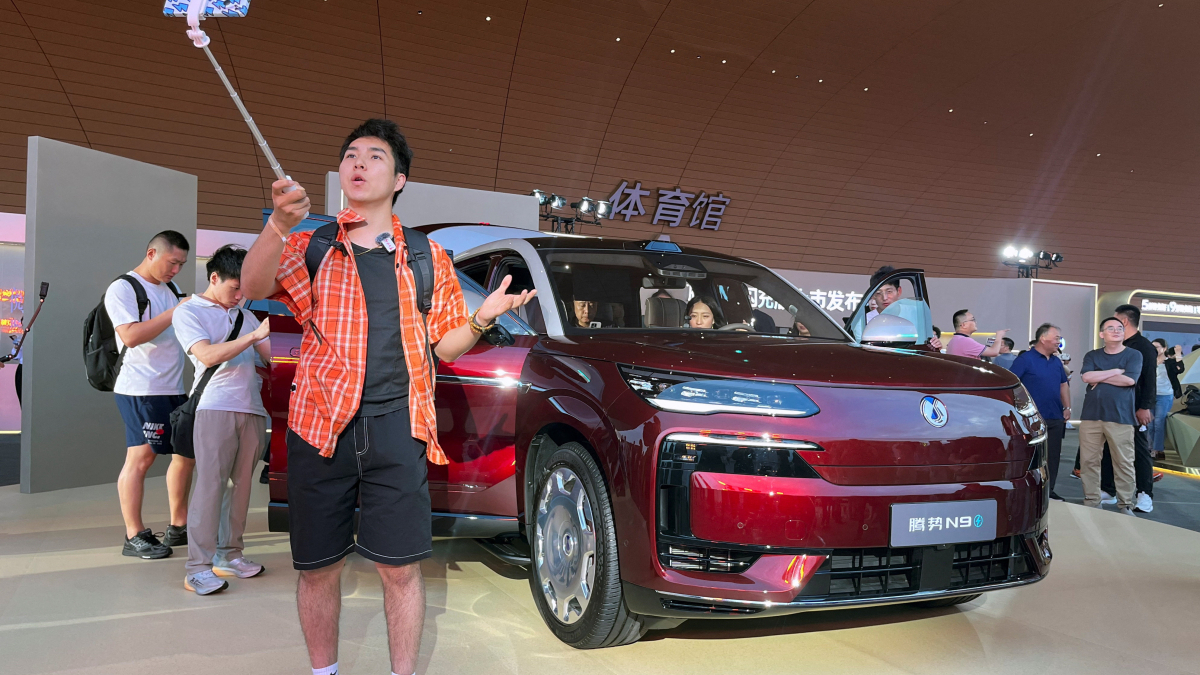
Online car marketplaces are also reporting a sharp shift in consumer behaviour toward electric vehicles, particularly Chinese brands offering lower-cost models.
German platform Carwow said EV enquiries have risen to 75% of total searches from around 40% since the conflict began, while interest in petrol cars has fallen significantly.
Carwow reported major increases in searches for Chinese EV brands, including BYD, Xpeng and Leapmotor, which analysts say are gaining ground in Europe’s increasingly price-sensitive market.
“What is striking is the strong momentum of Chinese manufacturers,” said Carwow Germany managing director Philipp Sayler von Amende.
Rival platform OLX said EV enquiries in France were up 80% since the start of the war.
Industry analysts say the shift could mark a longer-term change in consumer behaviour, noting that previous fuel-price spikes (such as in the 1970s) eventually reversed once prices eased.
However, some executives believe the current energy shock may have a more lasting impact.
“The Iran conflict has fundamentally reshaped how people think about energy security in their daily lives,” said OLX CEO Christian Gisy.
“Europeans have shifted from ‘maybe someday’ to ‘right now’ on electric vehicles,” he concluded.
















What is your opinion on this topic?
Leave the first comment