Negotiations between Samsung Electronics and its workforce on Wednesday have broken down, officials said, raising fresh concerns over potential disruption to South Korea’s export-heavy economy.
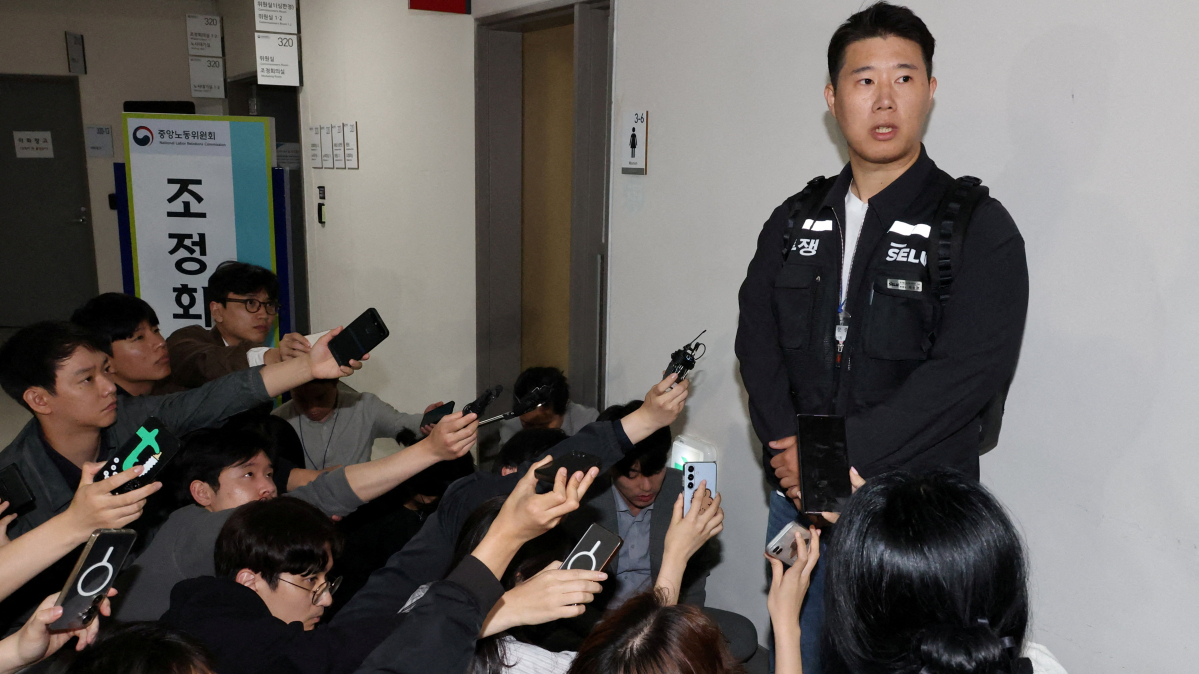
Union representative Choi Seung-ho said the breakdown was final after management rejected core demands.
“Our demands have not changed at all. We demanded the scrapping of a cap on bonus pay, as well as transparency and institutionalisation of the system. Because these demands were not accepted, the union declared a final breakdown in negotiations.”
Now more than 50,000 workers are preparing for a possible walkout from 21 May after government-mediated talks ended without agreement on Wednesday.
The dispute is centred on a widening gap in bonus pay compared with rival SK Hynix. Union members are demanding a fundamental overhaul of Samsung’s compensation system, including scrapping the current 50% cap on annual bonuses and increasing transparency over how performance-based pay is calculated.
Samsung management has expressed regret over the collapse in talks, insisting it will continue efforts to maintain dialogue and avoid escalation.
A vice president at Samsung Electronics, Kim Hyung-ro, said the mediation process had ended without a formal proposal being put forward.
“No mediation proposal has been formally presented. The last explanation we received from the National Labor Relations Commission regarding this procedure was that the mediation process had ended without the presentation of a mediation proposal.”
The impasse comes amidst heightened sensitivity in South Korea’s technology sector, where semiconductors now account for a growing share of exports and demand linked to artificial intelligence (AI) has fuelled record profits.
Prime Minister Kim Min-seok has instructed ministers to closely monitor the situation, citing the “gravity of the impact” on the national economy. With Samsung recently surpassing a $1 trillion market value amid the AI boom, there is increasing speculation that authorities could consider an emergency arbitration order if tensions escalate further.
Deadlock in talks raises strike risk
Negotiations between Samsung Electronics and its union have failed to produce a pay agreement, increasing the risk of prolonged industrial action that could affect chip production and broader economic stability.
The breakdown followed two days of government-mediated discussions earlier in the week. South Korea has since convened an emergency meeting of senior ministers to assess potential fallout. Officials have warned of the wider economic implications, given the country’s growing reliance on semiconductor exports, which recently accounted for around 37% of total shipments.
The core dispute revolves around performance-based compensation and how it compares with rival semiconductor maker SK Hynix. Shares in Samsung initially fell sharply after the talks collapsed, before recovering later in the trading session, while SK Hynix saw gains amid expectations it could benefit from uncertainty at its larger rival.
Union demands overhaul of bonus system
Union members, who have warned of an 18-day strike starting May 21 if demands are not met, are pushing for a structural change to Samsung’s bonus system. Their proposals include removing limits on bonus payouts and linking a fixed proportion of operating profits to employee compensation, along with clearer calculation mechanisms.
Union representative Choi Seung-ho reiterated that workers would not back down, saying the demands remained unchanged despite the collapse in talks.
Samsung has said it regrets the breakdown in negotiations and remains committed to dialogue, while warning that tying bonuses too closely to profits could limit investment flexibility during industry downturns.
The National Labour Relations Commission, which mediated the discussions, said the talks ended due to a wide gap between the two sides’ positions and the union’s decision to suspend negotiations.
Government weighs possible intervention
The standoff has also triggered discussion over possible government intervention. An emergency arbitration order, which would temporarily suspend industrial action for 30 days while mediation continues, has been mentioned as a potential but rarely used option.
Labour authorities, however, have emphasised that dialogue remains the preferred path forward, with officials urging both sides to return to negotiations in order to avoid escalation.
Read more:















What is your opinion on this topic?
Leave the first comment