A series of military drones entering the airspace of Finland and the Baltic states has heightened concerns that the war in Ukraine is increasingly affecting NATO’s northern flank. The incidents have triggered security alerts, air defence responses and political fallout across the region.
As Ukraine intensifies long-range strikes on Russian oil and port infrastructure along the Baltic Sea, some drones have reportedly veered off course. Several governments have linked the incidents to Russian electronic warfare interference, forcing authorities to respond to repeated airspace violations and potential threats to public safety.
Stray drones trigger regional alerts
The first major incidents occurred on 25 March, when two Ukrainian military drones entered the airspace of Estonia and Latvia after passing through Russia. One struck a chimney at the Auvere power station near Estonia’s border with Russia, while another crash-landed in Latvia. Lithuania had previously reported a Ukrainian drone crashing into a lake.
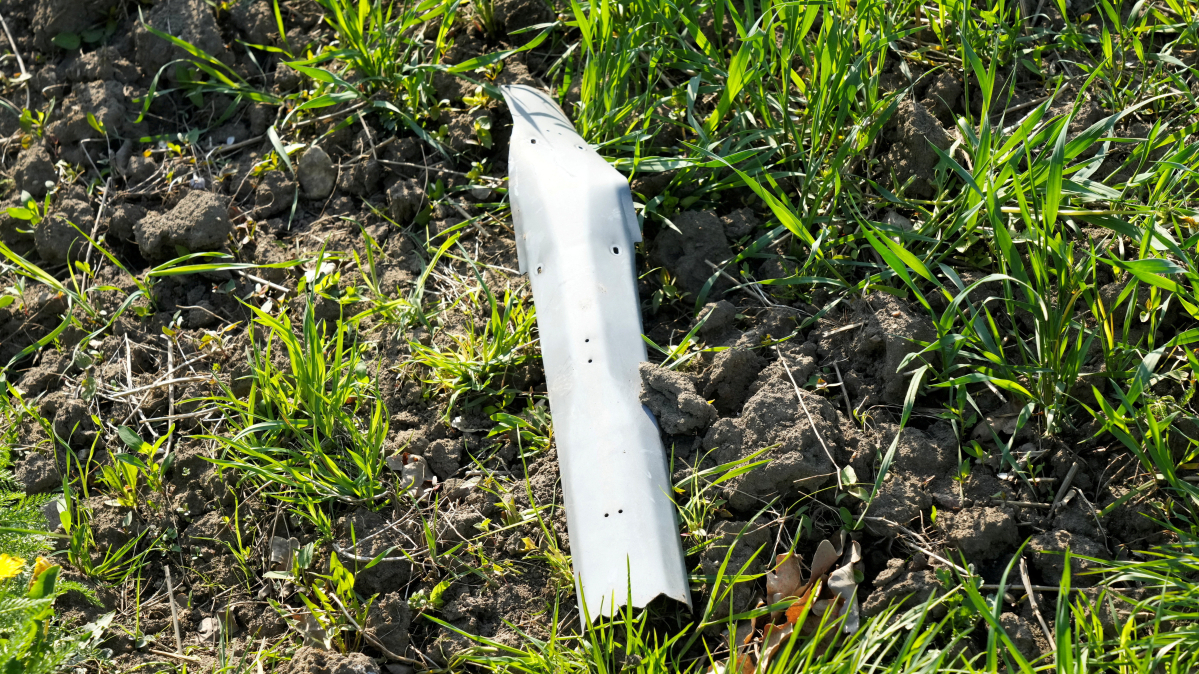
Days later, Finland reported a suspected airspace violation involving unmanned aerial vehicles in its south-eastern region. Finnish authorities deployed F/A-18 fighter jets, and one object was later identified as a Ukrainian AN-196 drone. Prime Minister Petteri Orpo suggested that strong Russian electronic jamming may have caused the drones to drift into Finnish territory.
On 31 March, Estonia and Latvia detected additional drone activity near their borders with Russia, while Finnish border guards discovered a drone on Finnish soil. Estonia later recovered drone debris in Tartu County.
Baltic states strengthen calls for air defences
On 1 April, Estonia’s armed forces said the drones detected in the country appeared to have originated in Ukraine and were likely intended for targets inside Russia.
Security concerns intensified on 7 May when Latvia and Lithuania urged NATO to reinforce regional air defences after two suspected drones crossed from Russia into Latvia. One exploded at an oil storage facility in the Rēzekne region, damaging four empty storage tanks.
The incident sparked political repercussions in Latvia. On 10 May, Defence Minister Andris Sprūds resigned after Prime Minister Evika Siliņa criticised the delayed deployment of anti-drone systems. Ukrainian officials said the drones had been diverted by Russian electronic warfare measures.
Just days later, on 14 May, Siliņa resigned as prime minister after Sprūds’ Progressives party withdrew its support from the governing coalition, resulting in the collapse of Latvia’s government.
Airspace incidents prompt public warnings
On 15 May, Finnish authorities advised approximately 1.8 million residents in the Greater Helsinki region to remain indoors because of suspected drone activity. Air traffic at the capital’s airport was temporarily suspended as fighter aircraft were scrambled. President Alexander Stubb later stated that there was no direct military threat to Finland.
Further incidents followed across the Baltic region. Explosives were discovered near the wreckage of a suspected Ukrainian military drone that crashed in Lithuania close to the Latvian and Belarusian borders. Lithuanian officials acknowledged that the aircraft had not been detected when it entered the country.
On 19 May, a Romanian NATO fighter jet shot down a suspected Ukrainian drone over Estonia after it crossed into Estonian airspace from Russia. Ukraine subsequently apologised to Estonia and other Baltic allies, attributing the incident to Russian electronic warfare and denying that it had deliberately used Baltic territory to conduct operations against Russia.
NATO responds to continuing threats
The following day, Lithuania issued an air danger warning, instructed residents in Vilnius to seek shelter and suspended operations at the capital’s airport after a drone was detected in its airspace. Members of parliament moved to underground shelters, while rail services, schools and kindergartens implemented emergency measures. Authorities said the drone’s origin remained unclear.
On 21 May, Latvia’s armed forces reported at least one drone operating within national airspace. NATO fighter jets were deployed, and residents in border regions near Russia and Belarus were advised to take cover.
Most recently, on 3 June, Latvia and Estonia issued overnight warnings in areas bordering Russia, urging residents to seek shelter if they observed suspected drone activity. Latvia confirmed that NATO aircraft had been scrambled in response.
The alerts were lifted in the early hours of the morning after Estonian defence officials concluded that no drones had ultimately entered the country’s airspace. Nevertheless, the repeated incidents have underscored growing security concerns along NATO’s northern borders as the conflict in Ukraine continues to reverberate across the region.

















What is your opinion on this topic?
Leave the first comment