India is expected to experience its weakest monsoon in more than a decade in 2026, raising concerns over crop production, food prices and economic growth as the country also grapples with inflationary pressures linked to the Iran conflict.
Weak rainfall outlook raises inflation concerns
The monsoon provides around 70% of India's annual rainfall and is vital for replenishing reservoirs, rivers and groundwater supplies. In the nearly $4 trillion economy, almost half of agricultural land lacks irrigation, while farming remains the primary source of income for roughly half the population.
Economists warned that weaker rainfall could increase inflation risks and weigh on economic growth.
"A deficient monsoon, particularly in the crucial July-August months, can add to the pressure and push up inflation closer to an average of 5.5% if food inflation spikes," said Gaura Sengupta, chief economist at IDFC First Bank.
India's retail inflation stood at 3.48% in April, driven largely by food prices. However, the outlook remains uncertain amid concerns over higher energy costs stemming from the conflict in the Middle East.
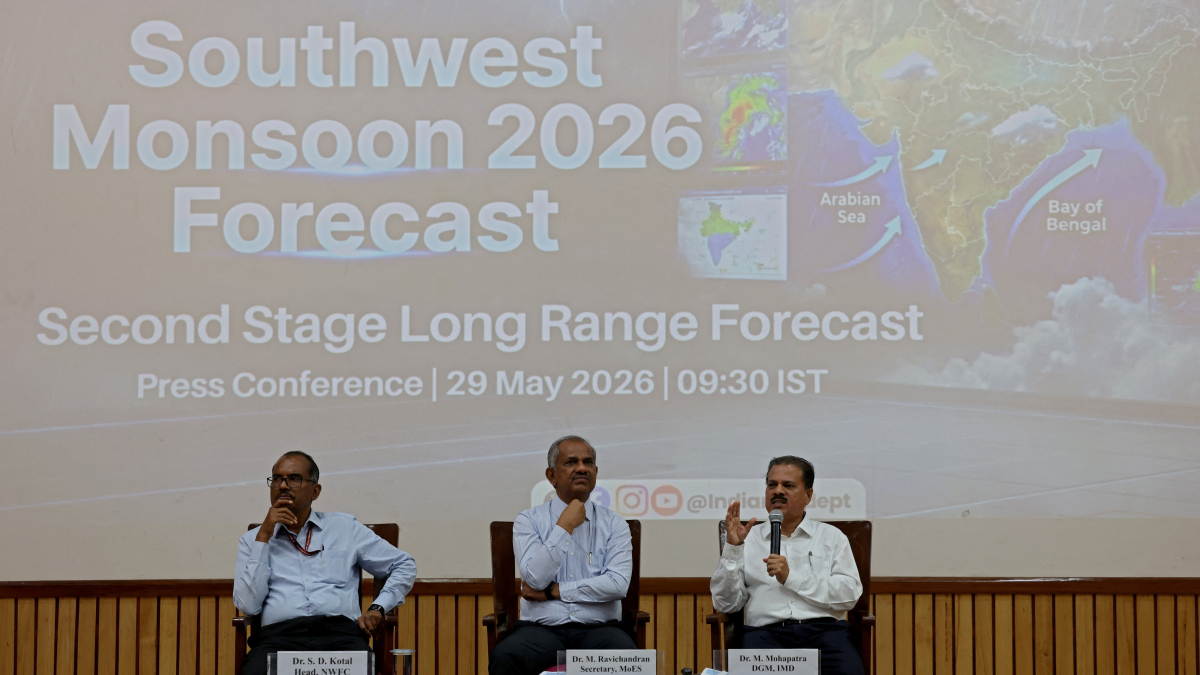
Speaking at a press conference on Friday, M. Ravichandran, secretary in the Ministry of Earth Sciences, said rainfall during this year's monsoon season is expected to reach 90% of the long-period average, down from an earlier forecast of 92% issued in April.
If realised, it would mark the weakest monsoon since 2015.
The India Meteorological Department classifies normal rainfall as between 96% and 104% of the 50-year seasonal average of 87cm during the four-month monsoon period.
Ravichandran said an El Niño weather pattern is expected to develop in the coming months and could influence rainfall across the country. The phenomenon is forecast to strengthen to moderate or strong levels during the latter half of the monsoon season.
Rainfall in June is also expected to be below average, at less than 92% of the long-period average.
Heatwave conditions persist
Several states are already experiencing severe heatwave conditions, with temperatures exceeding 45°C, levels that would normally begin to ease with the arrival of monsoon rains.
However, the monsoon's progress has slowed. Forecasters now expect rains to reach India's southern coast within a week, later than the previously forecast arrival date of 26 May.
The monsoon usually reaches India around 1 June before advancing across the country by mid-July.
The weather department said both maximum and minimum temperatures are likely to remain above average during June, with southern, western, central and northern states expected to experience an increased number of heatwave days.
Rural incomes and crop production at risk
India has historically received below-average rainfall during many El Niño years, with some episodes triggering severe droughts that damaged crops and prompted restrictions on grain exports.
Although the country currently holds ample stocks of staple foods, including rice and wheat, uneven rainfall could reduce rural incomes across vast parts of the country. Around two-thirds of India's 1.4 billion people live in rural areas.
Weaker rural spending typically affects demand for a wide range of consumer goods, from motorcycles to household appliances.
"Below-normal rainfall could affect early-season planting of pulses, cotton, edible oilseeds and coarse grains such as corn," said Ashwini Bansod, vice president for commodities research at Phillip Capital India, a Mumbai-based brokerage.
Bansod added that rice cultivation could also come under pressure in non-irrigated areas of northern and north-western India.
India is the world's largest exporter of rice and onions, the second-largest producer of sugar and the largest importer of edible oils, meeting nearly two-thirds of domestic demand through overseas purchases.
What is El Niño?
El Niño occurs when sea surface temperatures in the central and eastern Pacific Ocean rise above normal levels. The climate pattern is typically associated with hotter and drier conditions across parts of South-East Asia and several other regions around the world.


















What is your opinion on this topic?
Leave the first comment