Kazakhstan accounts for 45% of Central Asia’s road and rail infrastructure investment, with around $32.3 billion committed as the region expands key transport links across Eurasia.
The figures come from the Eurasian Development Bank’s (EDB) report, Transport Corridor Infrastructure: Observatory and Interactive Map of Eurasian Transport Network Projects – 2026, which tracks major transport projects across the continent.
Railways take largest share
Central Asian countries are collectively investing $71.75 billion in their transport networks, with 114 projects from the region included in the EDB’s observatory. Across Eurasia, the bank is monitoring 402 infrastructure projects worth a combined $345 billion.
Railways account for the largest share of transport investment in Central Asia, receiving 42.8 per cent of the total.
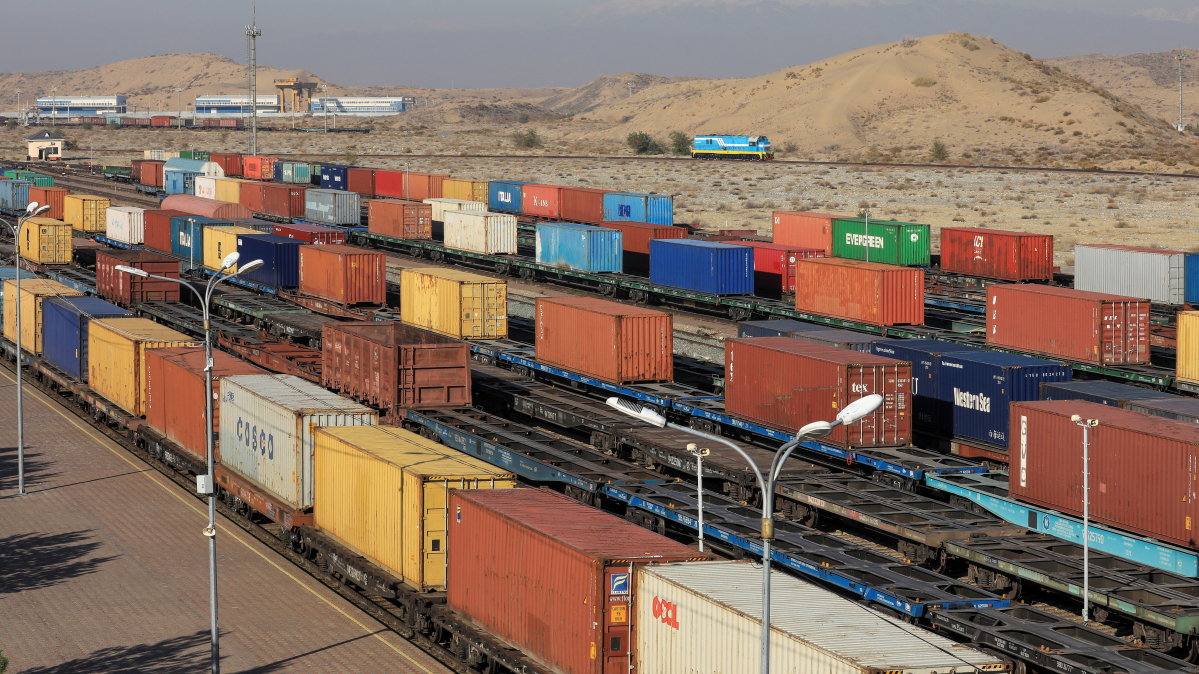
Investment goes beyond building and modernising railway lines, with countries across the region also funding motorways, logistics centres and border crossings to strengthen links between national and international transport networks.
Kazakhstan plays a particularly significant role in this expanding infrastructure network, with several routes crossing its territory linking China with Russia and the South Caucasus.
The growing concentration of projects along these routes is reinforcing Kazakhstan’s position as a major East-West transit hub.
China expands regional investment
The regional investment picture also reflects China’s growing role in Central Asian transport infrastructure.
China remains the largest external investor, with more than $7 billion committed to projects in the region, according to the EDB. Most are being implemented under the Belt and Road Initiative.
One of the most significant projects is the China–Kyrgyzstan–Uzbekistan railway. Kazakhstan, meanwhile, remains a key transit link in the wider Eurasian network, supported by infrastructure connecting it with neighbouring countries and major international markets.
Governments provide bulk of funding
External investment, however, accounts for only part of the funding driving the region’s transport expansion.
National budgets account for 62 per cent of the total value of transport network projects, making governments the primary source of funding.
Private investment is more concentrated, with capital mainly flowing into logistics infrastructure and warehousing. Almost half of all private investment in Eurasia’s transport sector is directed towards this segment.
Logistics capacity grows
In Kazakhstan, logistics facilities are being developed along the Western Europe–Western China international corridor and near the country’s borders with Kyrgyzstan and Uzbekistan.
These projects complement investment in roads and railways, providing additional logistics capacity to support growing freight flows across the region’s expanding transport network.
Kazakhstan strengthens transit role
The EDB expects the continued development of individual corridors to help create a more integrated Eurasian transport network by 2035.
Kazakhstan’s $32.3 billion investment, combined with its geographical position and established transit role, puts the country at the centre of many of the routes reshaping transport connectivity across Central Asia and the wider Eurasian region.
















What is your opinion on this topic?
Leave the first comment