Iranian President Masoud Pezeshkian has accused the U.S. and Israel of seeking to foment internal divisions in Iran after failing to defeat the country militarily, Iran's state news agency IRNA reported.
⦿ 12:27 GMT | UPDATE
Blast sound heard in Iran's Zahedan, no damage reported
Reuters
The sound of an explosion was heard in the southeastern Iranian city of Zahedan on Wednesday, Fars news agency reported, citing the Zahedan administrative office.
No damage was caused, according to the report.
⦿ 11:58 GMT | UPDATE
Fight between pilots reportedly triggers hijacking code on Dubai-Tel Aviv flight
A fight between the pilots of a Flydubai passenger plane travelling from Dubai to Tel Aviv reportedly triggered a hijacking code before the aircraft diverted to Saudi Arabia on Wednesday, according to Israeli daily Ynet.
The flight, carrying 174 passengers, was due to land at Ben Gurion Airport. Around 90 minutes after take-off, while entering Jordanian airspace, the aircraft transmitted code “7700”, indicating a general emergency, followed by code “7500”, used to signal unlawful interference, including a possible hijacking.
The aircraft then changed course, returned to Saudi airspace and landed at Tabuk Airport. The captain and first officer were injured and taken to hospital, according to Prince Sultan bin Abdulaziz International Airport.
⦿ 11:13 GMT | UPDATE
Iranian Supreme Leader threatens Israel
Mojtaba Khamenei, Supreme Leader of Iran, has threatened Israel in a post on X, saying that the country will be “swiftly buried and forgotten.”
He made the remarks in relation to Israel's activities in Lebanon.
⦿ 11:08 GMT | UPDATE
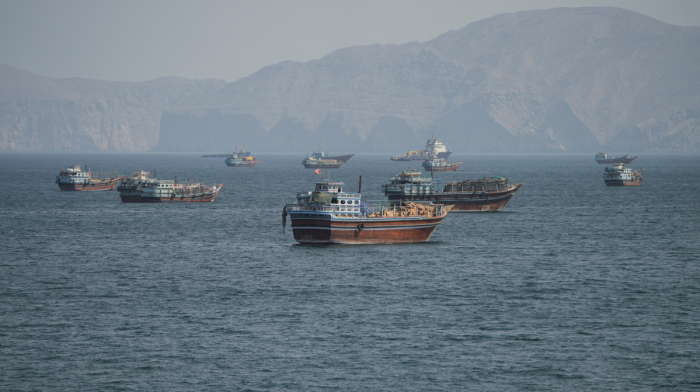
Hormuz is vital maritime passage, Iranian President says
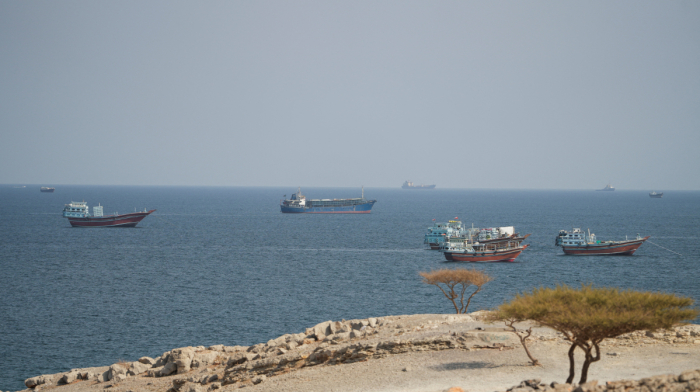
Iranian President Masoud Pezeshkian has called the Strait of Hormuz one of the world's “most vital maritime chokepoints,” on World Maritime Day, the government of Iran has said in a post on X.
“Iran’s powerful maritime presence has ensured the uninterrupted pulse of vital national lifelines despite all external pressures,” Pezeshkian is quoted as saying.
⦿ 10:34 GMT | UPDATE
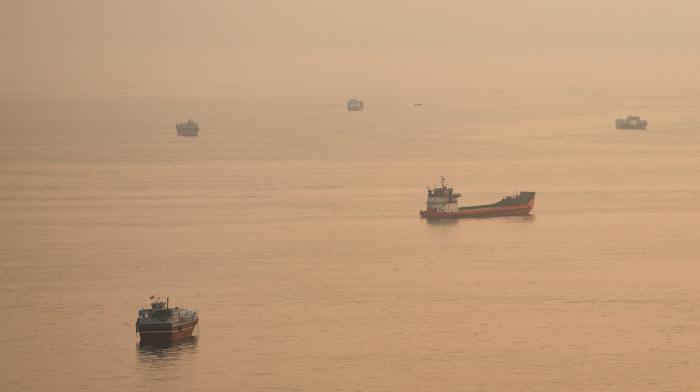
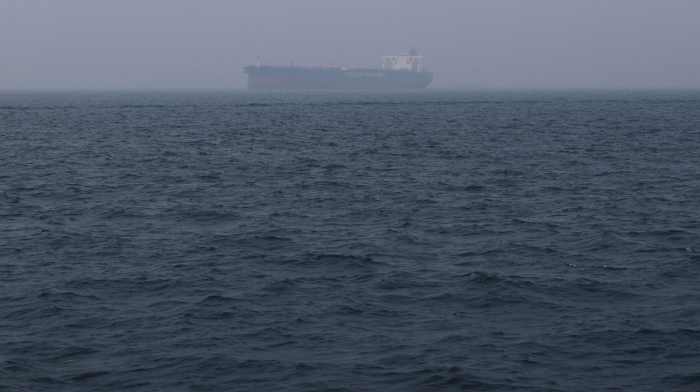
Ship hit by unknown object in Hormuz
A ship was struck by an unknown projectile in the Strait of Hormuz on Tuesday, maritime agency UKMTO has reported. Authorities are investigating the incident, UKMTO added.
⦿ 08:39 GMT | UPDATE
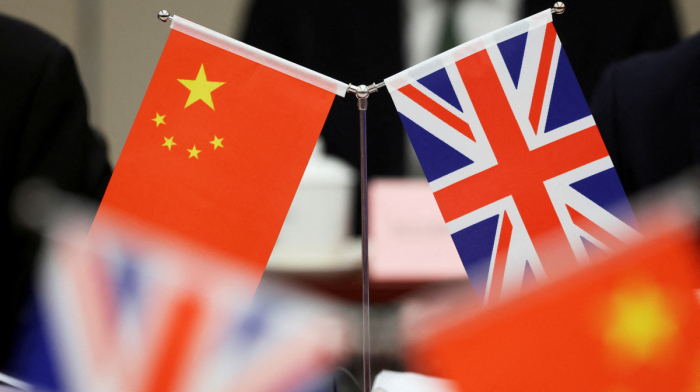
China urges U.S., Iran to return to Islamabad MoU and resume talks
Reuters
China has called on the United States and Iran to recommit to the Islamabad Memorandum of Understanding (MoU) and restart negotiations aimed at ending the conflict. Foreign Ministry spokesperson Guo Jiakun said Beijing continues to support resolving disputes through political and diplomatic means.
The 17 June Islamabad MoU was intended to provide a framework for a broader peace agreement covering navigation through the Strait of Hormuz and Iran’s nuclear programme. China said it would continue efforts to help restore peace and stability in the Middle East and Persian Gulf region.
⦿ 07:40 GMT | UPDATE
Iran receives U.S. feedback on 1 week trust-building plan
Reuters
Iranian Foreign Minister Abbas Araghchi received U.S. feedback via Qatari mediators in Doha on Tuesday about a seven-day plan aimed at building trust between Washington and Tehran, with sequencing the main sticking point, an official said.
Araghchi is expected to discuss the U.S. response in Tehran on Wednesday, the unnamed official added.
Iran last week presented a seven-day proposal under which the Strait of Hormuz could be reopened and normal maritime passage restored if the necessary conditions were met. U.S. President Donald Trump subsequently rejected the proposal, prompting further Qatari mediation.
⦿ 07:08 GMT | UPDATE
U.S. warships no longer in Hormuz, IRGC says
U.S. warships have retreated 500 kilometres from the Strait of Hormuz, Iran's Revolutionary Guards (IRGC) said on Tuesday, an Iranian news agency closely tied to the group reported.
“The truth is that not a single American ship remains in the Persian Gulf, and not even a single ship or small craft is present in the U.S. Fifth Fleet based in Bahrain, which operates from the Persian Gulf,” IRGC Spokesman Brigadier General Hossein Mohebi said.
⦿ 07:03 GMT | UPDATE
Iran's position on Hormuz hasn't changed, Iranian Foreign Minister says
Iran's stance on the Strait of Hormuz remains the same, Iranian Foreign Minister Abbas Araghchi said on Tuesday.
“I state firmly that there has been no change in Iran's position. Our conditions for opening the Strait are clear," Araghchi told reporters before his departure from New York to Tehran.
“The opening of the Strait of Hormuz is also subject to the fulfillment of a series of conditions that we announced to the other side.”
⦿ 06:23 GMT | UPDATE
Trump: I don't know if Iran are going to give up yet
Reuters
U.S. President Donald Trump has said he doesn't know if Iran is going to give up yet, in response to a question from a journalist on Tuesday.
Asked by a reporter if he thought Iran was on the brink of conceding, Trump said he was confident Tehran would give up, but wasn't sure if it would be imminently.
“Well, they are doing very poorly. I don't know if they're going to give up yet, but they'll give up,” Trump said.
⦿ 05:27 GMT | UPDATE
U.S. forces withdraw from Iraq
Reuters
U.S. forces have withdrawn from their remaining bases in Iraq, 23 years after an American-led invasion toppled Saddam Hussein.
After Hussein's fall, U.S. troops fought an insurgency in the country against Saddam loyalists and later al-Qaeda.
American forces ended up withdrawing at the end of 2011, but returned less than three years later to help Iraqi soldiers defeat Sunni militant group, the Islamic State.
The new departure, agreed in 2024 under former U.S. President Joe Biden, has been celebrated as a victory by Tehran and its allies.
Here's what could happen next:
⦿ 03:25 GMT | UPDATE
Iran's Revolutionary Guards urge Americans to vote out Trump
Iran's Revolutionary Guards have urged Americans to vote out U.S. President Donald Trump's allies in Congress in a letter published on Tuesday 29 September.
Voters go to the polls on 3 November to elect the U.S. House of Representatives and some seats in the U.S. Senate.
“Remove from power the evil, deceitful, and violent politicians who are responsible for America’s current state,” the letter said. “Make sure your politicians understand that the world has changed.”
Trump campaigned in 2024 pledging to avoid new wars, end existing conflicts and bring down inflation. The war with Iran, which Trump launched alongside Israel, has contributed to higher global fuel prices and spread in the Middle East.
⦿ 02:47 GMT | UPDATE
Iranian President accuses U.S. and Israel of seeking to create internal divisions in country
The U.S. and Israel are trying to sow internal divisions in Iran, having failed to defeat the country militarily, Iranian President Masoud Pezeshkian has said, the country's state news agency IRNA reported.
“Iran's aggressive enemies realised today that they cannot surrender the Iranian people through war, and they will not be able to conquer our country with bombs and missiles,” Pezeshkian added.
⦿ 02:30 GMT | UPDATE
Welcome to the blog
Follow for the latest updates from the Middle East conflict.






What is your opinion on this topic?
Leave the first comment