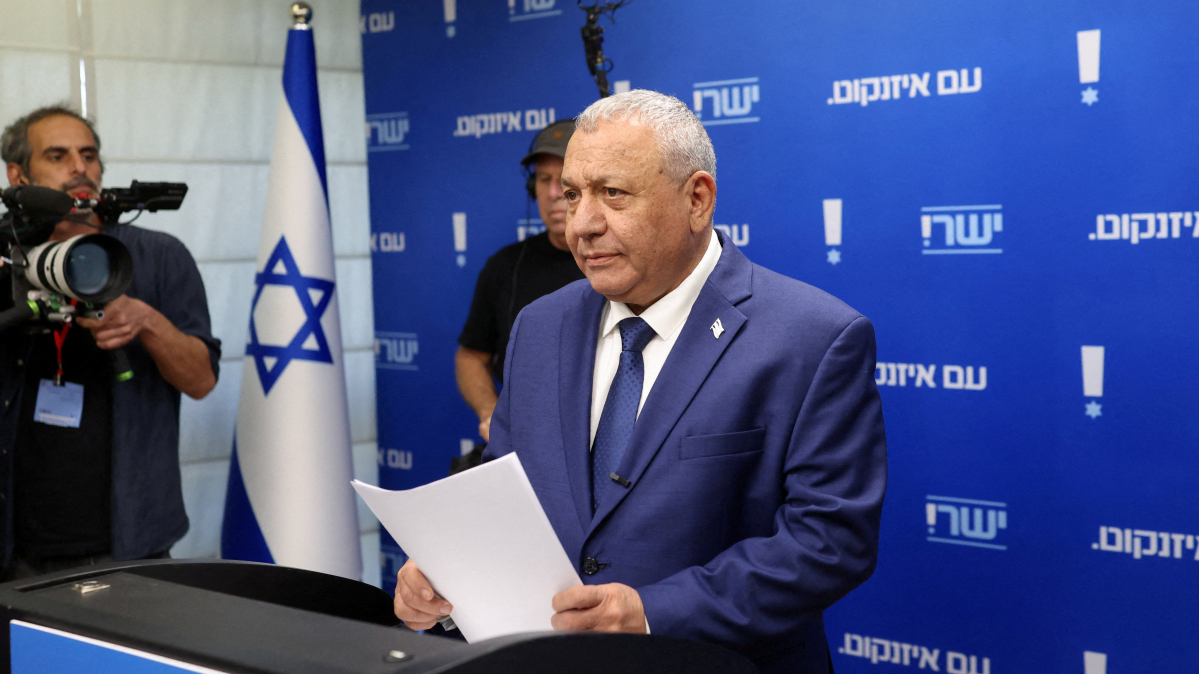
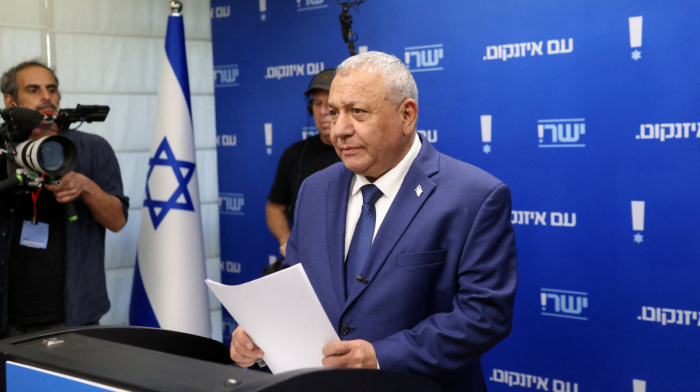
Gadi Eisenkot, leader of Israel's centre-right Yashar party, appeared to play down the prospects of forming a unity government with Israeli Prime Minister Benjamin Netanyahu after the two men held two-hour talks on Sunday (29 November) in Tel Aviv.
Rather than an alliance with Netanyahu, Eisenkot, a former military chief, seems more likely to form a governing coalition with parties seeking to oust the veteran premier, political analysts have said.
Sunday's meeting was their second this month, although the first had been described as a security briefing for Eisenkot. The meetings follow an inconclusive 27 October election that left neither man with a clear path to power.
“The discussion was businesslike, with both sides seeking to bridge the substantial differences between them,” Netanyahu and Eisenkot said in a joint statement, without elaborating.
Israel's Channel 12 news later reported there were no plans for any further meetings, and it cited Eisenkot as telling Netanyahu, “I'm committed to my partners in the bloc. You're welcome to join after the government is formed.”
A spokesperson for Eisenkot confirmed that report.
Netanyahu said on Saturday he would be willing to temporarily relinquish power in a unity government led by Eisenkot. Netanyahu, Israel's longest-serving premier, offered to go second in a rotation agreement under any deal between his own Likud party and Eisenkot's Yashar.
The proposal marked a significant concession by Israel's longest-serving leader as Eisenkot moves closer to assembling an opposition-backed coalition that could remove Netanyahu from power.
Israel's 27 October election left neither Netanyahu's Likud party nor Eisenkot's political bloc with a clear path to forming a government.
Although Likud emerged as the largest party with 27 seats, ahead of Eisenkot's Yashar party with 21, President Isaac Herzog tasked Eisenkot with forming a coalition after he secured broader support from lawmakers.
Deadline approaches to form a government
Eisenkot has until 6 December to form a government, with the possibility of a 14-day extension.
His position has strengthened following coalition agreements with the left-wing Democrats and the right-wing Yisrael Beiteinu party.
However, bringing together parties with differing political priorities remains a challenge.
Coalition arithmetic complicates negotiations
Israel's parliament, the Knesset, has 120 seats, meaning a governing coalition generally requires the support of at least 61 lawmakers to secure a majority.
Eisenkot's efforts have been complicated by disagreements among potential partners over military conscription, religious issues and cooperation with Arab political parties.
His possible coalition brings together factions from different parts of the political spectrum, while securing support from ultra-Orthodox or Arab parties could prove important.
Eisenkot has previously ruled out joining a government dependent on parties that reject his core security principles.
The divisions have made negotiations difficult, despite his growing support among parties seeking an alternative to Netanyahu's leadership.
Netanyahu's power-sharing proposal
Netanyahu's willingness to let Eisenkot serve first represents a reversal of his earlier position that Likud, as the largest party, should lead the government.
Some opposition figures have expressed willingness to consider negotiations with Likud, while others remain opposed to joining another Netanyahu-led political arrangement.
Eisenkot responded by calling for serious negotiations on policy and governance, saying his party was prepared to assess whether Netanyahu's proposal represented a genuine commitment to unity.
Eisenkot's military background and political positions
Eisenkot, a former Israeli military chief of staff, entered politics after a 41-year military career and founded the Yashar party in 2025.
He served as an observer in Netanyahu's war cabinet following the Hamas-led attacks of 7 October 2023 but resigned eight months later, criticising the prime minister's handling of the war in Gaza.
Although Eisenkot has positioned himself as an alternative to Netanyahu's leadership, the two share several security priorities.
Eisenkot opposes Palestinian statehood, supports dismantling Hamas' military capabilities and advocates preventing Iran from acquiring nuclear weapons.
However, he has criticised violence by Israeli settlers against Palestinians and opposed some settlement expansion plans in the West Bank.
His political approach has focused on forming a broader coalition while maintaining a strong emphasis on Israeli security.
Read more:

















What is your opinion on this topic?
Leave the first comment