Israeli President Isaac Herzog has tasked Gadi Eisenkot, Prime Minister Benjamin Netanyahu’s main rival, with trying to form a government after an inconclusive election. The decision, announced on Saturday, follows a vote that left neither candidate with a clear path to power.
The move marks a significant setback for Netanyahu, Israel’s longest-serving leader. His religious-nationalist coalition lost its majority in the 27 October election, although it remained the largest bloc in parliament.
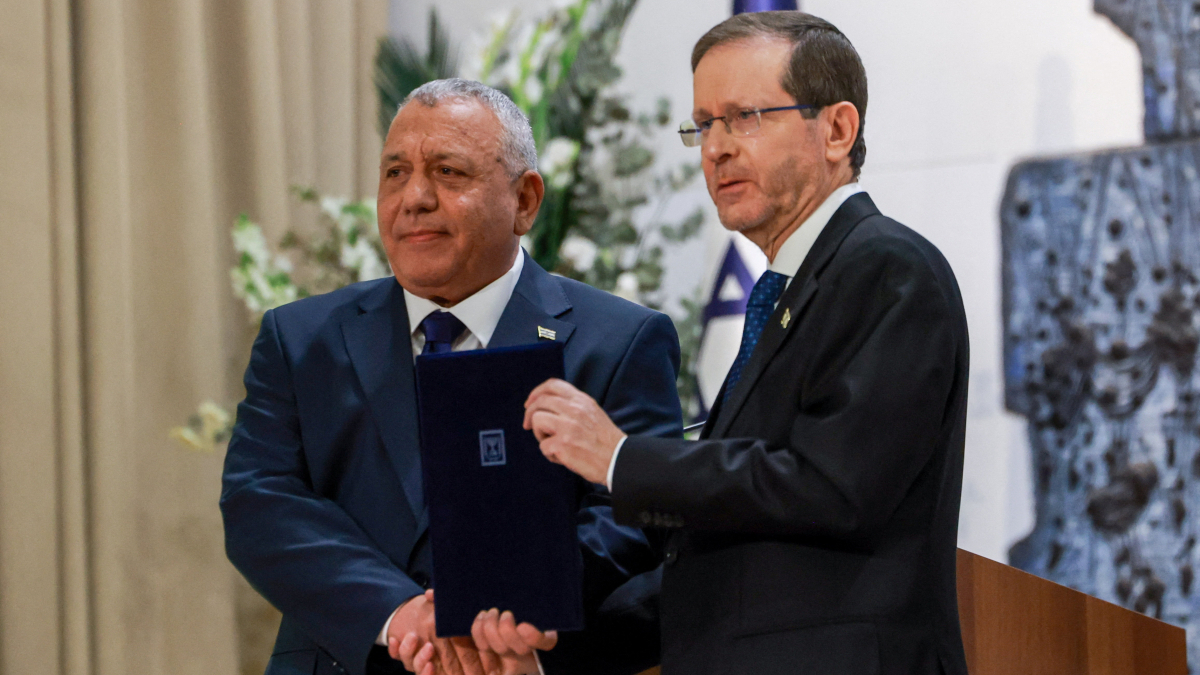
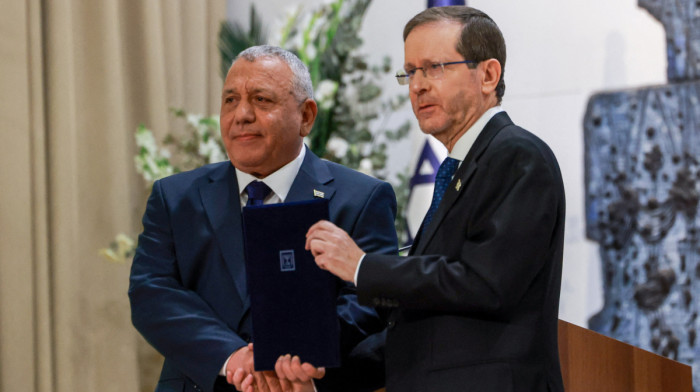
“President Herzog has invited Gadi Eisenkot to the President’s Residence, where he will be tasked with forming the government tomorrow,” Herzog’s spokesperson said.
Although the presidency is largely ceremonial, Herzog must select a candidate to attempt to build a governing coalition following an election.
Eisenkot, a former military chief, wrote on X: “Now is the time to form a national emergency government. I will do everything I can to ensure we are worthy.”
Arab votes tipped the count
Eisenkot has ruled out forming a coalition with Israel’s Arab parties, despite their support being enough to secure him a parliamentary majority.
Nevertheless, Arab party leaders backed his nomination, giving him the highest number of endorsements. They have expressed anger over what they regard as the racist policies pursued by Netanyahu and his far-right allies.
The arithmetic
Netanyahu’s Likud emerged as the largest single party, winning 27 seats in the 120-seat Knesset. But his wider religious-nationalist coalition secured just 53 seats, eight short of the 61 needed for a majority.
Eisenkot’s Yashar party finished second with 21 seats. However, his alliance of four Jewish-led parties, spanning the centre-left to the right, secured only 48 seats.
Meanwhile, two parties representing Israel’s Arab minority won an unprecedented 19 seats.
Three paths, none easy
Eisenkot now faces weeks of potentially difficult coalition talks, with three possible paths to forming a government:
- Forming a minority government that relies on Arab parties for support in key parliamentary votes.
- Building a coalition with ultra-Orthodox parties, despite having avoided such alliances in the past.
- Reaching a unity agreement with Netanyahu.
Analysts consider all three options unlikely, raising the prospect of another election.
Eisenkot will initially have 28 days to form a government, with a possible 14-day extension.
If he fails, another candidate may be nominated. Should that attempt also collapse, parliament can put forward a further candidate.
The process could last around 100 days. If no government emerges, Israel will have to hold another election.
If Eisenkot fails, another candidate can be given the chance. If that candidate also fails, parliament can nominate someone else. The whole process has a deadline of about 100 days, and if no one succeeds, Israel must hold another election.
A reluctant politician
Eisenkot, 66, is the son of Moroccan immigrants. If appointed prime minister, he would become the first leader fromIsrael’s Mizrahi community, whose Jewish ancestry traces back to the Middle East and North Africa.
Reserved and known for avoiding the media spotlight, Eisenkot entered politics in 2022.
After the Hamas-led attack on Israel on 7 October 2023, he served briefly in Netanyahu’s wartime cabinet before returning to the opposition.
He has since become an outspoken critic of Netanyahu, particularly over his handling of Israel’s military campaign in Gaza, and has pledged never to serve in a government led by him.
His political image has also been shaped by personal tragedy. A son and two nephews have been killed fighting in Gaza since 2023.
Security credentials and the settler question
Eisenkot placed his military credentials at the centre of his election campaign, highlighting his role in developing the “Dahiyeh doctrine” of responding to attacks with disproportionate force. He applied the approach as a commander during Israel’s 2006 war against Iran-backed Hezbollah in Lebanon.
He has also condemned settler violence against Palestinians, which has increased sharply since 2023, straining relations between Israel and Western governments.
Eisenkot has distanced himself from Netanyahu’s far-right allies, Itamar Ben-Gvir and Bezalel Smotrich, both of whom have faced sanctions from some Western countries over accusations of inciting violence against Palestinians.
The clock starts
Eisenkot's immediate challenge is to turn his parliamentary endorsements into a workable governing arrangement.
Once formally nominated, he will have a maximum of 42 days, including a possible extension, to secure a coalition. If successive attempts to form a government fail, Israel could face another election within around 100 days.
Read more:













What is your opinion on this topic?
Leave the first comment