Kazakhstan and Germany have agreed to expand cooperation in critical minerals, industry, energy and transport, with Astana seeking a greater German role in developing supply chains and higher-value production.
Critical minerals drive deeper cooperation
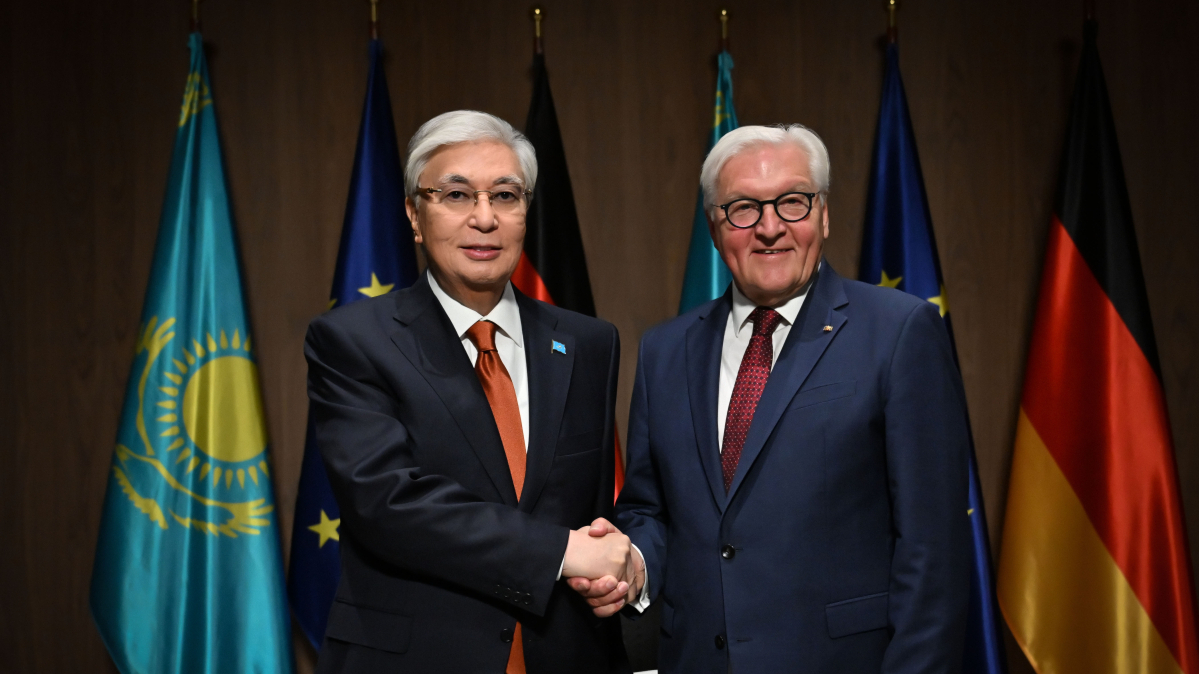
The two sides adopted a Joint Declaration following talks between Kazakh President Kassym-Jomart Tokayev and German President Frank-Walter Steinmeier in Berlin, and welcomed a Roadmap for the Development of Industrial, Technological and Raw Materials Cooperation for 2026–2028.
The document focuses on joint production and the extraction and processing of critical raw materials, while seeking to increase the value added to goods produced in Kazakhstan and develop reliable, sustainable supply chains.
The agreements come as economic ties between the two countries continue to expand. More than 1,400 companies with German participation are currently registered in Kazakhstan, while German investment in the country has reached $8 billion over the past 20 years. German companies including CLAAS Group, Rhenus Logistics, Siemens Energy and Linde are already active in the Kazakh market.
Tokayev outlined the direction of the partnership shortly before his talks in Berlin. In an article published by the German business newspaper Handelsblatt ahead of the visit, the president argued that Kazakhstan and Germany should move beyond conventional trade and develop joint production with higher added value.
Tokayev said bilateral trade had approached $9 billion (€7.9 billion) in 2025. He also said Kazakhstan could supply the German market with more than 80 additional types of processed products, identifying metallurgy, petrochemicals, food production and railway engineering as areas with significant potential.
Kazakhstan targets higher-value production
At the centre of the proposal are critical minerals. Kazakhstan produces 21 of the 34 raw materials considered strategically important for the European economy, including lithium, silicon, cobalt, niobium, tungsten and copper.
Tokayev has proposed that German companies participate not only in extracting these resources but also in processing them and developing complete production chains.
The new roadmap formalises that approach, identifying critical raw material extraction and processing, joint production and greater added value for goods manufactured in Kazakhstan as key priorities.
Energy ties remain a priority
Energy remains another major area of cooperation. Tokayev said Kazakhstan supplies around 13 per cent of the European Union’s oil imports and 20 per cent of its natural uranium imports. Kazakhstan’s oil deliveries to Germany exceeded 10 million tonnes in 2025.
In their Joint Declaration, Kazakhstan and Germany said they would strengthen cooperation on energy security and diversify sources and routes for energy supplies, including oil and gas deliveries to Europe.
Transport links Europe and Asia
Transport is another key element of Kazakhstan’s economic ambitions, reflecting the country’s strategic position between Europe and Asia. Around 85 per cent of overland freight transit between China and Europe passes through Kazakhstan, according to Tokayev, making the country an important land link between the two regions.
The Trans-Caspian International Transport Route is also expanding. In the first eight months of the year, freight traffic along the route increased by 22 per cent, while East-West transit grew by 55 per cent.
Tokayev said new transport projects could connect several regions directly with Caspian ports and shorten the China-Europe route by around 1,000 kilometres. He also highlighted opportunities for German companies to expand their involvement in air cargo transport through Kazakhstan and the development of aviation hubs.
Focus shifts to concrete projects
The agreements formalise the broader vision Tokayev outlined ahead of his visit, combining Kazakhstan’s resources and strategic position between Europe and Asia with German investment, technology and industrial expertise.
Attention will now turn to converting the roadmap into concrete projects, particularly in critical minerals, processing, manufacturing, energy and transport.
Read more:










What is your opinion on this topic?
Leave the first comment