Kazakhstan and Uzbekistan have signed regional and commercial agreements worth more than 80 billion tenge ($146 million). The deals aim to expand cooperation between the two Central Asian neighbors in trade, transport, industry and cross-border development.
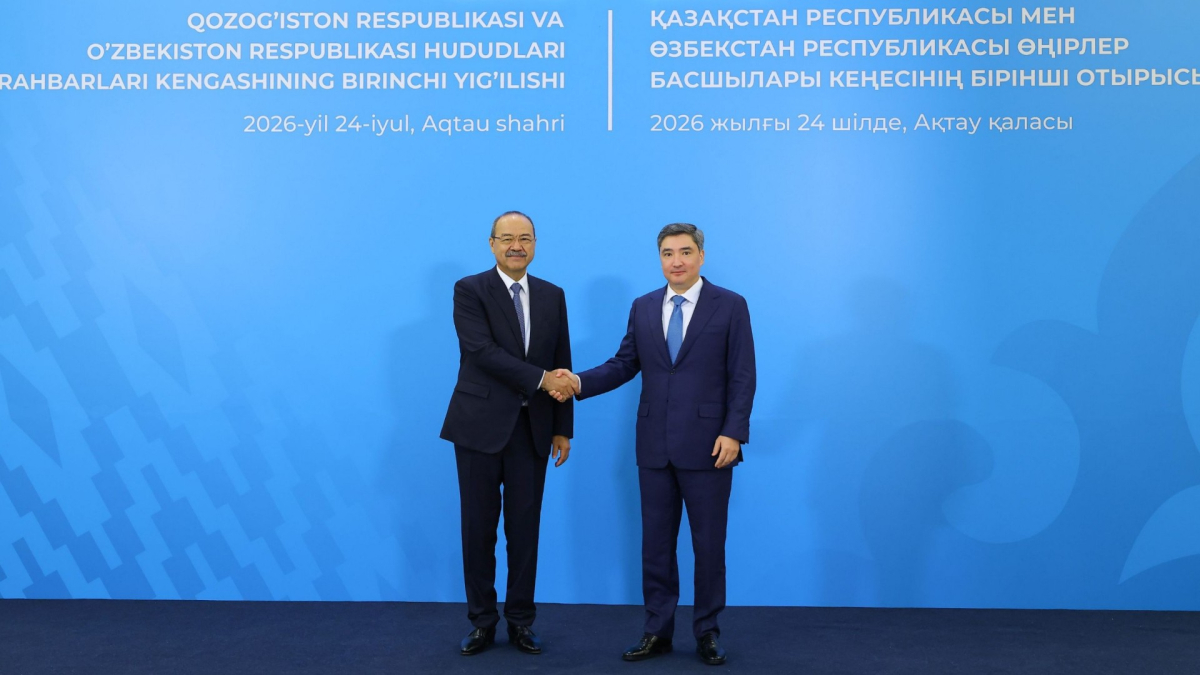
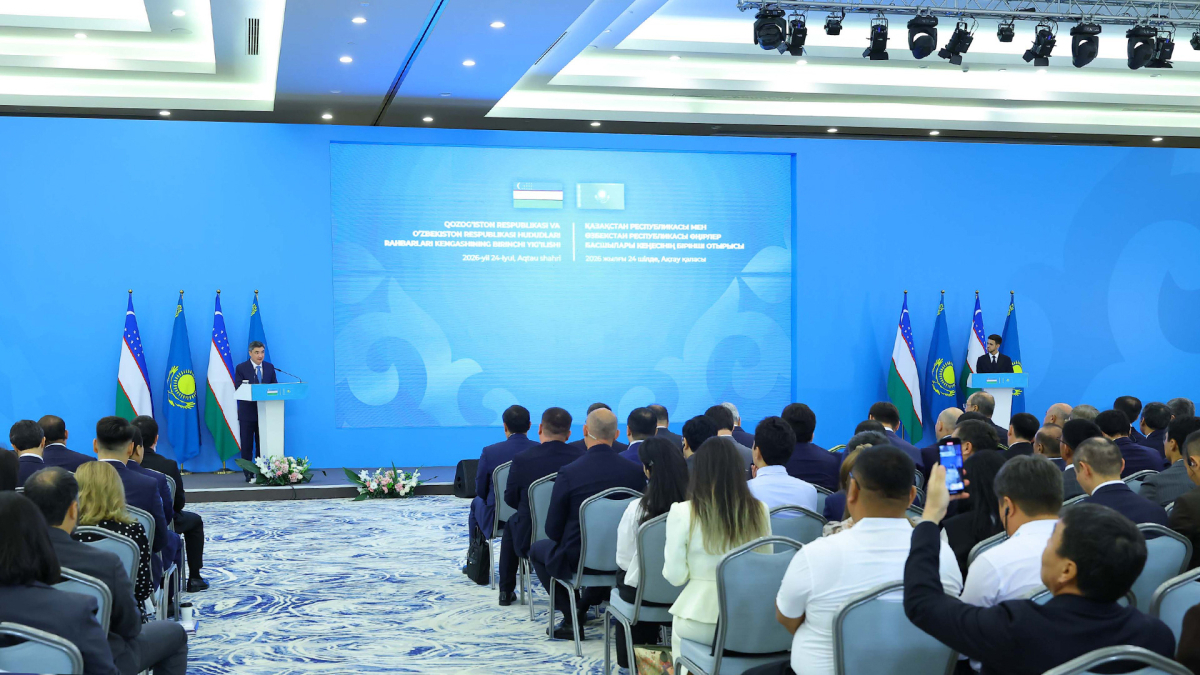
The deals were signed on 24 July in Aktau following the 23rd meeting of the Kazakhstan-Uzbekistan Joint Intergovernmental Commission and the first meeting of the Council of Regional Leaders.
The talks were co-chaired by Kazakh Prime Minister Olzhas Bektenov and Uzbek counterpart Abdulla Aripov, who reviewed progress on agreements reached by Presidents Kassym-Jomart Tokayev and Shavkat Mirziyoyev.
The discussions focused on expanding cooperation in trade, investment, industrial production, transport links, regional development and cultural ties.
“Thanks to the joint efforts of our heads of state, multifaceted cooperation between our countries continues to develop dynamically and today serves as a successful example of partnership for the entire Central Asian region,” Bektenov said.
Aripov said both governments remain committed to carrying out the tasks set by their presidents.
Transport links and Caspian routes take priority
Transport connectivity was a key focus of the discussions as Kazakhstan and Uzbekistan seek to strengthen regional trade corridors.
According to Bektenov, rail freight between the two countries increased by 16% in 2025, reaching 32.3 million tonnes.
The two governments have adopted a plan to expand railway corridor capacity from 35 million to 60 million tonnes.
The port covers 44 hectares, handles nearly 12 million tonnes of cargo annually and provides connections between Central Asia, the Caucasus and the Caspian region.
Kazakhstan has completed dredging works at Kuryk Port and plans to finish similar works at Aktau by the end of 2026, allowing larger vessels to access the ports and increasing cargo capacity.
“Our task is to provide Central Asian cargo with fast and reliable access to the markets of the Caucasus, Türkiye and Europe,” Bektenov said.
Trade and investment cooperation expands
Bilateral trade between Kazakhstan and Uzbekistan reached $4.8 billion in 2025, while trade turnover during the first five months of 2026 increased 37% year-on-year to $2.3 billion.
The two countries are implementing a $7.8 billion trade and investment roadmap aimed at diversifying economic cooperation and attracting new investment.
Industrial cooperation is also expanding, with 80 joint projects worth more than $1.8 billion currently underway.

















What is your opinion on this topic?
Leave the first comment