The war between Russia and Ukraine continued to claim civilian lives this week even as diplomatic activity intensified ahead of planned peace discussions in Abu Dhabi.
On the battlefield, both sides reported deadly attacks, while international partners met to discuss Ukraine's future reconstruction and long-term security. At the same time, efforts are underway to revive negotiations aimed at ending a conflict that is now in its fifth year.
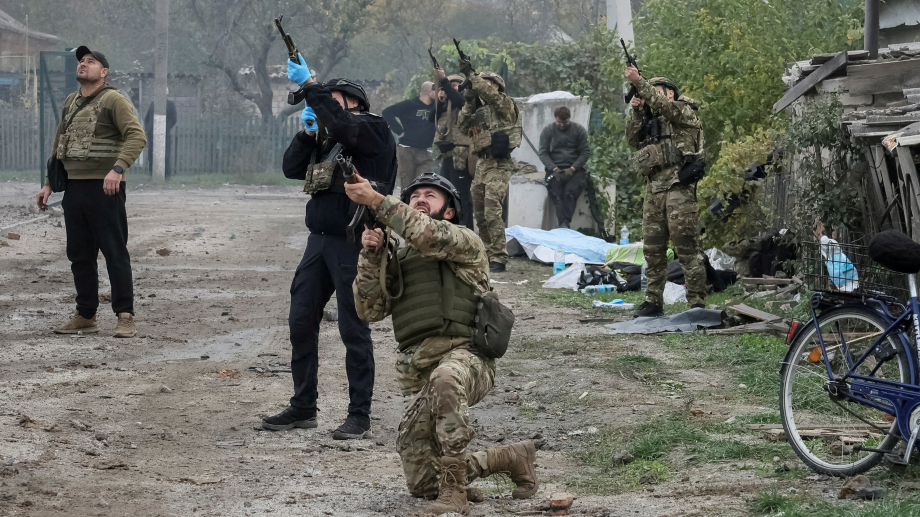
Russian officials said a Ukrainian drone strike in the Belgorod region killed three members of the same family, including an eight-year-old child. According to regional authorities, the drone struck a minibus carrying the victims near the Ukrainian border.
Belgorod has remained one of the Russian regions most frequently targeted by Ukrainian cross-border attacks since the war began.
Meanwhile, in Ukraine, the death toll from a Russian strike on a humanitarian aid distribution point in the Zaporizhzhia region rose to 40, making it one of the deadliest attacks on civilians reported this year.
The facility, located in the village of Komyshuvakha, was being used to distribute aid and provide shelter to civilians. Ukrainian officials said dozens of people remain unaccounted for after the attack.
Ukrainian President Volodymyr Zelenskyy said Russian forces first hit the area with aerial bombs before launching further strikes on the underground shelter.
Russia's Defence Ministry said it had targeted Ukrainian military positions and denied intentionally attacking civilians.
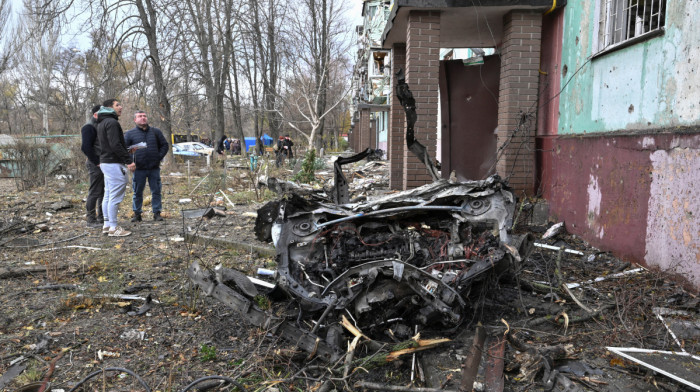
Footage released by Ukrainian police showed the aftermath of the bombardment, including destroyed buildings and rescue efforts around a large crater.
Police said several emergency responders were killed while helping civilians. According to local authorities, at least two rescue workers and four police officers died in the attack.
The strike highlighted the continued vulnerability of civilian infrastructure even as international efforts to secure temporary humanitarian pauses continue.
Suspected drone attack on Ryazan refinery
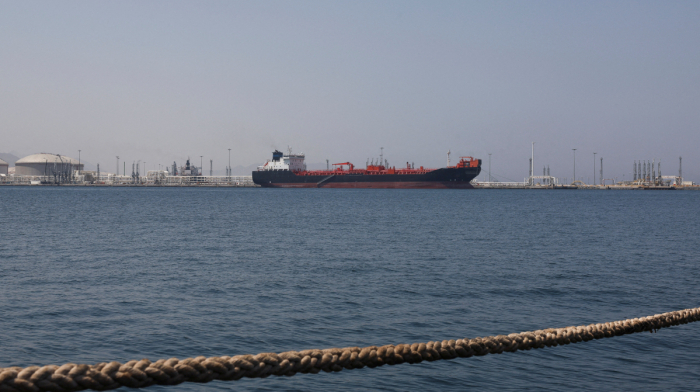
Meanwhile, one of Russia’s largest oil refineries appears to have come under attack in the Ryazan region, according to a Reuters analysis of footage posted on social media on Thursday.
The video appears to show a fire near the industrial area where the Ryazan refinery is located. Reuters geolocated the footage by matching landmarks with archive and satellite imagery but could not independently verify when it was recorded.
Earlier, the regional governor said power had been restored in Ryazan and fires at unspecified industrial sites had been contained or extinguished following what he described as a massive drone attack. He had previously reported that one person was injured and that falling drone debris had sparked fires at industrial facilities.
The governor said more than 200 drones had attacked the region.
The extent of any damage to the refinery was not immediately clear. Ryazan is located more than 200 kilometres south-east of Moscow.
Oleshky ceasefire offers rare success
One of the few positive developments came in the southern town of Oleshky, where a U.S.-brokered ceasefire enabled hundreds of civilians to leave the conflict zone.
The six-day truce, supported by U.S. First Lady Melania Trump, allowed nearly 800 people to be evacuated from the Russian-controlled area, according to officials.
The operation marked a rare instance of cooperation between Russian and Ukrainian authorities and demonstrated that limited humanitarian agreements remain possible despite the broader conflict.
Zelenskyy later awarded Melania Trump a Ukrainian state honour in recognition of her involvement in the initiative.
However, the ceasefire has now expired, and fighting has continued elsewhere along the front line.
Peace talks advancing
Attention is increasingly shifting toward planned negotiations in Abu Dhabi scheduled for 10-11 November.
U.S. envoy Steve Witkoff said representatives from Russia and Ukraine will meet to discuss possible pathways to ending the war, future security arrangements and measures aimed at reducing tensions.
The talks are viewed as one of the most significant diplomatic initiatives in months and come as pressure grows on both sides to explore options beyond continued military escalation.
The Kremlin said it hopes recent U.S. political developments will not disrupt President Donald Trump's efforts to broker a settlement.
Kremlin spokesman Dmitry Peskov said Moscow remains focused on what he described as the American president's “peacemaking efforts.”
Ahead of the talks, Zelenskyy travelled to Spain after meetings in Germany as part of a diplomatic push to secure additional military assistance.
The Ukrainian leader said discussions with European partners would focus heavily on strengthening air defences before winter.
Ukraine continues to warn that Russia could intensify missile and drone attacks on critical infrastructure during the colder months, increasing pressure on energy networks and civilian services.
Zelenskyy also signalled that further consultations with U.S. officials would take place before the Abu Dhabi meeting.
While fighting continues, international partners are already preparing for Ukraine's eventual recovery.
Representatives from Ukraine, the European Union, Germany, France, Britain, the United States, NATO and the World Bank met this week to discuss reconstruction and future economic development.
The discussions focused on financing mechanisms, investment tools and strategies that could support rebuilding efforts once conditions permit.
The talks reflected growing recognition that planning for Ukraine's post-war recovery will require years of international cooperation and substantial financial commitments.
Read more:














What is your opinion on this topic?
Leave the first comment