Trade between Kazakhstan and Uzbekistan rose by 16.2% in 2025 to nearly $5 billion, underscoring deepening economic ties highlighted during a visit by Kazakhstan’s Foreign Minister Yerlan Kosherbayev.
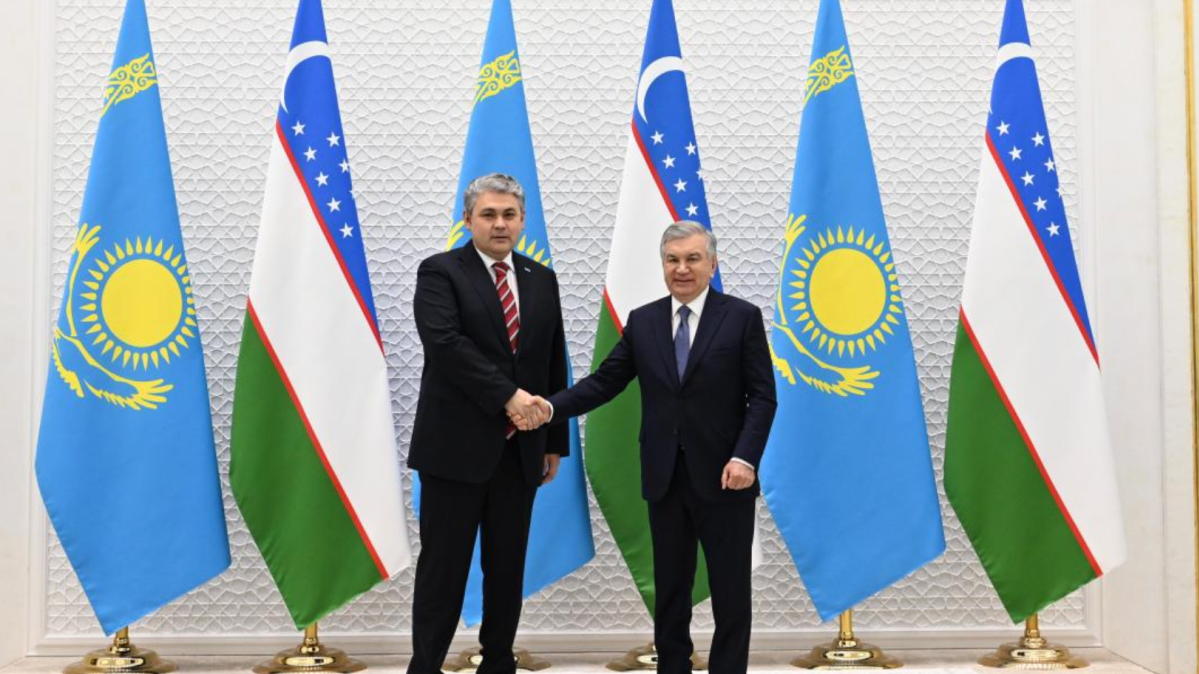
During the visit, Kosherbayev was received by Uzbekistan’s President Shavkat Mirziyoyev, with discussions focusing on bilateral cooperation and the implementation of previously agreed commitments.
The increase in trade reflects a broader shift towards more structured and predictable economic engagement. Kazakhstan remains one of Uzbekistan’s top three trading partners, and both sides are aiming to double trade to $10 billion.
This trend is increasingly underpinned by industrial cooperation. The two countries are implementing 78 joint projects with a combined value of around $1.8 billion. These initiatives signal a gradual transition from trade-led interaction to deeper economic integration based on shared production and investment.
Infrastructure is becoming a central pillar of this approach. Key projects include the International Centre for Industrial Cooperation “Central Asia”, alongside reciprocal developments such as the “Tashkent” hotel in Astana, the “Astana” hotel in Tashkent, and the “Astana” district in the Yangi Tashkent area. These initiatives are intended to facilitate business activity while reinforcing long-term economic presence.
Transport connectivity remains another priority. Kazakhstan and Uzbekistan are working to strengthen their roles as transit hubs linking Central Asia with markets in the Middle East, South Asia, and Europe.
Alongside economic cooperation, the two sides are coordinating on regional and international issues. In talks with Uzbekistan’s Foreign Minister Bakhtiyor Saidov, Kosherbayev discussed key agenda items and confirmed the intention to deepen cooperation within multilateral frameworks.
At the same time, humanitarian and educational ties are expanding. This includes the operation of university branches in Almaty and Chirchik, aimed at supporting workforce development for joint economic projects.
The visit concluded with the signing of a cooperation programme between the two foreign ministries for 2026–2027, formalising the next phase of bilateral engagement and reflecting a shift towards a more structured, long-term partnership.












What is your opinion on this topic?
Leave the first comment