A renewed wave of U.S. diplomatic activity in the South Caucasus highlights Washington’s growing focus on regional connectivity, trade and security, according to Associate Professor George Mchedlishvili of European University in Tbilisi.
Speaking to AnewZ, Mchedlishvili said simultaneous high-level engagements in Armenia and Georgia suggest the region is being elevated within U.S. foreign policy priorities, particularly as competition with Russia and China intensifies.
The remarks come as U.S. State Department representatives visited Tbilisi from 24 to 29 May for a series of meetings with government officials, opposition parties, business leaders and religious figures.
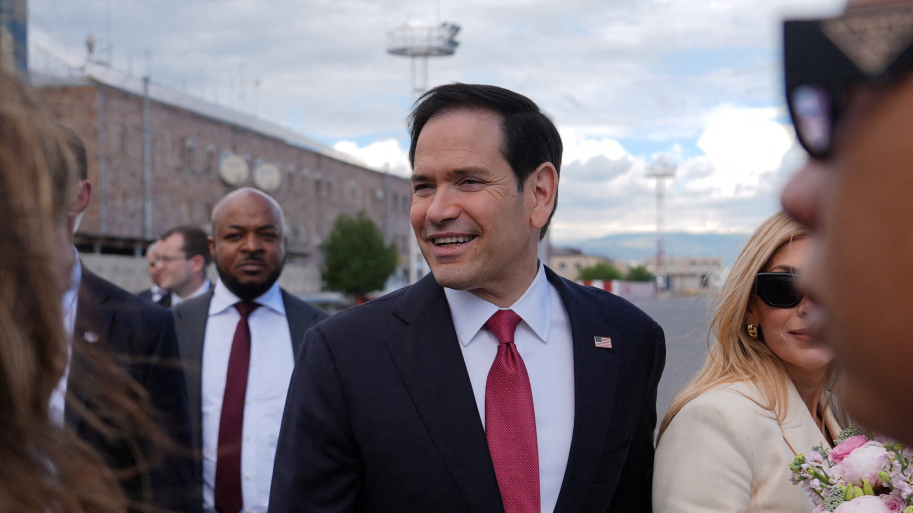
The visit follows separate discussions in Armenia involving Secretary of State Marco Rubio on regional transport connectivity under the so-called TRIPP Framework Agreement.
South Caucasus in strategic focus
Mchedlishvili said the South Caucasus is increasingly viewed in Washington as a strategically important corridor linking Europe and Asia, particularly through initiatives such as the Middle Corridor and regional transport projects.
He argued that shifting geopolitical dynamics, including Russia’s reduced reliability as a transit partner due to sanctions and the war in Ukraine, have increased the importance of alternative routes through the South Caucasus.
“The South Caucasus gains even greater importance in the strategic relations of the United States,” he said, adding that Washington is seeking a “stable and reliable region in Eurasia” as global supply chains are reconfigured.
He added that recent diplomatic activity, including U.S. engagement with Armenia, Azerbaijan and Georgia, indicates the region is moving higher up Washington’s foreign policy agenda.
Georgia’s political divide
In Tbilisi, U.S. officials held meetings with government representatives and opposition figures, alongside discussions with civil society organisations and the Georgian Orthodox Church.
Mchedlishvili said the breadth of engagement reflects Washington’s efforts to build a clearer understanding of Georgia’s domestic political landscape, which he described as increasingly polarised and defined by a “zero-sum” dynamic between the ruling Georgian Dream party and opposition forces.
He noted that the United States is seeking to reassess its approach amid shifting political alignments and competing narratives over the country’s foreign policy direction and its relations with Russia and the West.
“The U.S. authorities try to get a clear picture of what is actually happening,” he said, adding that engagement across political and societal actors is essential for shaping future relations.
Armenia’s westward shift
The expert also pointed to Armenia’s growing efforts to diversify its foreign policy and deepen ties with Western partners, including the European Union and the United States.
He said recent diplomatic developments suggest Yerevan is actively seeking to rebalance its strategic orientation away from heavy reliance on Russia, particularly in the context of economic pressures and evolving regional dynamics.
Mchedlishvili described this as part of a broader regional realignment, noting that renewed peace discussions between Armenia and Azerbaijan, alongside transport connectivity initiatives, could contribute to long-term stability in the South Caucasus.
He added that sustained U.S. involvement will be critical to maintaining momentum, warning that any inconsistency in engagement could undermine progress.
Connectivity and geopolitics
The discussion also highlighted the importance of balancing U.S. engagement across Armenia, Azerbaijan and Georgia, particularly as connectivity projects such as the Middle Corridor and the TRIPP initiative gain traction.
Mchedlishvili said the South Caucasus has the potential to serve as a “bridge between East and West”, but stressed that this role depends on sustained cooperation and careful diplomatic management.
Despite ongoing geopolitical competition, he argued that the region’s economic and strategic value could encourage broader alignment among global powers in support of stability and infrastructure development.
He added that while differences remain, there is growing recognition that the South Caucasus must function as a stable transit hub for international trade and energy flows.














What is your opinion on this topic?
Leave the first comment