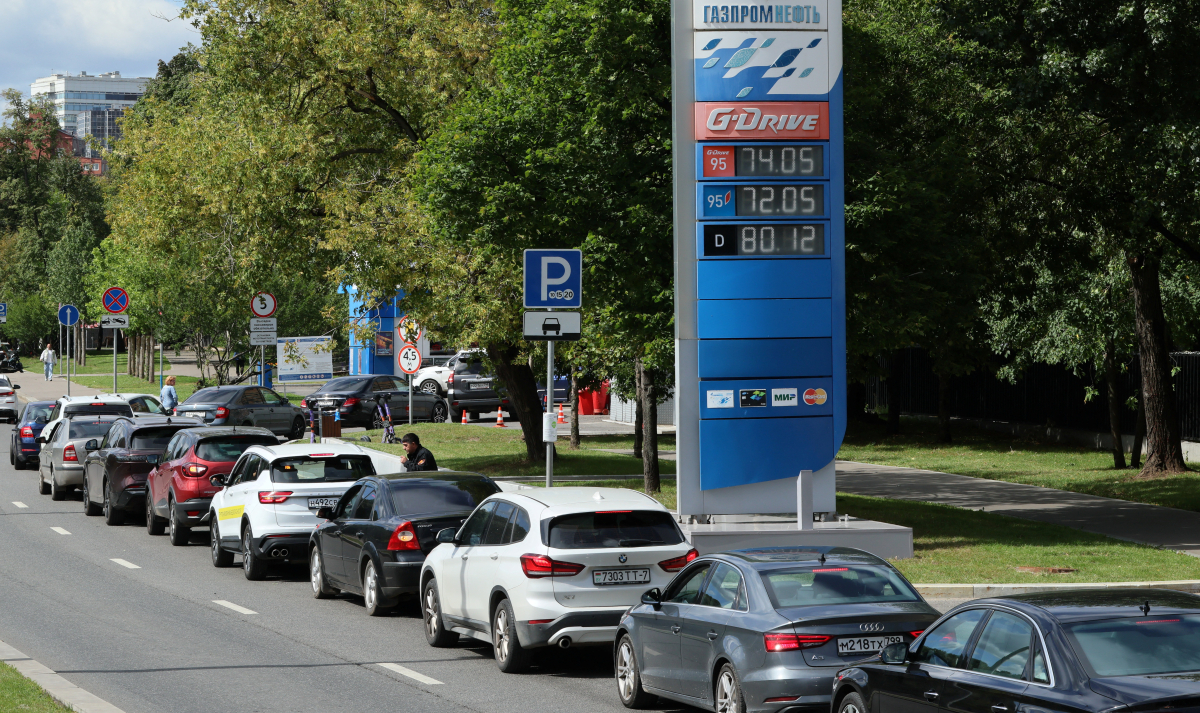
Fuel restrictions have returned to parts of Moscow and the surrounding region, adding another strain to Russia’s economy as refinery outages and rising imports weigh on the rouble.
Shortages began to gather pace in May and had spread to most Russian regions by July, but fuel stations in Moscow were able to ease an earlier wave of restrictions in June.
Ukraine has targeted Russian oil refineries in an effort to undermine Moscow's war effort and reduce energy revenues.
To boost domestic supplies, Russian authorities have banned exports of gasoline and diesel, eased fuel quality requirements and began importing petroleum products.
There were long queues at several filling stations on Wednesday (19 August), while some sites were closed or selling only diesel.
Gazprom Neft’s customer hotline said sales at its automated stations in Moscow were capped at 40 litres per customer, while other stations limited petrol to 60 litres per vehicle.
Rosneft said petrol sales at its stations across Russia were limited to 30 litres per vehicle, and Tatneft put its cap at 50 litres.
Lukoil also confirmed restrictions in Moscow and the region, citing high demand, unscheduled refinery maintenance and operational stability.
Finding fuel is 'very bad'
Motorists said they had visited multiple stations without finding petrol.
"We have been to five petrol stations already and there was no fuel. Last week, fuel was available. And now, there is no fuel again," said one Moscow resident.
Artur said he'd been waiting a long time in the queue. "Approximately 20 minutes. That is on average. This is my second attempt. First time, I reached the pump, but they said there was no fuel left. Then I made another circle and petrol became available again."
Marat is a taxi driver and he said the situation is very challenging. "Everything is very bad. To find fuel, you probably need to drive across half of Moscow. And even in this case, you will not find it. You will have to wait for two or three hours in a queue."
Pressure on rouble
The pressure is also being felt in currency markets. The rouble has fallen about 20% against the dollar since May and touched 85.44 on the interbank market at the start of the week, its weakest level since September 2025. It stood at 84.95 to the dollar at 14:27 GMT on Wednesday, according to LSEG data.
Analysts at Bank Saint Petersburg said foreign currency purchases linked to fuel imports were weighing on the rouble. Finam analysts said oil companies also needed foreign currency to buy equipment for repairing drone-damaged facilities.
Russia’s exports reached $126 billion in the second quarter, but that was not enough to support the currency. Central bank data showed forex sales by the largest exporters fell in July to $2.22 billion, the lowest level since tracking began in 2022, while Russian imports rose 26 per cent year-on-year in June.
Higher import demand is extending beyond fuel. Customs data showed car imports rose 21 per cent in the second quarter, while sales of new plug-in hybrids, mostly from China, jumped 125 per cent year-on-year in January-May as fuel shortages encouraged some buyers to consider electric vehicles.
Sberbank analysts expect the rouble to weaken to 88.20 per dollar by the end of 2026 and move close to 97 per dollar by the end of 2027, while Finam said the currency could stabilise around Russia’s 18 - 20 September parliamentary elections.
Read more:





















What is your opinion on this topic?
Leave the first comment