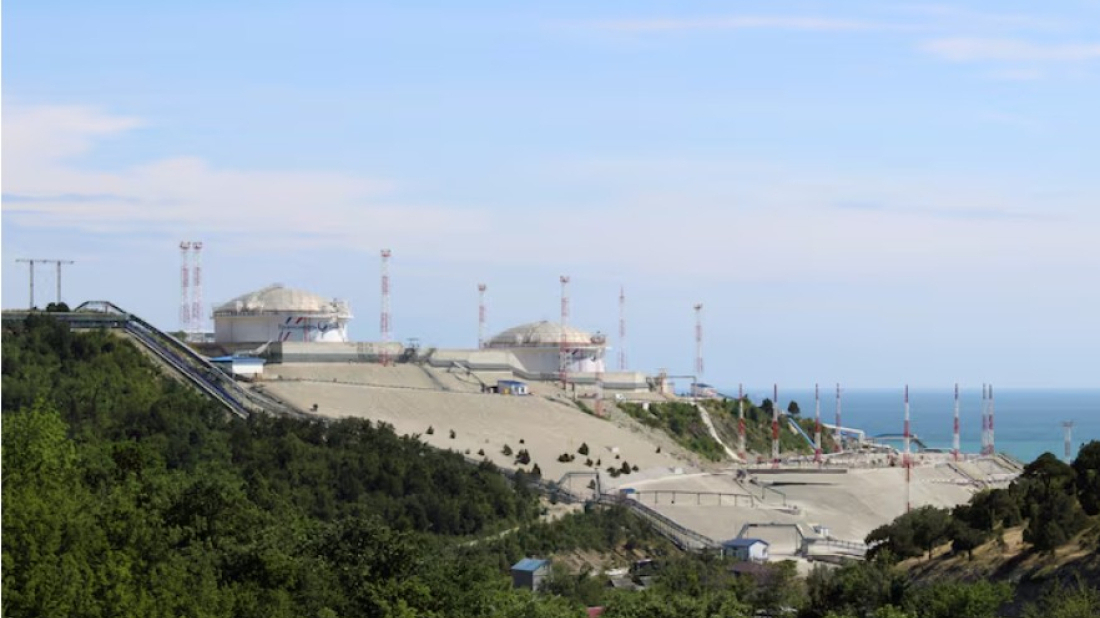
Russia, the world's second-largest oil exporter, on Wednesday imposed restrictions on another major oil export route, suspending a mooring at the Black Sea port of Novorossiisk only a day after restricting loadings from a key Caspian pipeline.
Russia produces about 9 million barrels of oil a day, or just under a 10th of global production. Its ports also ship oil from neighbouring Kazakhstan.
The restrictions were imposed as U.S. President Donald Trump has said he is unhappy with Russia and the rate of progress in peace talks with Ukraine, and threatened to impose secondary tariffs on buyers of Russian oil.
Russia's oil pipeline monopoly Transneft said it had suspended a mooring at Novorossiisk for 90 days after a snap inspection by a transport watchdog.
The Novorossiisk Commercial Sea Port (NCSP) is one of Russia's largest export outlets and the closure of one mooring is unlikely to affect its operations significantly.
"A temporary ban on operations has been imposed on oil loading berth 8. NCSP has been ordered to eliminate all identified violations by June 30, 2025," Transneft said.
Industry sources said that Berth 8 at the Sheskharis terminal handles low-sulphur diesel tankers with a deadweight of around 7,000 metric tons, mainly carrying exports to Turkey and Georgia.
An industry source also said that the berth is used to deal with small-scale vessels of up to 10,000 tons of oil products.
LSEG and industry sources' data showed that the berth handled around 100,000 tons of diesel in January-March.
Two of three moorings at a nearby terminal of the Caspian Pipeline Consortium, in which U.S. oil majors Chevron and Exxon Mobilhold stakes, were closed on Monday following the regulator's checks.
Kremlin spokesman Dmitry Peskov told reporters on a conference call that the restrictions on CPC are related to Ukrainian drone attacks on the infrastructure.
Ukraine accused Russia of launching new attacks against its energy facilities.
Ukrainian President Volodymyr Zelenskiy said a Russian drone hit an energy substation in Sumy region and artillery fire damaged a power line in Dnipropetrovsk, cutting off electricity to nearly 4,000 consumers.
Oil exports via the CPC pipeline have been set at 1.7 million barrels per day, or around 6.5 million metric tons, for April.
CPC buyers have said they are waiting for the revised loading programme. Both Kazakhstan and Chevron said on Tuesday that the flows via the pipeline were not interrupted.














What is your opinion on this topic?
Leave the first comment