Azerbaijan is expanding its diplomatic and economic footprint amid European energy insecurity and global geopolitical tensions. The Czech Prime Minister’s 27 April visit to Gabala highlighted growing Azerbaijan–Central Europe cooperation, particularly in energy, industry and defence.
Following visits by the Latvian and Ukrainian presidents and the Czech Prime Minister, Baku is attracting increased international attention amid the war in Eastern Europe, instability in the Middle East and renewed geopolitical competition.
This momentum has further reinforced Azerbaijan’s role not only as an energy supplier but also as a strategic transit and connectivity hub linking Central Asia, the South Caucasus and Europe.
Czechia recognised Azerbaijan’s independence on 8 January 1992, and diplomatic relations were established on 27 January 1993, laying the foundation for today’s political and economic cooperation.
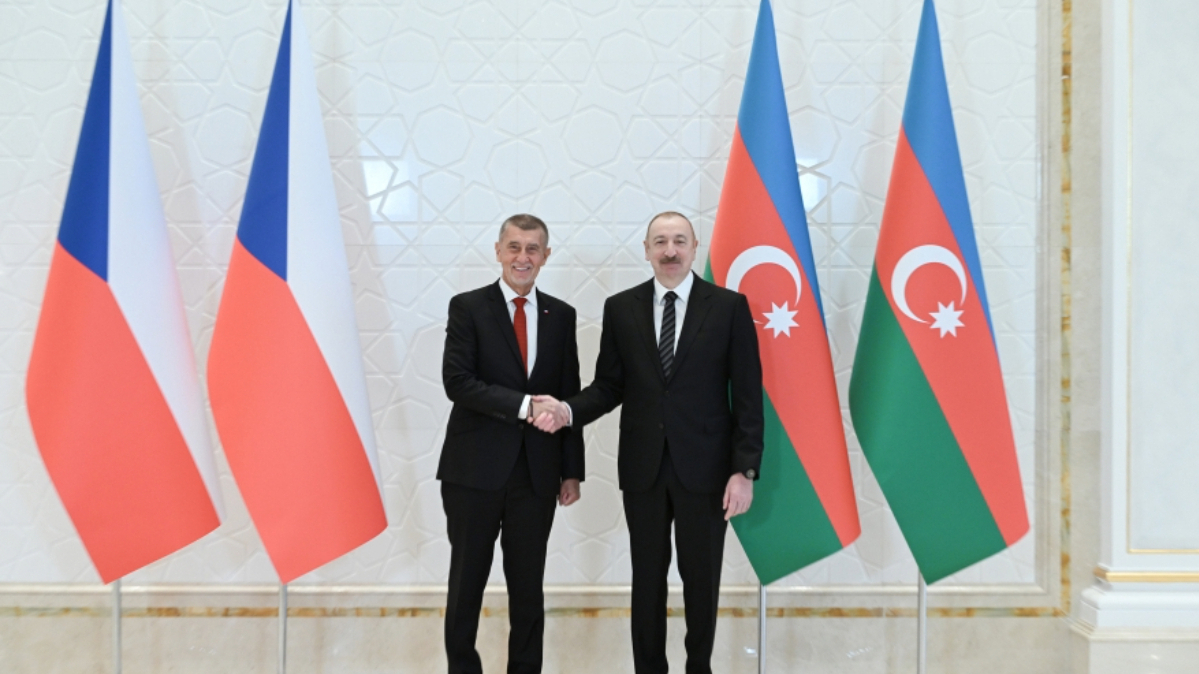
On 27 April, Ilham Aliyev received Andrej Babiš in Gabala during an official visit marked by formal ceremonies and high-level talks.
The welcoming ceremony featured a guard of honour and national flags of both countries, with the anthems performed and a military march held in their presence.
The visit continued with one-to-one and expanded meetings, followed by a business forum and joint press statements, reflecting efforts to advance bilateral cooperation across multiple sectors.
President Aliyev underlined the momentum in bilateral ties, noting: “This demonstrates the dynamic development of relations between the two countries. We have a very active political dialogue.”
Discussions covered regional, bilateral and global issues, reinforcing long-term political cooperation.
Prime Minister Babiš echoed this stance, declaring: “Azerbaijan is a strategic partner of the Czech Republic,” while emphasising the country’s rising geopolitical relevance.
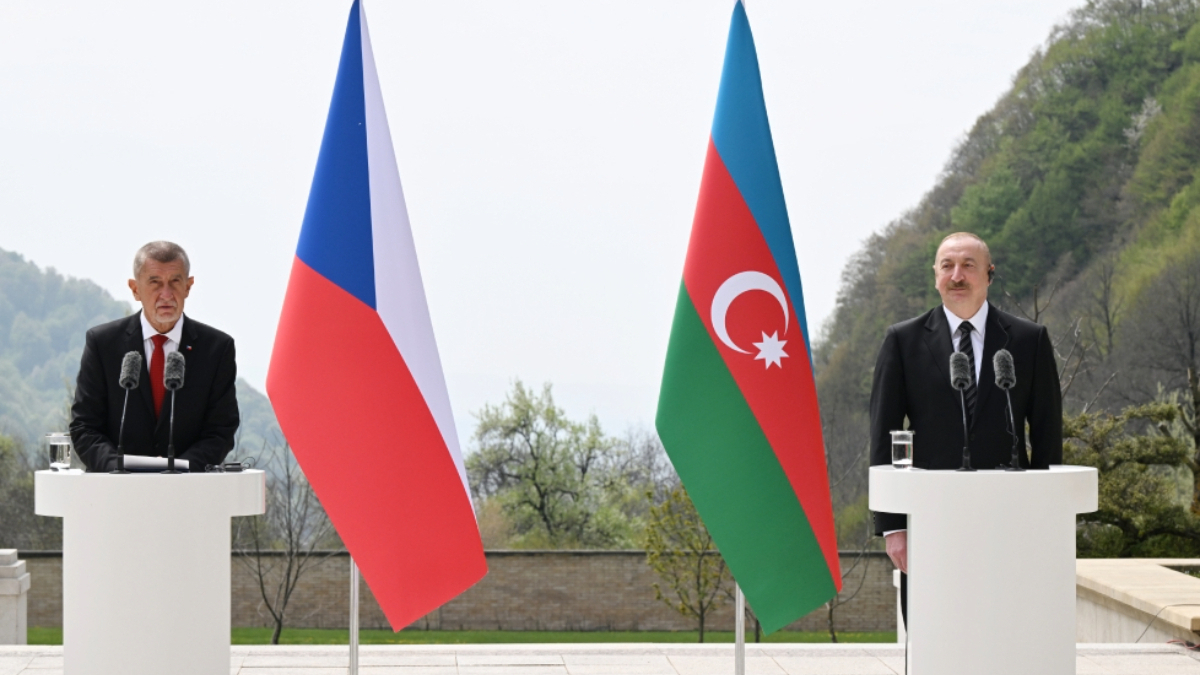
President of the Republic of Azerbaijan Ilham Aliyev and Prime Minister of the Czech Republic Andrej Babiš delivered press statements in Gabala, Azerbaijan, On 27 April, 2026.
Azertag
Energy at the core of cooperation
Energy remained the central focus of discussions, with Azerbaijan continuing to play an important role in Czech energy supply, particularly through oil exports.
Aliyev stated: “Azerbaijani oil is exported to the Czech Republic and occupies an important place in the Czech energy balance.”
He also noted: “Today, Azerbaijani gas is exported to 16 countries, 10 of which are members of the European Union.”
Babiš highlighted prospects for future cooperation in gas supply, noting that Czech energy company ČEZ is interested in long-term agreements: “We would be very pleased if we could sign a long-term contract with Azerbaijan regarding gas supply.”
Trade relations between the two countries have reached significant levels in the past, largely driven by energy exports.
In recent years, however, both sides have increasingly emphasised diversification, with a stronger focus on the non-oil sector, particularly agriculture and industry, as key areas for future cooperation.
Historically, Azerbaijan and the Czech Republic have maintained steady economic ties. Trade turnover reached around $1.5 billion in 2013, the majority of which was driven by Azerbaijani oil exports.
Azerbaijan's growing geopolitical role
Speaking to Inside Politics on AnewZ, Glen Howard, President and Chairman of the Saratoga Foundation, said Azerbaijan’s rising importance reflects wider geopolitical shifts in Europe driven by energy insecurity.
He stated that Europe is undergoing “a kind of change in the geopolitical calibration of Europe,” adding that “Azerbaijan and the Caucasus… have assumed increased strategic importance.”
Howard also described Azerbaijan as a key energy hub between Europe and Asia, noting that “the entire geopolitics of the Caucasus with Azerbaijan playing a very central role… is critically important.”
On diplomacy, he suggested Azerbaijan’s role is expanding beyond energy, saying “Azerbaijan is in the driver’s seat now,” increasingly acting as a potential mediator and regional platform for negotiations.
Economic and business cooperation
Bilateral trade exceeds $800 million but remains largely dependent on Azerbaijani oil exports. Both sides stressed the importance of diversifying economic relations.
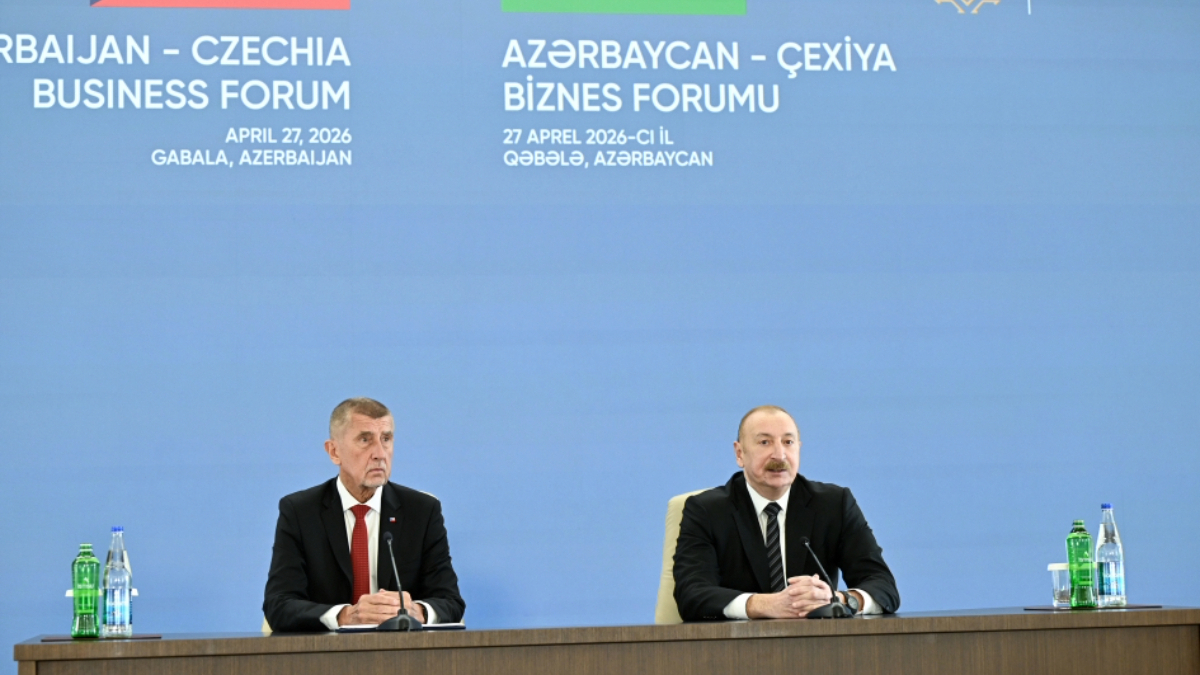
The Azerbaijan–Czechia business forum brought together around 50 Czech companies, focusing on transport, infrastructure and industrial cooperation.
Czech firms also expressed interest in projects such as the Baku Metro and potential joint production initiatives in Azerbaijan.
An Azerbaijan-Czechia business forum was held on 27 April, 2026, in Gabala, Azerbaijan.
Azertag
Defence and industrial cooperation
Defence cooperation is emerging as another important area. Azerbaijan and Czechia are negotiating joint production projects in the military-industrial sector.
Aliyev stated: “We purchase many military-grade products from the Czech Republic… negotiations are underway on specific projects regarding joint production.”
Czech defence and aviation companies also presented proposals for modernisation and industrial collaboration.
Long-term partnership outlook
Both leaders reaffirmed their commitment to strengthening cooperation across sectors, from energy and defence to technology and education.
The visit concluded with optimism about future projects and institutional mechanisms, including the revival of the intergovernmental commission.
Watch the full interview with Glen Howard on Inside Politics with Anastasiya Lavrina, on Monday night at 17:15 CEST.
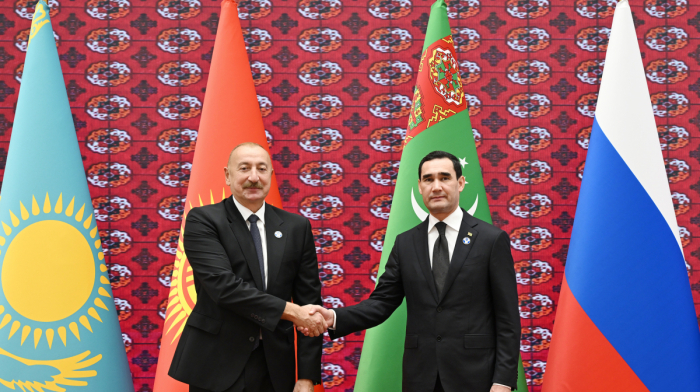
Leaders of countries from the Commonwealth of Independent States (CIS) have agreed to hold coordinated population censuses around 2030. They took the decision at the CIS Council of Heads of State meeting in Awaza, Turkmenistan on Friday, media reported.
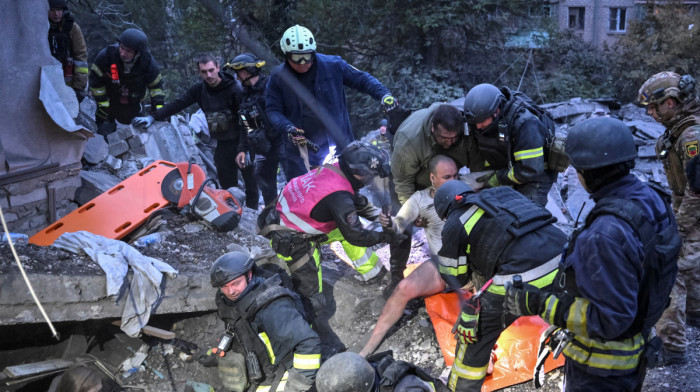
The explosion at King Khalid International Airport in Riyadh on Saturday afternoon killed at least 12 people and injured a further 309, according to Saudi Arabia’s Civil Aviation Authority. The airport remains closed until further notice.
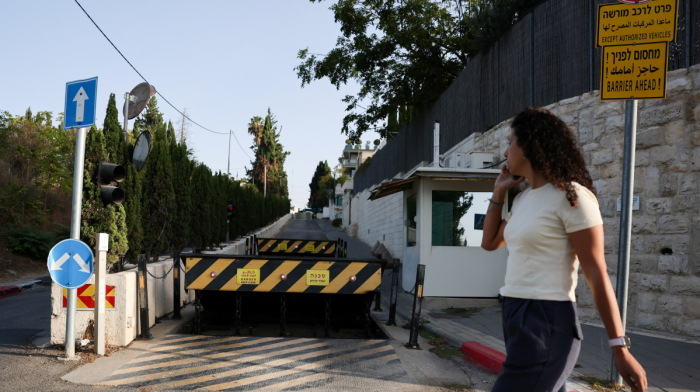
Britain and Israel have reached a temporary compromise over the future of the British Consulate General in East Jerusalem, easing a diplomatic dispute that had threatened to further strain relations between the two countries.
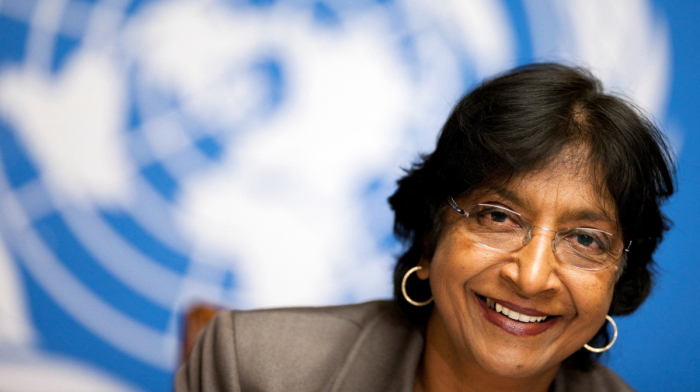
South African judge Navanethem “Navi” Pillay won the Nobel Peace Prize on Friday “for her efforts to promote peace and international law,” the Norwegian Nobel Committee said.
The U.S. has imposed sanctions on the International Criminal Court (ICC) on Friday (9 October) escalating tensions with European allies and potentially targeting companies that provide services to the tribunal. The move came hours after former ICC judge Navi Pillay won the Nobel Peace Prize.
The explosion at King Khalid International Airport in Riyadh on Saturday afternoon killed at least 12 people and injured a further 309, according to Saudi Arabia’s Civil Aviation Authority. The airport remains closed until further notice.
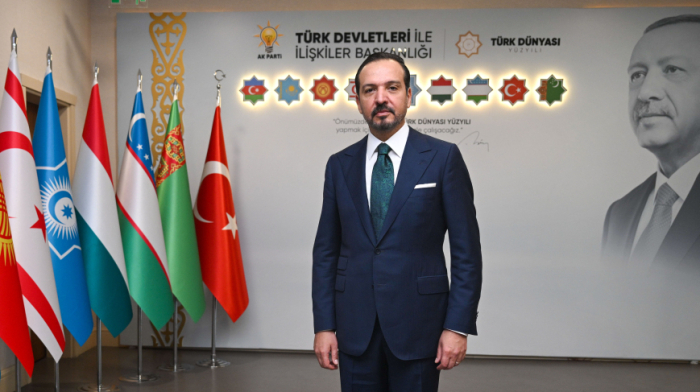
Turkic states are assessing the feasibility of passport-free travel between countries using national ID cards, Kürşad Zorlu, the Deputy Chairman of Türkiye’s ruling AK Party said on Saturday.
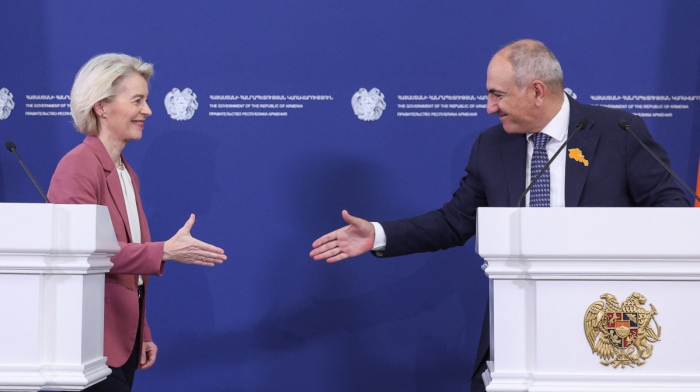
European Union measures suspending import duties on 80 per cent of Armenian exports to the bloc came into effect on Saturday. The temporary liberalisation measures are aimed at supporting Armenian producers and exporters following trade restrictions imposed on the country's products by Russia.
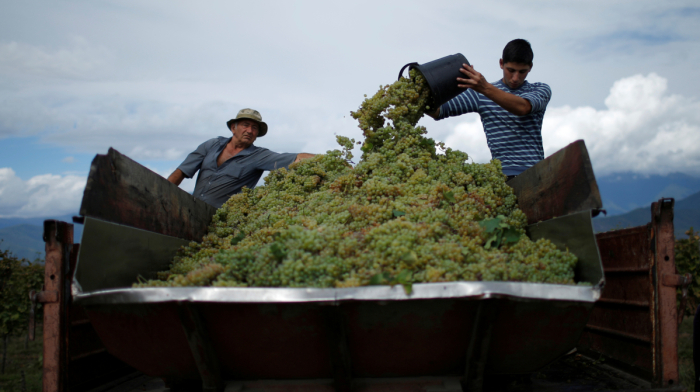
Georgia is enjoying one of its biggest and highest-quality grape harvests since independence. By 6 October, growers in the country's main wine-producing region, Kakheti, had delivered 182,210 tonnes of grapes, with 99 per cent rated medium or high quality, despite recent protests over prices.
Uzbekistan has unveiled plans to deepen economic ties with Central Asia and Azerbaijan, proposing shared artificial intelligence infrastructure, a critical minerals alliance and a regional trade strategy extending to 2035.
Download the AnewZ app
You can download the AnewZ application from Play Store and the App Store.












What is your opinion on this topic?
Leave the first comment