China will address U.S. concerns about rare earth shortages, the White House said on Sunday in a recap of agreements struck at last week's leaders summit that fell short of calling for the removal of restrictions that have disrupted U.S. aerospace and semiconductor manufacturing.
Introduced in April 2025 in retaliation for U.S. President Donald Trump's so-called Liberation Day tariffs, Beijing' controls continue to tightly restrict exports of certain rare earths despite a deal at last October's Busan summit where the White House said China committed to "effectively eliminate" all current and proposed critical mineral export controls.
Six months on, the White House's latest statement now tacitly acknowledges that China's export control regime is here to stay. It also did not mention whether a one-year truce on a wider set of Chinese rare earth restrictions, due to expire in November, will be extended.
The Sunday fact sheet summarising key takeaways from the summit in Beijing said China would address U.S. concerns about shortages of critical minerals and rare earths including yttrium, scandium and indium.
It also said China would address U.S. concerns over export restrictions on rare earth processing technology, which Beijing tightly guards to protect domestic producers responsible for almost all of the world's production.
Unlike the White House, China's Ministry of Commerce made no mention of rare earths in its own summary published on Saturday.
"The gap in this case is not ideal, but fine," said Cory Combs, Associate Director at macro research firm Trivium China.
"What's most important is that both sides have clearly, credibly indicated interest in stability and they are able to effectively market that message to their own domestic audiences."
While rare earth export licences are flowing to sectors such as autos and consumer electronics, companies in sensitive sectors where rare earths have potential military applications continue to experience delays.
Reuters previously reported that ongoing shortages of yttrium - part of a heat-protective coating in aircraft engines - and scandium used in chip manufacturing have severely impacted U.S. industry. Companies have lobbied Washington to intervene with Beijing.
Indium and chips
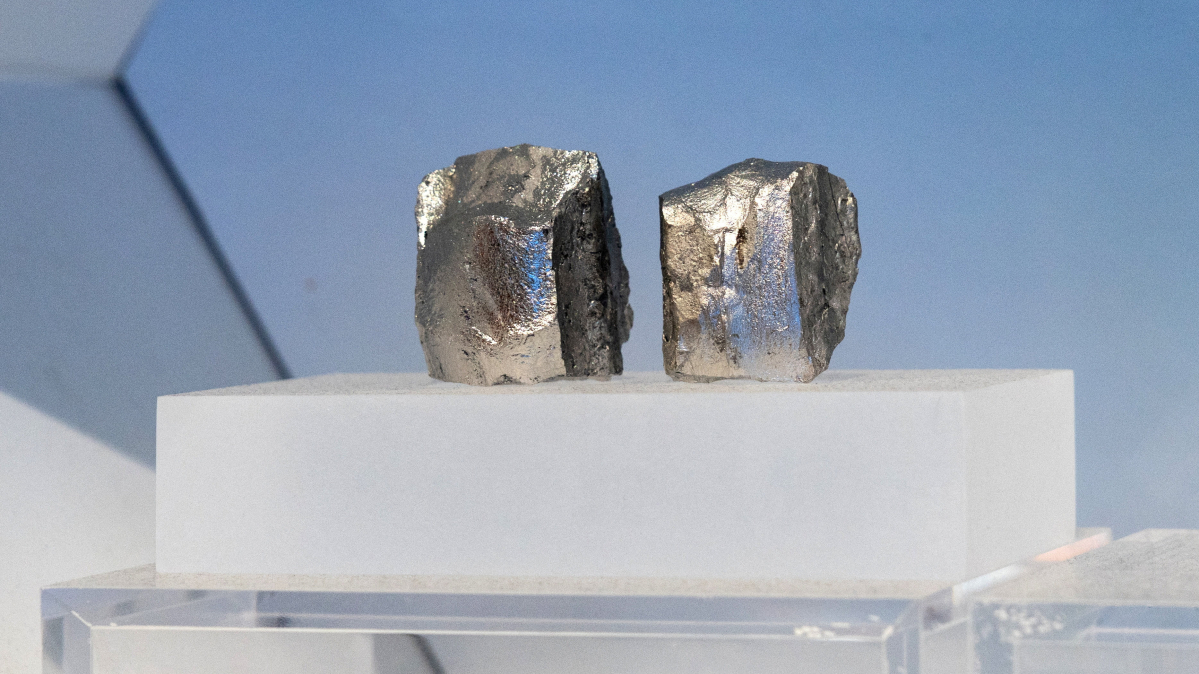
One critical mineral mentioned for the first time by the White House is indium, which plays a key role in the upstream and downstream semiconductor supply chain and has been on a Chinese export control list since February 2025.
Its compound indium phosphide is crucial for making next-generation photonic chips that use light instead of electricity to process data, as well as high-speed optical lasers used in optical fibre and 6G networks. Another compound, indium tin oxide, is used to make LED screens in consumer electronics.
Manufacturers such as Coherent are stepping up production of photonic chips that are rapidly being integrated into the development of artificial intelligence (AI) data centres around the world.
Chinese exports of indium have fallen dramatically in the 14 months since February 2025 versus the same period the year before, customs data showed. Shipments are down by about two-thirds globally and by 77% to the U.S.
Coherent's CEO was part of the executive delegation accompanying Trump on his visit, with all participating firms facing regulatory or political issues in China. Coherent holds a 40% global market share in indium phosphide optical components.
"If Chinese licensing remains slow or politically contingent, Coherent could face higher input costs, allocation problems, delayed capacity expansion, and difficulty meeting hyperscaler demand," said Paul Triolo, Partner and China technology policy lead at DGA-Albright Stonebridge Group.



















What is your opinion on this topic?
Leave the first comment