Armenia is host to the 8th meeting of the European Political Community which opened in Yerevan on Monday (4 May). Prime Minister Nikol Pashinyan welcomed European Union leaders and heads of international organisations, including NATO Secretary General Mark Rutte.
The U.S.-Israel war against Iran, the conflict in Ukraine, and EU security are expected to dominate the agenda at the talks.
In his opening remarks, Armenian Prime Minister Nikol Pashinyan said, "To consider this summit historic for Armenia, not to mention the very summit of its own which is the first European event of this scale hosted by Armenia ever. Dear friends, thank you for coauthoring this history for Armenia."
Azerbaijan's President Ilham Aliyev said at the summit that peace between Azerbaijan and Armenia is a reality, according to Report News Agency.
“Both Armenia and Azerbaijan already see the practical benefits of peace,” Aliyev said. These include deliveries of cargo from Azerbaijan to Armenia and the proposed Trump Route for International Peace and Prosperity.
But he also took aim at what he described as inconsistent treatment within international bodies, arguing that Azerbaijan’s territorial integrity should be afforded the same recognition as that of other countries, including in forums such as the Parliamentary Assembly of the Council of Europe (PACE).
“Unfortunately, double standards are today a kind of modus operandi for PACE," he said. "Azerbaijan’s territorial integrity has the same value as that of any other country. In this issue, double standards are unacceptable.”
President of the European Council Antonio Costa said, "The geopolitical situation in Europe finds itself with the ongoing Russian war of aggression against Ukraine and the conflict in the Middle East demonstrate that our continent needs a 360 vision for its security."
However he added that "The agreement between Armenia and Azerbaijan is a story of peace in Europe that must be celebrated."
Meanwhile, Canadian Prime Minister Mark Carney was welcomed as the first leader from a non‑European country to take part in the summit.
Costa said Canada was a close partner of the summit’s participants.
"Canada is more than like-minded, it is a close partner," Costa explained.
"Our shared values are born of that common history. Freedom, rule of law, democracy, pluralism. And these values shape our relationships, determine our priorities, and point to our common future," Carney said.
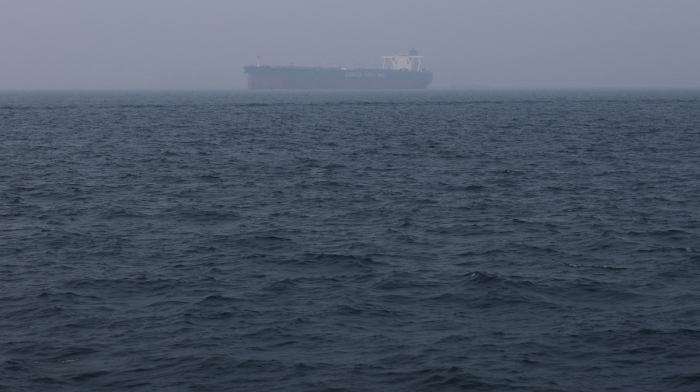
EU's Foreign Policy chief Kaja Kallas spoke of diversifying trade routes in a reference to the war in Iran and the subsequent blockade of the Hormuz Strait that has up ended global energy supplies and threatens a severe economic downturn for many countries.
After the summit, Kallas will head to Azerbaijan for high level meetings including with President Aliyev.
EU Commission President Ursula Von der Leyen told reporters that Europe would pursue an independent security and defence policy.
"We have to step up our military capabilities to be able to defend and protect ourselves. There is a vast amount of money available for the investment. Now, we really have to step up and speed up the production process for military capabilities," she said.
On wider defence policy, NATO Secretary General Mark Rutte said that European nations had "gotten the message" from U.S. President Donald Trump and were now ensuring that agreements on the use of military bases by the Americans were being implemented.
Trump has accused some NATO nations of not doing enough to support the United States in the Iran war. In a further sign of his discontent with European allies, the U.S. announced on Friday plans to withdraw 5,000 troops from Germany.
"Yes, there has been some disappointment from the U.S. side, but Europeans have listened," Rutte told reporters at a European Political Community summit in Armenia.
"They are now making sure that all the bilateral basing agreements are being implemented," he added.
NATO member Spain has said that military bases on its territory cannot be used for the war with Iran. But Rutte said other NATO countries such as Montenegro, Croatia, Romania, Portugal, Greece, Italy, Britain, France and Germany were implementing requests for the use of bases and other logistical support.
Rutte also said "more and more" European nations were pre-positioning assets such as minesweepers close to the Persian Gulf to be ready for a "next phase" of the conflict with Iran.
Multiple European nations have said they are willing to take part in a mission to help ensure freedom of navigation through the Strait of Hormuz once the war is over.
The two‑day summit, hosted by Armenia, is taking place under the theme “Building the Future: Unity and Stability in Europe” and is being co‑chaired by the president of the European Council, António Costa, and Armenia’s Prime Minister, Nikol Pashinyan.
More than 40 countries are represented at the summit, including Ukraine, France, the UK and Italy. A first‑ever European Union–Armenia summit is due to follow on Tuesday, aimed at strengthening bilateral ties.
Last year, Armenia signalled its intention to pursue closer integration with the EU, a move widely seen as part of a shift away from Moscow’s influence.
Sideline meetings
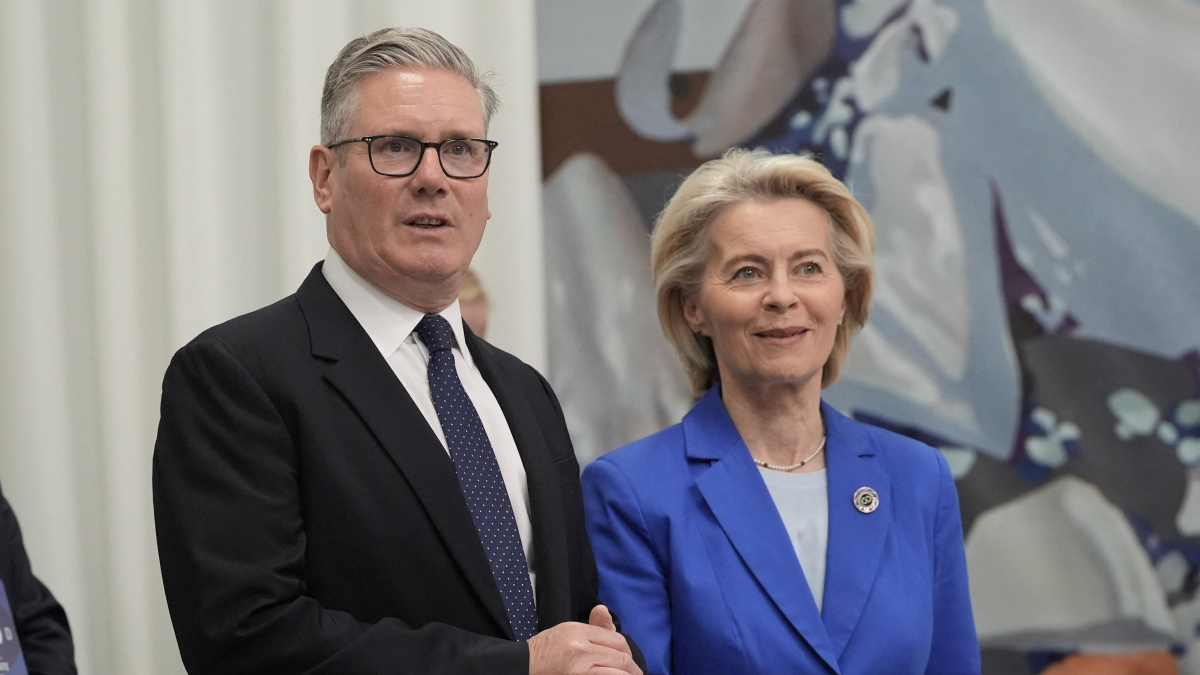
Ukrainian President Volodymyr Zelenskyy met with European Union heads of state on the sidelines already. EU Commission chief Ursula Von der Leyen, NATO head Mark Rutte, British Prime Minister Keir Starmer and French President Emmanuel Macron were among the leaders present.
Britain is set to enter talks to join the European Union's £78 billion loan ($106 billion) to Ukraine, the government said on Sunday (May 3), in a further sign of deepening European defence ties under rising U.S. pressure.
Starmer is expected to tell the leaders at the summit that a discussion forum set up after Russia's invasion in 2022 - that Britain wants to work with the EU to support Ukraine in getting vital military equipment, his office said.
Finnish Prime Minister Petteri Orpo also joined the meeting. Zelenskyy said that he had offered Finland to strengthen the two countries' partnership by signing a drone deal, sharing technology and combat expertise developed during the four-year war with Russia.
Türkiye is attending at its highest political level since 2008, represented by Vice President Cevdet Yilmaz. His presence reflects renewed momentum in the normalisation process between Türkiye and Armenia, with relations entering one of their most active phases since the 1990s.
Officials from both sides recently met in the Turkish city of Kars to discuss reopening the long‑closed Kars–Gyumri railway, a potentially significant route for regional trade.
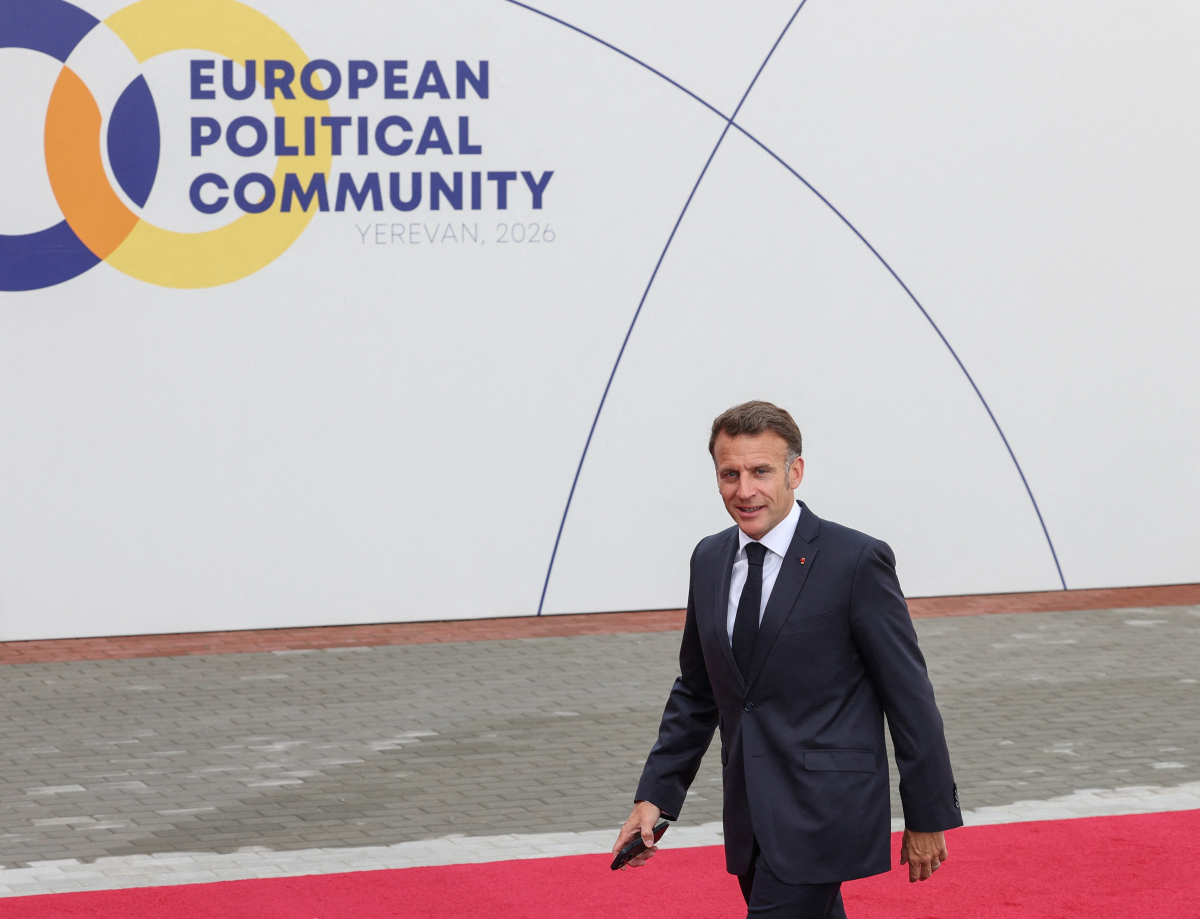
Speaking as he arrived at the summit, France’s President said Europe was developing its own security capabilities and taking greater responsibility for defence. In regards to U.S. President Donald Trump's announcement to escort ships through the Strait of Hormuz on Monday, Emmanuel Macron said France supported the reopening of the Strait of Hormuz but would not take part in any operation involving force under what he described as an unclear framework.
He added that a coordinated approach between Iran and the U.S. offered the only sustainable solution to restoring free navigation through the waterway.
Regional tensions have risen sharply in recent months following U.S. and Israeli strikes against Iran and subsequent retaliatory actions. Since mid‑April, Washington has enforced a naval operation affecting Iranian maritime traffic in the strait. A ceasefire brokered last month through Pakistani mediation has been extended, but negotiations have yet to deliver a lasting settlement.











What is your opinion on this topic?
Leave the first comment