The AnewZ Opinion section provides a platform for independent voices to share expert perspectives on global and regional issues. The views expressed are solely those of the authors and do not represent the official position of AnewZ
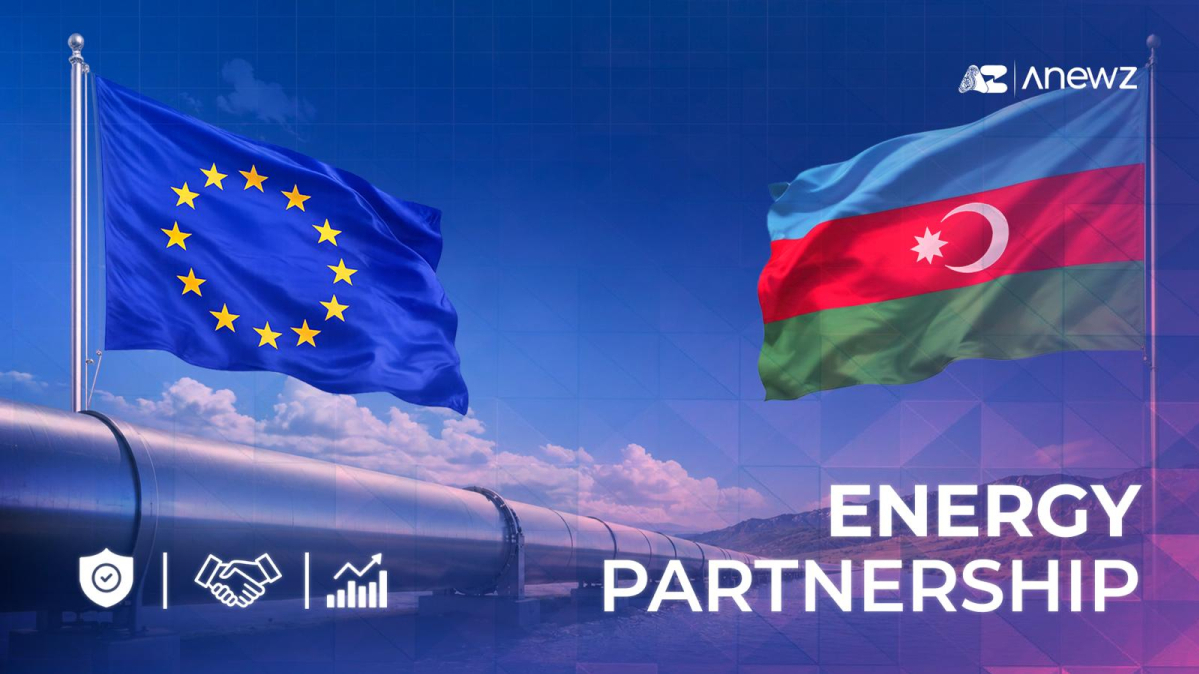
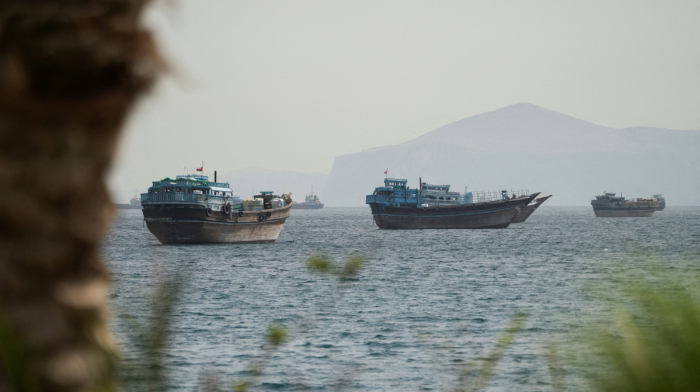
The European Union entered 2026 under conditions of exceptioal tensions in the energy markets. Due to the upheaval from Russia’s invasion of Ukraine, unrest in the Middle East with the closure of Strait of Hormuz, and fierce competetion for LNG , the whole new geopolitical landscape has reshaped.
In this new environment, the reliability of supply had come to outweigh concerns about costs. It was against this backdrop that the European Union turned to Azerbaijan as a trusted and dependable partner in energy supply.
The clearest confirmation of this came on 5 May, when Kaja Kallas visited Baku, becoming the most senior EU foreign policy official to visit Azerbaijan during the current crisis period.
During her meeting with President Ilham Aliyev, Kallas was informed that Azerbaijani gas had, for the first time, begun reaching Germany and Austria, extending the Southern Gas Corridor deep into the core of Europe’s largest economy. Her response left little ambiguity regarding Brussels’ intentions.
Kallas described Azerbaijan as “a valued and reliable energy partner for the European Union,” and emphasised that “there is clear scope to deepen our cooperation,” and signalled openness to a “more structured partnership.” She used language which in EU diplomatic practice indicates a deliberate elevation of bilateral relations.
Importantly, she framed this ambition in terms extending far beyond energy supplies alone, stressing that “strengthening connectivity between the EU, the South Caucasus, and Central Asia is in our shared strategic interest.”
Within a matter of weeks, what had initially emerged as short-term crisis management was increasingly reframed as part of a broader long-term strategic architecture. Azerbaijan was no longer viewed merely as a dependable emergency supplier. It was gradually becoming one of the central pillars of the European Union’s wider Eurasian connectivity vision.
This elevated status had, in fact, been building for some time. A high-level endorsement had already been delivered following a Foreign Affairs Council meeting in Luxembourg on 21 April.
Speaking after the meeting, EU's Foreign Policy Chief Kaja Kallas called Azerbaijan a “very reliable energy partner” and announced plans to deepen ties across energy, trade, and connectivity.
Kallas underscored the broader strategic value of the South Caucasus for European stability, pledging the resumption of negotiations on a new bilateral agreement, signalling expanding EU support for Azerbaijan's demining efforts in Garabagh.
The timing of her remarks was not just a coincidence. Coming just weeks after Commissioner Dan Jørgensen's visit to Baku and President Antonio Costa’s meeting with Ilham Aliyev, Kallas’ statement confirmed that Brussels reliance on Azerbaijan’s gas has become explicit foreign policy.
Why Azerbaijan? Logic of structural irreplaceability
This shift in the EU-Azerbaijan relations arises a logical question: Why Azerbaijan, specifically? Why is that Brussels, despite having very incentive to diversify away from any single point of dependence, finds itself anchoring its long-term energy architecture around a country that occupied only a limited place in European strategic calculations a decade ago?
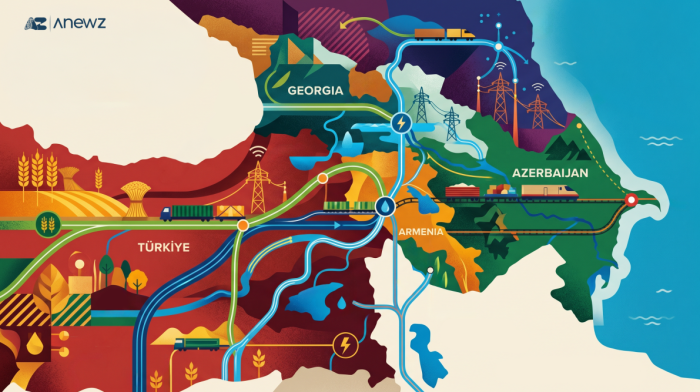
The answer lies in a structural logic that no other supplier can replicate. Azerbaijan is a state evolving into a fully developed transit hub, positioned at the intersection of Eurasian energy and trade corridors. Therefore, this transit function explains why Azerbaijan occupies a different position in EU strategic thinking compared to suppliers such as Algeria, Qatar, or the United States.
While these countries contribute to diversification through volume, none offers an overland and politically stable gateway into the Caspian and Central Asian space.
Azerbaijan, by contrast, occupies a unique geographic position as the only caspian littoral state on the western shore with fully operational cross-Caspian transit infrastructure. This infrastructure includes the Port of Baku as the Capian’s largest and busiest hub, featuring oil terminal at Dubendy, alongside its modern expansion, the Alat International Sea Trade Port near Baku.
Most importantly, the Port of Alat is further enhaced into the Alat Free Economic Zone (AFEZ), Azerbaijan's premier export-oriented industrial hub. Strategically positioned at the intersection of the East-West Middle Corridor and North-South transport routes, the zone provides ready-to-use industrial plots equipped with full infrastructure, including gas, water, electricity, sewage systems, and road connectivity, while offering exemptions from corporate tax, VAT, property tax, customs duties, and personal income tax for export-oriented firms.
This infrastructure is reinforced with integrated rail connections to Georgia and Türkiye through the Baku-Tbilisi-Kars railway. As a result, westbound flows of energy, trade, and increasingly digital connectivity converge through Azerbaijani territory.
Equally significant are Baku’s own policy choices. Over the past decade, Azerbaijan has consistently invested in transforming its transit potential into operational reality. One clear example of it is Azerbaijan’s active role developing the Middle Corridor, the multimodal Trans-Caspian route linking Central Asia and western China to Europe while bypassing Russia and Iran.
Yet Azerbaijan has not limited its ambitions to a single East-West axis. Complementing the Middle corridor, the Trump Route for International Peace and Prosperity (TRIPP), established after signing of the Washington Declaration on 8 August, 2025, extends Azerbaijan’s connectivity southward. The fact that TRIPP has already entered into operation, including the export of 12,000 tons of Azerbaijani oil products to Armenia as highlighted in President Aliyev’s video address during the 2026 European Political Community Summit in Yerevan, demonstrates that this southern vector has moved beyond political symbolism and into practical economic integration.
Thus, Europe’s engagement with Azerbaijan extends well beyond securing Caspian gas volumes. It increasingly represents acces to a broader resource base of Central Asia, a region rich in natural gas, oil, and critical minerals that are becoming central to the EU’s long-term diversification strategy.
Central Asian producers such as Kazakhstan, Turkmenistan, and Uzbekistan possess significant resource potential, yet their access to European markets depends on crossing the Caspian and entering Azerbaijan's transport network.
Turkmenistan possesses one of the world's largest proven natural gas reserves, with estimated around 27.4 trillion cubic metres. Yet Turkmen gas currently reaches external markets primarily through Russia or Iran, both of which present political and strategic complications for Brussels.
Kazakhstan combines approximately 3.3 trillion cubic metres of natural gas with around 30 billion barrels of oil, in addition to uranium and rare earth deposits that are increasingly important for Europe's green transition.
Kazakh oil already moves westward through the Baku–Tbilisi–Ceyhan pipeline, although any future gas expansion remains dependent on Caspian transit via Azerbaijan.
Uzbekistan faces similar constraints despite holding an estimated 1.8 trillion cubic metres of gas alongside growing condensate production. Collectively, the reserves of these three states amount to roughly 40 trillion cubic metres. And geography makes Azerbaijan the indispensable gateway connecting these resources to European markets.
The European Union’s response has increasingly reflected the scale of this opportunity. Through the EU’s Global Gateway initiative and related connectivity frameworks, Brussels has committed substantial financial and institutional resources to strengthening transport and infrastructure links across the South Caucasus and Central Asia.
Consequently, every new European investment further reinforces the same underlying geographic reality. Azerbaijan has gradually become the central connective node within the wider Eurasian transit architecture, while Baku has simultaneously demonstated both the political willingness and institutional capacity to continue this role.
Conclusion
Overall, the European Union’s turn toward Azerbaijan is not accidental, nor is it merely a product of circumstances. Azerbaijan has become a “pivotal state”, a state whose behaviour, stability, and strategic choices have outsized consequences for a larger regional system. Baku does not export the largest volumes in absolute terms, but it occupies a structurally critical position that cannot easily be replicated by any combination of alternative suppliers.
This pivotal status rests on three mutually reinforcing foundations. First, Azerbaijan holds “transit position” through wich all viable cross-Caspian flows must pass. This geographic position is reinforced by the existence of large-scale infrastructure already embedded within European energy security calculations, most notably the Southern Gas Corridor and its interconnected components including TANAP, and TAP.
The substantial financial and political investments already committed to these projects have created long-term incentives for all participating actors to preserve and expand the corridor’s operational role.
Second, Azerbaijan’s strategic value derives not only from its own hydrocarbon exports, but from its function as the principal gateway connecting Europe to the far larger resource base of Central Asia. Through Azerbaijani territory, the European Union gains potential access to Turkmenistan’s massive natural gas reserves, Kazakhstan’s oil and uranium resources, and the broader economic potential of the Central Asian region. In this sense, Azerbaijan increasingly serves not simply as an energy supplier, but as a regional connector capable of transforming energy corridors into wider platforms for trade, transport, and digital integration across Eurasia.
Third, the scope of EU-Azerbaijan cooperation has gradually expanded beyond traditional hydrocarbons into renewable energy and green connectivity projects. Initiatives involving electricity exports from the South Caucasus to Europe, including Black Sea submarine cable projects, indicate that the partnership is evolving toward a more diversified and multilayered energy relationship. Rather than replacing existing gas infrastructure, these projects are being constructed alongside it, thereby deepening the long-term strategic interdependence between Azerbaijan and the European Union.
Looking ahead, this partnership will likely deepen into critical minerals collaboration, leveraging South Caucasus deposits to secure EU supply chains for the green transition. These dynamics position Azerbaijan not simply as an alternative source, but as an increasingly important pillar within the EU’s evolving energy security architecture.












What is your opinion on this topic?
Leave the first comment