AnewZ has premiered its new investigative documentary, Shadow of the Cross, examining the power, history and contested role of one of the world’s most recognised humanitarian symbols.
The film follows the Red Cross emblem across war, occupation, humanitarian corridors and public trust crises. It asks a direct question: when an institution is trusted enough to enter prisons, front lines and conflict zones, who ensures that this trust is not abused?
The documentary opens with Theresienstadt, where Nazi authorities staged a false image of life inside the ghetto before and after a Red Cross visit in 1944. The film uses this moment to examine how humanitarian access can be controlled by the side that controls the scene, and how a witness can be used to give a staged reality the appearance of truth.
The story then moves to the Second World War and the fate of Soviet prisoners of war. By 1945, more than five million Soviet POWs had passed into Nazi captivity, and more than three million never returned. The documentary revisits the early failures of humanitarian protection and asks what neutrality means when crimes are already visible.
A major part of the film focuses on Azerbaijan and the first Garabagh war. It examines claims around the International Committee of the Red Cross, its operations in Khankendi, Azerbaijan’s territorial integrity, and the cases of Azerbaijani citizens who were visited and registered by ICRC staff while held in Armenia and the occupied Azerbaijani territories.
The documentary also looks at the fate of nearly four thousand Azerbaijanis who were taken prisoner, held hostage or went missing during the first Garabagh war. It highlights the case of 54 Azerbaijani citizens officially registered after ICRC visits. Of those 54, 17 bodies were returned, 33 were reported dead in detention but their bodies were not returned, and no further information was provided about four others.
Another section examines the Lachin checkpoint case. According to Azerbaijani authorities, vehicles operating under ICRC arrangements were found carrying smuggled mobile phones, cigarettes and petrol. The film asks what happens when a humanitarian corridor, built on trust, becomes part of wider questions over access, accountability and wartime movement.
The film then turns to Ukraine and the Russian Red Cross. It examines Bucha, occupied Ukrainian territories, Red Cross-branded structures in Donetsk, Luhansk and Zaporizhzhia, reported international funding to the Russian Red Cross, and concerns raised over alleged links to Kremlin-aligned structures.
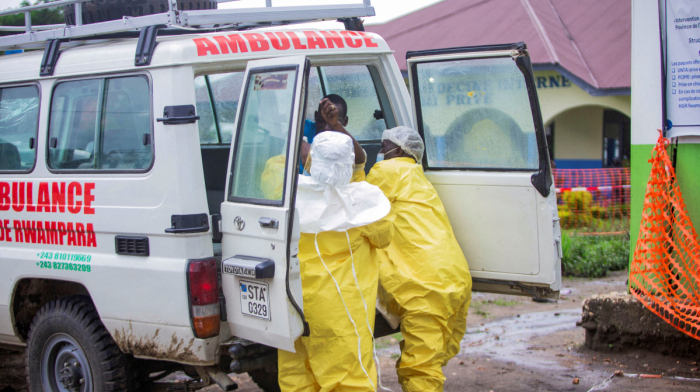
The final section widens the lens beyond war zones. It looks at the Red Cross Society of China after the Guo Meimei scandal and the collapse of public confidence around charity funds. It also examines West Africa, where the Red Cross confirmed that more than $5 million in aid money was lost to fraud and corruption during the Ebola response.
Shadow of the Cross does not question the need for humanitarian work. It asks whether humanitarian power itself receives enough scrutiny.
The film’s central question is simple: if the emblem can open doors closed to others, who watches what happens after those doors open?













What is your opinion on this topic?
Leave the first comment