China joins global effort to tackle deadly Ebola outbreak in Central Africa
China is sending doctors, medical teams and emergency supplies to help combat a growing Ebola outbreak in Central Africa, joining an international eff...
Shadow Trade is an investigative documentary by AnewZ that examines how global sanctions imposed after Russia’s 2022 war in Ukraine have been weakened through informal trade routes, permissive transit regimes, and overlooked commercial practices.
The film focuses on Armenia’s emergence as a re-export hub for dual-use technologies, sanctioned components, and sensitive goods that ultimately support Russia’s military capacity. What is often presented as economic growth is placed under scrutiny, revealing a corridor through which restricted materials move from international markets into an active conflict.
Drawing on verified data, trade analysis, and open-source investigations, Shadow Trade explores how regulatory gaps are exploited, why sanctions lose effectiveness, and how supply chains adapt under pressure. The documentary reflects AnewZ’s commitment to factual, evidence-based journalism and to principles of transparency, accountability, and respect for sovereign borders.
By documenting what operates beyond public view, Shadow Trade seeks to clarify how illicit networks function during wartime and why exposure remains a necessary first step toward accountability.

Okinawa lost transport links and suffered widespread power outages on Monday (1 June) as Severe Tropical Storm Jangmi brought destructive winds and heavy rain to Japan's south-western islands.
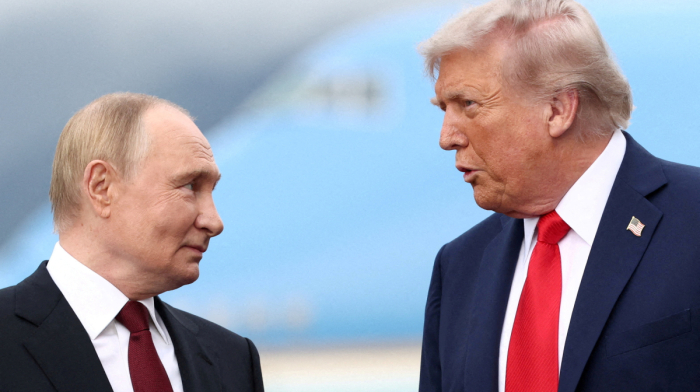
Competing narratives continue to shape perceptions of the war in Ukraine, with Russian leadership suggesting a possible end phase while Ukrainian officials warn of renewed large-scale attacks and ongoing escalation risks.
U.S. Secretary of State Marco Rubio has held talks with Lebanese President and Israeli Prime Minister on efforts to ease tensions between Israel and Lebanon. According to a U.S. official, Washington has proposed a plan aimed at achieving a gradual de-escalation of hostilities.
When Armenians vote on 7 June, they will be voting in an election shaped by months of political change and a rapidly deepening relationship with the European Union. The result may not only determine who governs Armenia but also the future direction of the country's geopolitical alignment.
Unsealed records from the U.S. Department of Justice have renewed scrutiny of lawyer Robert Amsterdam after documents revealed communications between his law firm and Jeffrey Epstein's office. The disclosures have drawn attention because of Amsterdam's prominent role in Armenia.
Armenian Prime Minister Nikol Pashinyan has said Yerevan remains committed to normalising relations with Azerbaijan and Türkiye, expressing confidence that decades of regional hostility will eventually give way to lasting stability.
Kazakhstan has restored oil production after an accident at the Tengiz oil field briefly disrupted output last week, while also signalling its readiness to increase crude shipments through the Baku–Tbilisi–Ceyhan (BTC) pipeline.
Baku has once again become a focal point for international energy diplomacy, investment and strategic cooperation, as Baku Energy Week brings together policymakers, industry leaders and investors from around the world.
A launch ceremony marking the commissioning of the modernised Baku-Tbilisi-Kars (BTK) railway line was held at Akhalkalaki station in Georgia on 2 June, bringing together senior officials from Azerbaijan, Georgia and Türkiye.
Baku Energy Week has opened in Azerbaijan, bringing together global energy leaders to discuss energy security, green energy and regional cooperation, underscoring the country's growing strategic role in Eurasian connectivity.
You can download the AnewZ application from Play Store and the App Store.
What is your opinion on this topic?
Leave the first comment