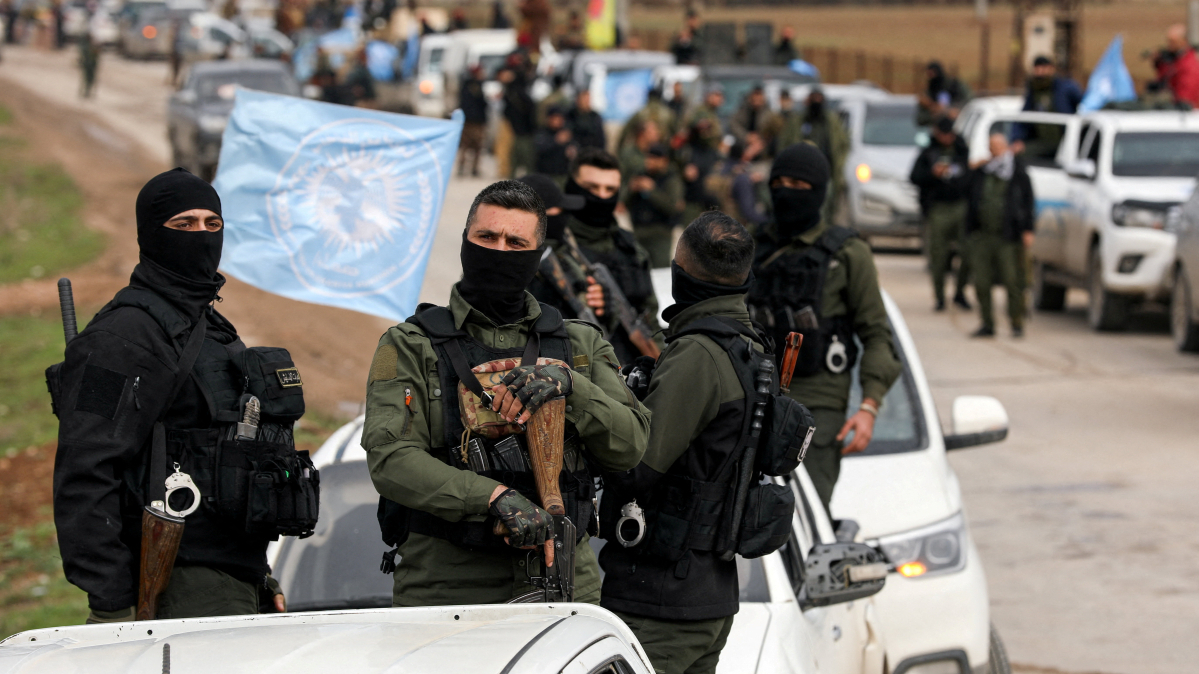
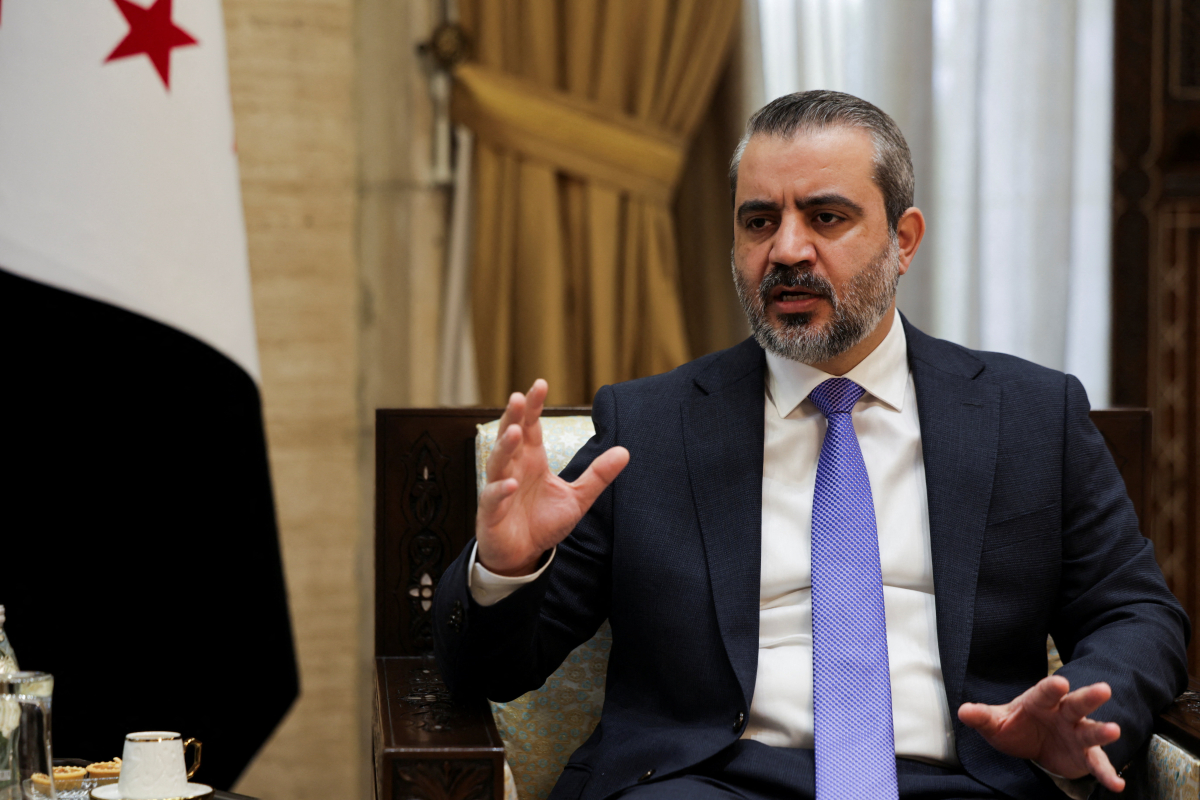
Syria's government has integrated armed factions into the national army and is restructuring its security institutions as part of a broader effort to consolidate state authority and support the country's post-conflict recovery, Foreign Minister Asaad al-Shaibani said on Monday.
Speaking during the 166th regular session of the Arab League Council in Cairo, al-Shaibani said Damascus was working to ensure that weapons remain exclusively under state control, describing the move as a key element of rebuilding the country after years of conflict.
“To protect this recovery, we integrated the armed factions and rebuilt our national army on the basis of restricting arms to the state,” al-Shaibani said, according to Syrian state media.
He stressed that the state's monopoly over weapons was a sovereign decision designed to protect all Syrians and strengthen national institutions.
Damascus highlights political and institutional reforms
Al-Shaibani said Syria has undergone significant changes under President Ahmed al-Sharaa over the past 20 months, moving from crisis management towards reconstruction and state-building.
According to the foreign minister, authorities have restructured security and defence institutions, strengthened border protection and worked to restore government control across the country.
He also said Damascus had established a new parliament and launched wider institutional reforms while prioritising education and the return of displaced people to normal life.
The minister noted that hundreds of thousands of Syrian children and young people had returned from displacement camps to schools and universities, while the government continues efforts to rebuild educational facilities damaged during the conflict.
Syria is also seeking deeper integration with regional development initiatives, with al-Shaibani expressing hope that the country would become part of Arab development funds and programmes by 2027.
Focus on reconciliation and national unity
Al-Shaibani said the government was addressing the consequences of decades of authoritarian rule through what he described as a process of justice and reconciliation.
He argued that efforts to reunify the country and restore territories to state control were helping create conditions for long-term stability and recovery.
The foreign minister also referred to a three-part roadmap developed with Jordan, saying Syria was making steady progress in implementing the initiative, although he did not provide specific details.
Syria addresses regional tensions
The minister also used addressed broader regional developments.
He said Damascus had expressed solidarity with Gulf countries and Jordan since the outbreak of what he described as the “American-Israeli-Iranian war,” while rejecting attacks against regional states.
“We reject the Iranian attacks on their territories and the use of weapons outside the framework of the state,” al-Shaibani said.
On the issue of Israel, he welcomed the Arab League's criticism of Colombia's recognition of Israel's annexation of the Golan Heights.
Al-Shaibani reiterated Syria's position that rights in the Golan Heights remain non-negotiable and said Damascus continues to pursue diplomatic efforts aimed at ending Israeli military operations and incursions into Syrian territory.
UN nuclear watchdog closes long-running investigation
The developments coincide with a major breakthrough in efforts to clarify questions surrounding Syria's past nuclear activities.
International Atomic Energy Agency (IAEA) Director General Rafael Grossi said on Monday that the agency had resolved outstanding questions relating to secret nuclear work carried out under the Assad family government.
The breakthrough follows cooperation between Syria's new authorities and the United Nations nuclear watchdog after the fall of former president Bashar al-Assad in late 2024.
According to the IAEA, investigators uncovered approximately 73 metric tonnes of natural uranium metal, primarily in the form of reactor fuel, during their examination of previously undeclared nuclear activities.
Reactor could have produced weapons material, says IAEA
Grossi also confirmed that a facility destroyed by Israeli airstrikes in Syria's Deir al-Zor province in 2007 was a nearly completed nuclear reactor.
The reactor, he said, was designed in a way that would have allowed for the efficient production of fissile material that could potentially be used in nuclear weapons.
“This is a reactor that is very efficient in the production of fissile material that could be used directly for the fabrication of nuclear weapons,” Grossi said.
He described the project as a serious proliferation concern but added that the intentions of the authorities responsible for the programme could not be conclusively determined.
The IAEA has welcomed the cooperation shown by Syria's current government, with Grossi praising what he called the country's transparency and willingness to provide access and information needed to resolve the long-running investigation.
















What is your opinion on this topic?
Leave the first comment