New Zealand’s ruling centre-right National Party has taken a narrow lead over the opposition Labour Party in Saturday’s general election, with the country’s current three-party coalition projected to retain power.
With approximately 85 per cent of votes counted, National had secured 29.37 per cent of the party vote, just 0.31 percentage points ahead of Labour, a difference of around 6,740 votes.
The election follows a campaign dominated by concerns over the struggling economy, rising living costs, unemployment and dissatisfaction with the country’s two main political parties.
Early projections suggest the current governing coalition, made up of National, ACT New Zealand and New Zealand First, could secure 68 seats in a potentially expanded 131-seat parliament, enough to retain power. However, the results remain preliminary, with official figures expected on 27 November.
Who are the main parties competing?
New Zealand’s two largest political parties National and Labour, have traditionally dominated the country’s political landscape.
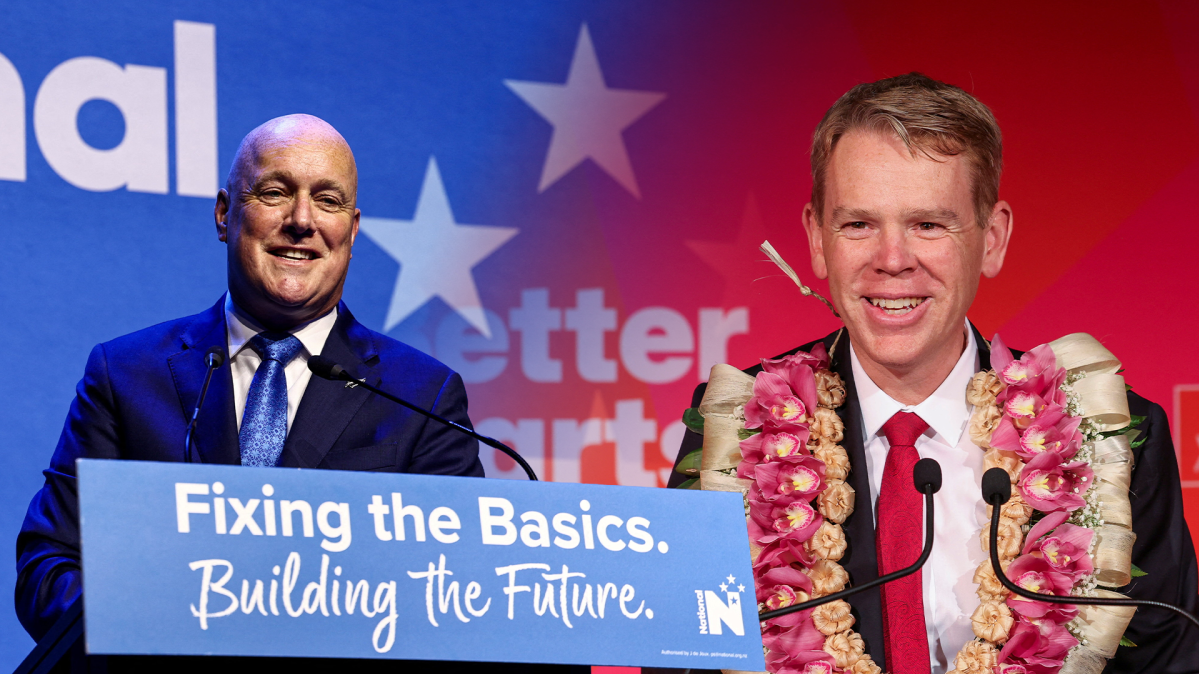
The centre-right National Party, led by Prime Minister Christopher Luxon, has governed since 2023. It currently shares power with two smaller parties, ACT New Zealand and New Zealand First.
Labour, the main centre-left opposition party, is led by former Prime Minister Chris Hipkins. The party governed New Zealand between 2017 and 2023, including under former Prime Minister Jacinda Ardern.
While National has focused on economic management, government spending and business confidence, Labour has campaigned on issues including public services, healthcare and the cost of living.
However, neither major party is expected to secure enough parliamentary seats to govern independently, making cooperation with smaller parties particularly important.
Smaller parties gain ground
Smaller political parties have performed strongly in the election, reflecting growing support for alternatives to National and Labour.
So far the Green Party had secured approximately 13.7 per cent of the party vote, followed by ACT New Zealand with around 11 per cent and New Zealand First with 9.6 per cent.
The Opportunity Party, a relatively new political force led by Qiulae Wong, had received approximately 5.9 per cent, putting it on course to enter parliament for the first time.
The party’s performance is particularly significant because New Zealand’s electoral system allows smaller parties to gain parliamentary representation if they secure at least 5 per cent of the nationwide party vote or win an electorate seat.
Although the current governing coalition is projected to have enough seats to remain in power without Opportunity, the final distribution of seats could change as counting continues.
How does New Zealand’s electoral system work?
New Zealand uses a system known as Mixed Member Proportional representation (MMP), introduced in 1996. Under this system, voters cast two votes: one for a political party and another for a candidate to represent their local constituency, known as an electorate.
The party vote largely determines how many seats each political party receives in parliament, while the electorate vote decides which candidate represents a particular area.
Parliament normally consists of 120 seats, including 71 electorate seats and at least 49 seats allocated through party lists.
However, the number of parliamentary seats can increase under a system known as an overhang. This happens when a party wins more electorate seats than it would normally receive based on its share of the nationwide party vote.
In this election, projections suggest that National and Te Pāti Māori could win additional electorate seats, potentially expanding parliament to around 131 members.
If parliament has 131 seats, a government would need at least 66 seats to secure a majority. Current projections give National and its coalition partners 68 seats, while Labour, the Greens and Te Pāti Māori would hold a combined 56 seats. The Opportunity Party is projected to secure seven seats.
Unlike electoral systems where a single political party regularly wins a parliamentary majority, New Zealand’s proportional voting system makes coalition governments common.
Winning the largest share of votes does not automatically guarantee that a party can form a government. Instead, parties must secure enough parliamentary support to govern, often by negotiating agreements with smaller parties.
These negotiations can involve compromises over policies, government spending priorities and ministerial positions. The current National-led government is an example of this arrangement, with three parties sharing power since 2023.
While the latest projections suggest the coalition could remain in government, its final parliamentary majority will depend on the official results.
When will the final results be announced?
New Zealand’s Electoral Commission is expected to release the official election results on 27 November.
The final count will include special votes, such as ballots cast by overseas voters and those voting outside their registered electorates. These votes could affect the allocation of parliamentary seats, particularly given the narrow margins between the major parties.
Coalition negotiations may also continue after the official results are announced, potentially delaying the formation of the next government.
















What is your opinion on this topic?
Leave the first comment