When Armenians vote on 7 June, they will be voting in an election shaped by months of political change and a rapidly deepening relationship with the European Union. The result may not only determine who governs Armenia but also the future direction of the country's geopolitical alignment.
The question is no longer simply whether Prime Minister Nikol Pashinyan's Civil Contract party wins. It is what that victory, or the absence of one, would mean for the relationship between Yerevan and Brussels, which has entered what both sides describe as a historic new chapter.
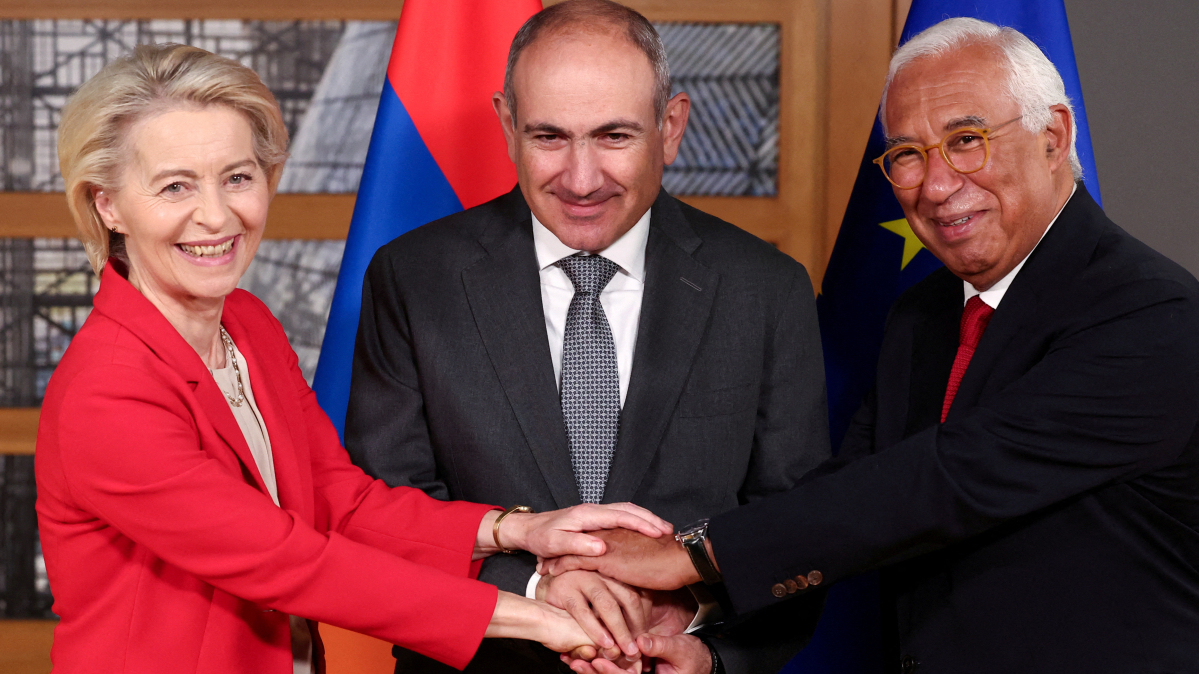
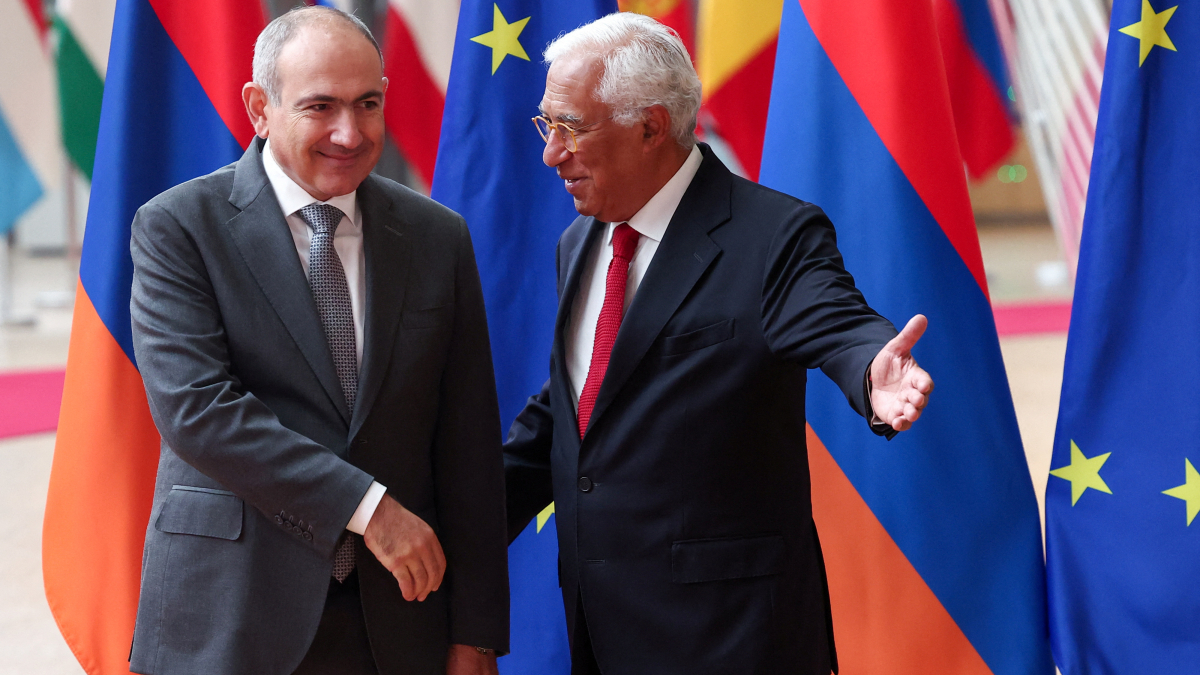
The May summit in Yerevan was the clearest signal yet of how far that relationship has progressed. The joint statement from the first-ever EU–Armenia summit acknowledged Armenia's European aspirations, rooted in the country's March 2025 law launching an EU accession process, and reaffirmed the bloc's commitment to supporting Armenia's sovereignty, resilience and reform agenda.
The symbolism was deliberate. European Council President António Costa and European Commission President Ursula von der Leyen arrived in Yerevan just one day after the European Political Community summit, lending unmistakable political weight to a government heading into an election.
Commitment or gesture?
"For the Armenian government, future membership in the European Union is extremely important," says Elxan Şahinoğlu, a political analyst at the Atlas Research Centre. "If the European Union, despite Armenia's efforts, leaves the country halfway through the process and delays membership for many years, Armenia will remain under Russian pressure, and Russia could repeat in Armenia what it did in Ukraine.
"If Ukraine had become a member of NATO and the European Union in the early 2000s, Russia would not have been able to do what it did."
Yet the most consequential signal from Brussels did not come from the summit itself. Two weeks earlier, on 21 April, the EU's Foreign Affairs Council approved the establishment of a new civilian mission, the EU Partnership Mission in Armenia (EUPM Armenia).
Operating under the Common Security and Defence Policy, the mission will support Armenia against a range of threats, including foreign information manipulation and interference, cyber-attacks and illicit financial flows, by providing strategic advice and capacity-building to ministries and national institutions.
The creation of EUPM Armenia also reinforces the extent to which the election is unfolding against the backdrop of a wider contest for influence between Russia and the European Union. Explicitly tasked with helping Armenia address hybrid threats, including foreign interference and disinformation, the mission signals a longer-term European commitment to the country. Its initial two-year mandate suggests Brussels is seeking not only to support Armenia through a pivotal political period, but also to establish a durable presence in the years ahead.
The mission will deploy between 20 and 30 experts based in Yerevan and was approved unanimously by EU ambassadors. Crucially, it carries an initial two-year mandate. This is not a temporary election-monitoring exercise. It is an institutional presence designed to outlast the vote and entrench European advisory support within Armenian state structures for years to come.
A society pulling in two directions
The European Parliament has strongly condemned foreign information manipulation and disinformation campaigns targeting Armenia, particularly those originating from Russia and its proxies, as well as the role of certain domestic actors and oligarchic networks in amplifying such threats. That external pressure has deepened divisions already visible within Armenian society long before the election campaign began.
"A disagreement has emerged within Armenian society," Şahinoğlu says. "Armenians who support the government favour their country's integration with the U.S. and the European Union. However, there is also a group that wants Armenia to remain dependent on Russia, just as it was in the past. This has created a serious division within society."
That divide is reflected in the electoral landscape. The election is widely viewed as both a pivotal political contest and a referendum on Armenia's geopolitical direction, with Pashinyan seeking to deepen ties with the West while opposition figures advocate a more pro-Russian course.
Winning is not enough
Polls consistently place Civil Contract ahead, but winning the election and securing a governing majority are separate challenges.
Recent surveys indicate that Pashinyan's support has fallen to around 32 per cent among all respondents, rising to 38 per cent among likely voters - a sharp decline from the popularity he enjoyed following the 2018 Velvet Revolution.
"Nikol Pashinyan's party is highly likely to win the elections," Şahinoğlu says. "However, whether their votes alone will be enough to form a government is still a serious question. Furthermore, enough votes are needed to ensure a majority for a constitutional change and a referendum. This is also still up in the air."
The implications of falling short extend beyond domestic politics.
"Azerbaijan's position is such that without a change in the Constitution, the peace treaty will not be signed," he says. "If Pashinyan does not achieve the desired result in the referendum, then the peace treaty will not be signed. This is not a big problem for Azerbaijan; it can continue on its own path even without a peace treaty. But it will be a problem for Armenia.
"Because if Armenia wants full normalisation of relations with Azerbaijan and Turkey, the opening of roads, and the establishment of diplomatic relations, it absolutely must change the Constitution."
Rhetoric or reality?
Şahinoğlu argues that Brussels now faces a test of credibility that extends well beyond summit declarations and institutional initiatives.
Russia's leverage over Armenia remains significant. Moscow could restrict Armenian agricultural exports to the Russian market or increase gas prices for Yerevan, deliberately fuelling public dissatisfaction in an effort to destabilise the government.
"In such a situation, what could the European Union do?" Şahinoğlu asks. "It could help Armenia with gas supplies and facilitate access for Armenian agricultural products to European markets. If it does not take such practical steps, then the European Union's support will remain only rhetorical, and it will not solve the Armenian government's problems."
The warning echoes a broader criticism of European engagement in the region: that the gap between symbolic solidarity and sustained economic support remains one of the bloc's greatest vulnerabilities.
The EUPM's two-year mandate begins in earnest not at the summit, but when polling stations close on 7 June. What follows may determine whether Brussels has built a lasting foundation in Armenia or merely provided a political backdrop.











What is your opinion on this topic?
Leave the first comment