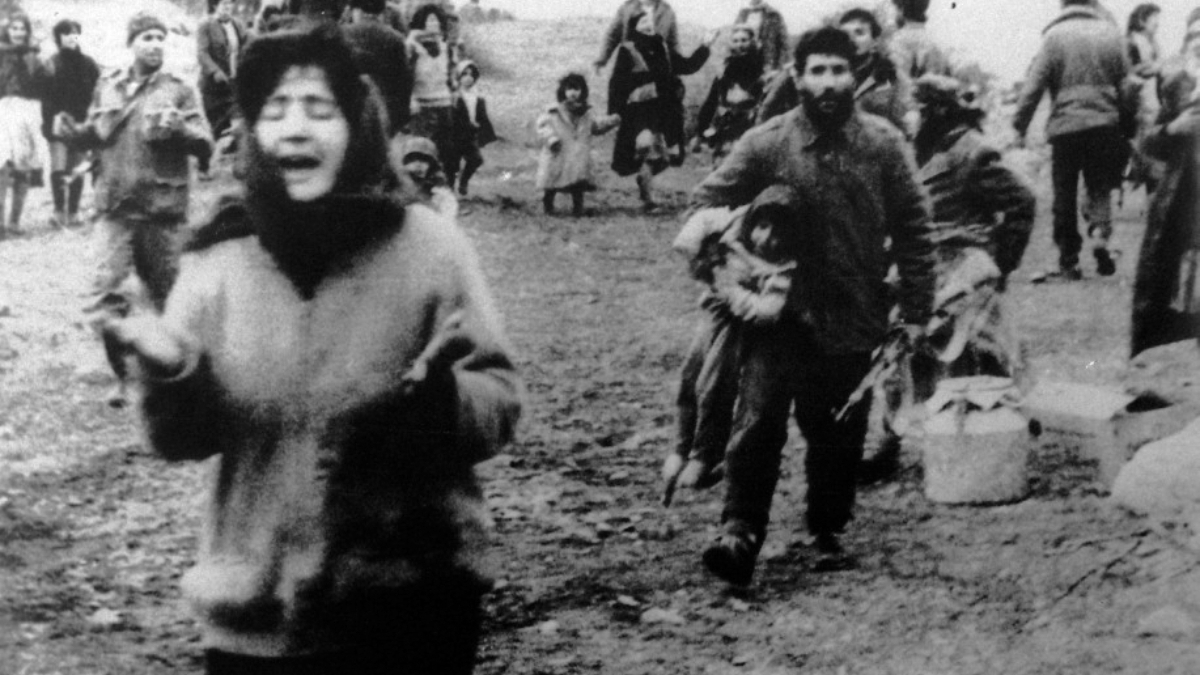
Azerbaijan is marking the 34th anniversary of the Khojaly genocide, commemorating the victims of the events of 25–26 February 1992 with ceremonies and moments of remembrance across the country.
During the night assault, Armenian armed forces, reportedly supported by the 366th Motorised Rifle Regiment of the former USSR army, invaded Khojaly in Azerbaijan’s Garabagh region.
As residents fled into forests and fields in freezing winter conditions, many were killed. In total, 613 Azerbaijanis lost their lives, including 106 women, 63 children and 70 elderly people.
Thousands were injured, hundreds were taken hostage and many remain missing.
Elmira Allahverdiyeva, a resident of Khojaly, recalled: "I left with my other children and my husband. That night was tragic. I lost 10 family members. I still don’t know the fate of four of them - my father-in-law, my brother-in-law, my son, my husband…"
Legal characterisation and international response
The events in Khojaly are regarded in Azerbaijan as one of the most tragic episodes of the Armenia–Azerbaijan conflict. A number of international organisations, national parliaments and public figures have condemned the killings.
Under international law, deliberate attacks against civilians may constitute war crimes or crimes against humanity, subject to legal assessment and judicial determination.
The 1948 Convention on the Prevention and Punishment of the Crime of Genocide defines genocide as acts committed with the intent to destroy, in whole or in part, a national, ethnic, racial or religious group.
Developments after the conflict
Azerbaijan says military operations conducted in late 2020 and in September 2023 ended the occupation of its territories and restored its sovereignty and territorial integrity.
Since the end of active hostilities in November 2020, Azerbaijani authorities report that 18 mass graves containing the remains of more than 600 individuals have been discovered in previously occupied territories, including Khojaly.
The government says it is taking steps to investigate and prosecute alleged violations of international humanitarian and human rights law in accordance with national legislation and its international obligations.













What is your opinion on this topic?
Leave the first comment