Iran’s Supreme Leader Mojtaba Khamenei warned “foreigners who commit evil” have no place in the Gulf, outlining a “new phase” for the Strait of Hormuz, while a senior adviser said U.S. blockade efforts would fail and could trigger confrontation.
Summary
We are closing this Live Page now. Thank you for joining. Here are some of the top stories:
-
Flotilla organisers on Thursday said that Israel intercepted aid ships heading to Gaza in international waters, near Greece.
-
U.S. seeks international coalition to restore navigation in Strait of Hormuz.
-
U.S. President Donald Trump said talks with Iran are continuing by telephone, rather than through face‑to‑face meetings.
-
Russian Foreign Minister Sergey Lavrov said on Thursday that the extended U.S.–Israeli conflict with Iran has harmed the Caspian Sea and its coastline.
-
U.S. President Donald Trump reignited a war of words with German Chancellor Friedrich Merz on Thursday, saying that Merz should focus on trying to end the Russia-Ukraine war and stop "interfering" in the Iran conflict.
-
Iran will participate in the World Cup and will play matches in the United States, FIFA's President Gianni Infantino said on Thursday.
Here are the top stories that made the headlines on Thursday:
-
Minval Politika alleges Ocampo campaign targeted Azerbaijan and Armenia’s internal politics - Video and Text
-
How U.S. military bases in the Gulf shape security, energy and global power shifts
-
EU resolution on Armenia raises concerns amid fragile South Caucasus peace process - Video and Text
⦿ 20:57 GMT | UPDATE
UAE bans citizens from travel to Iran, Lebanon and Iraq
Reuters
The United Arab Emirates has banned its citizens from travelling to Iran, Lebanon and Iraq, and urged Emiratis currently in those countries to leave immediately and return home, citing regional developments, the foreign ministry said.
⦿ 20:34 GMT | UPDATE
Iran's air defences engaging drones over parts of Tehran
Reuters
Iran's air defences were engaging small drones and surveillance UAVs over parts of the capital Tehran, with air defence fire continuing to be heard in western, central and southeastern areas of the city, the semi-official Tasnim news agency reported.
⦿ 19:24 GMT | UPDATE
Trump 'ok' with Iran playing in FIFA World Cup
Reuters
U.S. President Donald Trump on Thursday told reporters that he was "ok" with Iran playing in the FIFA soccer World Cup, which will be held in North America in June and July.
Earlier, FIFA President Gianni Infantino insisted Iran would participate in the competition and play matches in the United States.
"Let me start at the outset. Of course Iran will be participating at the FIFA World Cup 2026. And of course Iran will play in the United States of America," Infantino told the football governing body's congress in Vancouver, Canada.
⦿ 18:54 GMT | UPDATE
FIFA President: Iran's football team will play World Cup matches in the U.S.
Reuters
Iran will participate in the World Cup and will play matches in the United States, FIFA's President Gianni Infantino said on Thursday,
But his assurances were complicated by the absence of Iran's delegation from the football governing body's congress in Vancouver, Canada.
"Let me start at the outset. Of course Iran will be participating at the FIFA World Cup 2026. And of course Iran will play in the United States of America," Infantino said.
Officials from the Iranian Football Federation (FFIRI) turned back at Toronto Airport on their way to the event after what Tehran described as "unacceptable behaviour," by Candian immigration authorities.
The FFIRI's President Mehdi Taj is a former member of Iran's Islamic Revolutionary Guards Corps (IRGC).
In 2024, Canada designated the IRGC a terror group, barring its members from entering the country.
Canadian Prime Minister Mark Carney said that members of the IRGC were prohibited from entering Canada in a statement.
"We have a series of screenings, and we take action. And no members have entered the country. Action has been taken appropriately," he said.
⦿ 16:52 GMT | UPDATE
Deadline looms for Trump to make case to Congress for extending Iran war
Reuters
U.S. President Donald Trump faces a deadline on Friday (1 May) to either end the Iran war or make a case to Congress for prolonging it.
Analysts have said they either expect Trump to notify Congress that he plans a 30-day extnesion or to disregard the deadline and instead argue that the current ceasefire with Iran marks an end to the conflict.
Iran said on Thursday that if Washington renewed attacks it would respond with "long and painful strikes" on U.S. positions.
Opinion polls show that the Iran war is unpopular among Americans, six months before November elections that will determine who controls Congress next year.
⦿ 16:17 GMT | UPDATE
Crude oil building up on Iranian storage ships, data suggests
Reuters
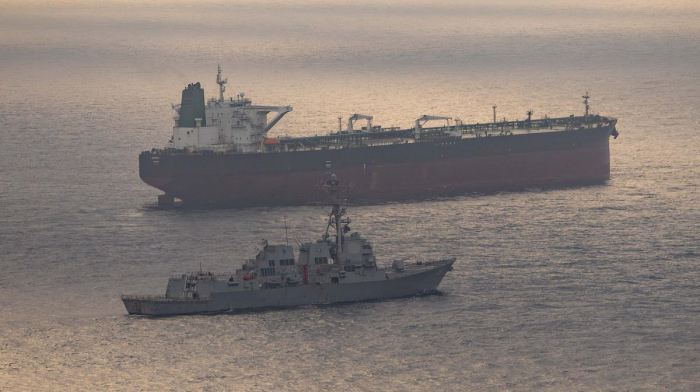
The U.S. naval blockade of Iran has resulted in an increasing stockpile of crude piling up on tankers, as storage sites in the country run out of space, shipping data suggests
Just a handful of carriers carrying Iranian crude left the Gulf of Oman between 13 April and 25 April, oil analytics firm Vortexa said.
It marks a more than 80% reduction relative to a comparable period in March, when Iran exported 23.4 million barrels, LSEG data shows.
The loss of Iranian crude oil supply further squeezes a market which is already heavily squeezed due to Iran's closure of the Strait of Hormuz.
U.S. Central Command said on Wednesday that there were 41 tankers storing $69 million barrels of oil that Iran can't sell due to the U.S. blockade of Iranian ports.
⦿ 14:56 GMT | UPDATE
Control of Hormuz allows Tehran to be free from U.S. interference, Iran's Parliament Speaker says
X
Iran's Parliament Speaker, Mohammad-Bagher Ghalibaf, has said Iran's control over the Strait of Hormuz will allow it and its neighbours to enjoy a future free from American interference.
"Iran, by exercising control over the Strait of Hormuz, will ensure that it and its neighbors enjoy the precious blessing of a future free from the presence and interference of America, " he wrote on X.
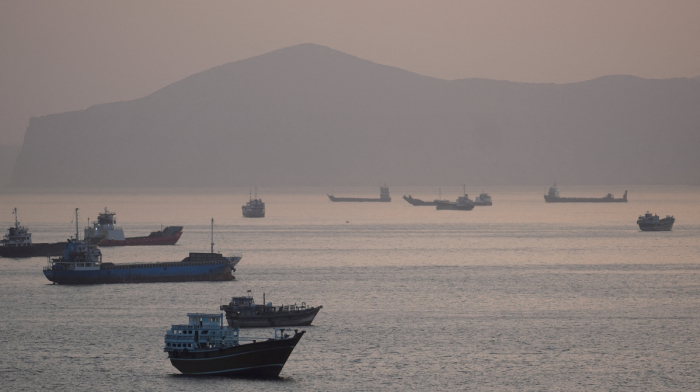
Before Iran's blockade of the sea passage, roughly 20% of the world's daily oil and liquified natural gas moved through the strait.
⦿ 14:48 GMT | UPDATE
Europe not worst hit by Hormuz blockade, Germany's Merz says
Reuters
German Chancellor Friedrich Merz said Europe's oil and gas supply was relatively unaffected by the Strait of Hormuz blockade, in remarks at a town hall event in the northern German town of Salzwedel on Thursday.
"We still have (...) enough oil and gas supplies. Relatively little of the supply for Europe passes through the Strait of Hormuz. The majority comes from other sources," he said.
But Merz added that international shortages meant his government was doing everything possible diplomatically to reopen the sea passage.
"Nevertheless, the shortages on the global markets are, of course, also an important signal for price developments here. Therefore, everything is aimed, including my own efforts, at making every possible contribution to reopening the Strait of Hormuz."
⦿ 14:41 GMT | UPDATE
Germany's Merz should focus on Russia-Ukraine and stop 'interfering' in Iran, Trump says
Reuters
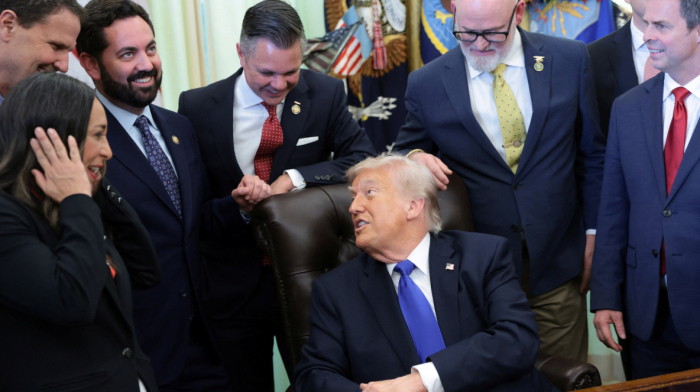
U.S. President Donald Trump reignited a war of words with German Chancellor Friedrich Merz on Thursday, saying that Merz should focus on trying to end the Russia-Ukraine war and stop "interfering" on the Iran conflict.
On Monday (27 April), Merz said the U.S. was being humiliated in the war with Iran. Trump hit back earlier in the week on social media website Truth Social, saying that Merz didn't understand what he was doing, and taking a swipe at the German economy.
On Wednesday, Merz tried to downplay the spat between the two leaders, inisting their relationship remained strong.
⦿ 10:39 GMT | UPDATE
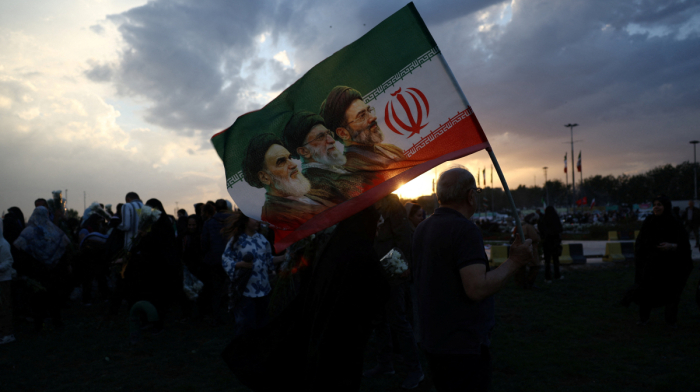
Iran’s Khamenei vows to secure Gulf, end 'enemy abuses' of waterway
Reuters
Iran’s Supreme Leader Mojtaba Khamenei said on Thursday that Tehran will secure the Gulf region and eliminate what he described as “the enemy’s abuses of the waterway,” according to state TV.
He also said a “new phase” is taking shape in the Gulf and the Strait of Hormuz following the outbreak of war with the United States and Israel on 28 February.
Khamenei added that new management of the Strait of Hormuz will “bring calm and progress” and deliver economic benefits to all Gulf nations while warning that “foreigners who commit evil” have no place but ''in the depth of water''.
⦿ 10:37 GMT | UPDATE
Merz: Iran must return to talks
Reuters
German Chancellor Friedrich Merz says Iran must return to the negotiating table and “stop playing for time.”
⦿ 10:30 GMT | UPDATE
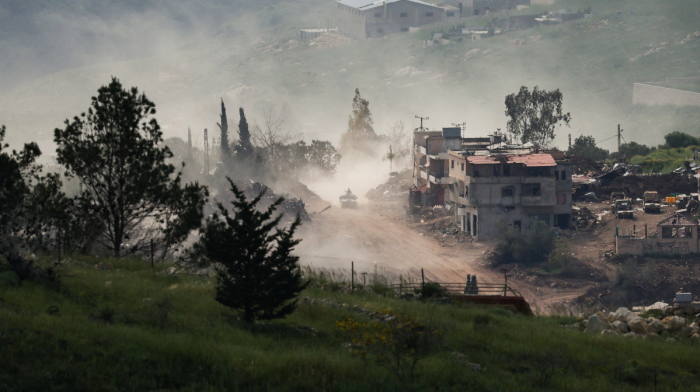
Israel warns Lebanese towns to evacuate to safety ahead of strikes
Reuters
The Israel Defence Forces has warned residents of eight towns in southern Lebanon - outside the so-called buffer zone - to evacuate immediately ahead of planned strikes.
⦿ 10:22 GMT | UPDATE
Lithuania’s Gitanas Nausėda backs joining U.S. Hormuz mission
Reuters
Lithuania’s President Gitanas Nausėda says he supports joining a U.S.-led freedom of navigation mission in the Strait of Hormuz, adding he will present the proposal to the country’s defence council.
⦿ 10:20 GMT | UPDATE
Iran: Khamenei's statement is imminent for Persian Gulf Day
Reuters
Iranian state media reports that a message from Supreme Leader Mojtaba Khamenei will shortly be published to mark ''national Persian Gulf day'', a key national occasion observed annually on 29-30 April.
⦿ 10:01 GMT | UPDATE
Iran war fears hit emerging markets as oil surges
Reuters
Emerging market stocks and currencies edged lower on Thursday as fears of an escalation in the Iran war sent oil prices soaring more than 7%, adding to inflation worries. Brent crude hit a fresh four‑year high after reports that U.S. President Donald Trump is set to be briefed on possible new military strikes on Iran.
Despite the daily losses, EM assets remain on course for strong monthly gains, supported by a brief easing in tensions after a temporary ceasefire was announced earlier this month. However, analysts warned that with no clear progress towards peace, markets are increasingly pricing in a longer conflict, keeping oil prices elevated.
Sentiment was further weighed down by a hawkish signal from the U.S. Federal Reserve, which held rates steady but showed rare internal division, prompting investors to scale back expectations of rate cuts this year and adding pressure across risk assets.
⦿ 09:19 GMT | UPDATE
Russia’s Lavrov says Iran conflict threatens Caspian Sea stability
Anadolu
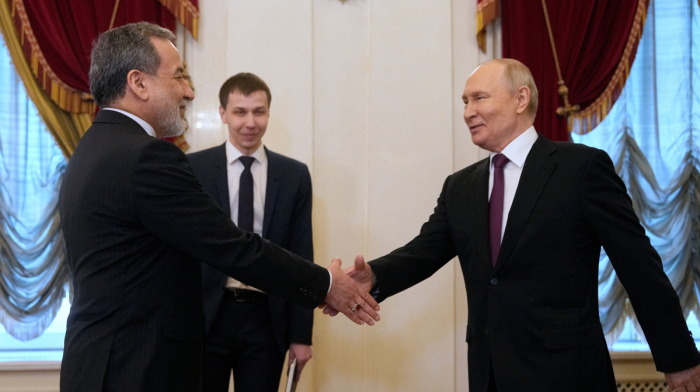
Russian Foreign Minister Sergey Lavrov said on Thursday that the extended U.S.–Israeli conflict with Iran has had a negative impact on the Caspian Sea and its coastline, stressing that the region must remain a zone of peace and cooperation.
Speaking in Astana after talks with Kazakh Foreign Minister Yermek Kosherbayev, Lavrov described last month’s strike on Iran’s port city of Bandar Anzali as unacceptable, noting that the port serves the shared trade and logistics interests of all five Caspian states.
He said both sides supported a swift political resolution to the crisis in the Persian Gulf and the wider Middle East, while also highlighting continued instability in Lebanon and the absence of clear progress towards the creation of a Palestinian state.
⦿ 09:02 GMT | UPDATE
IEA’s Birol reiterates warning of historic energy crisis amid Iran conflict
Reuters
The world is facing its most severe energy crisis on record as disruption linked to the conflict involving Iran continues to batter global markets, International Energy Agency chief Fatih Birol warned on Thursday.
Speaking at a conference in Paris, Birol said oil and gas markets were under intense strain, noting that crude prices had risen above $120 a barrel, increasing pressure on economies worldwide.
⦿ 08:36 GMT | UPDATE
UN rapporteur condemns Israel flotilla interception
Anadolu
UN Special Rapporteur on Palestine Francesca Albanese criticised Israel’s interception of the Gaza‑bound Global Sumud Flotilla in international waters, describing the action as “apartheid without borders.” In a post on X, she questioned how Israeli forces could seize vessels near Greece, saying the incident should alarm Europe.
The flotilla, which set sail from Barcelona on 12 April to deliver humanitarian aid and challenge Israel’s blockade of Gaza, was intercepted late on 29 April in international waters off Crete, organisers said. Officials claim Israeli forces seized 21 boats, while others escaped into Greek waters.
The convoy carried 345 participants from 39 countries, though no verified details are yet available on the fate of those aboard.
⦿ 08:27 GMT | UPDATE
Amazon says cloud regions in Bahrain, UAE hit by conflict‑related damage
Reuters
Amazon said on Thursday that damage to its cloud infrastructure in Bahrain and the United Arab Emirates during the conflict in the Middle East has left the affected regions unable to support customer applications.
Amazon Web Services (AWS) said billing has been suspended in both locations while technical teams work to restore services, a process the company expects could take several months.
Amazon did not immediately respond to questions on whether the facilities were struck by drones or damaged by nearby attacks. Reuters previously reported last month that AWS’s Bahrain region had been disrupted by drone activity in the area.
⦿ 08:24 GMT | UPDATE
Serbia extends oil export ban amid Iran war fuel price surge
Reuters
Serbia will extend its ban on crude oil and fuel exports for a further month to protect domestic supplies amid global energy disruption and rising prices linked to the war involving Iran, the country’s energy minister said on Thursday.
The restrictions will remain in force until the end of June, with Energy Minister Dubravka Djedovic Handanovic also announcing the release of an additional 30,000 metric tonnes of diesel from state reserves, while fuel excise duties have been cut by 25% in an effort to curb price increases.
⦿ 06:42 GMT | UPDATE
Rolls‑Royce sticks to forecast despite Middle East disruption
Reuters
Rolls‑Royce said it remains on track for profit to rise by at least 16% this year and expects to fully offset any disruption caused by the war in the Middle East.
The British engineering group said engine flying hours from Middle Eastern airlines are recovering, with some back at pre‑conflict levels, while growth in other regions has helped as airlines adjust capacity, despite higher fuel costs linked to the conflict.
⦿ 06:37 GMT | UPDATE
Trump says U.S.-Iran talks now taking place by phone
Anadolu
U.S. President Donald Trump said talks with Iran are continuing by telephone, rather than through face‑to‑face meetings, telling reporters at the White House that negotiations no longer require lengthy travel.
While saying he would prefer direct talks, Mr Trump stressed that any agreement would depend on Iran fully abandoning any ambition to develop nuclear weapons.
His comments come after a ceasefire agreed on 8 April and the collapse of Pakistan‑mediated negotiations, which prompted the United States to announce a naval blockade on 13 April and begin intercepting Iran‑linked vessels in and around the Strait of Hormuz, with Iran responding by seizing several ships in the same area during the escalation.
⦿ 05:27 GMT | UPDATE
South Korea’s Lee warns Iran conflict outcome unclear, urges action on living costs
Reuters
South Korean President Lee Jae Myung said on Thursday that the outcome of negotiations to end the war between the United States and Iran remains uncertain, while urging the government to step up efforts with stronger and more effective measures to ease the burden of rising living costs.
⦿ 05:11 GMT | UPDATE
U.S. seeks international coalition to restore navigation in Strait of Hormuz
Reuters
President Donald Trump's administration is seeking support from allied countries to form an international coalition aimed at restoring freedom of navigation in the Strait of Hormuz, according to a State Department cable seen by Reuters.
The initiative, known as the Maritime Freedom Construct (MFC), was approved by U.S. Secretary of State Marco Rubio and is being developed jointly by the State Department and the Pentagon as part of a proposed post‑conflict maritime security framework for the Middle East.
Under the plan, the State Department would act as the diplomatic hub coordinating with partner nations and the shipping industry, while the Pentagon, through U.S. Central Command, would manage real‑time maritime operations in the strait.
Countries could participate through diplomacy, intelligence sharing, sanctions enforcement or limited naval support, the cable said, noting the effort is separate from Washington’s “maximum pressure” campaign on Iran. The proposal follows a sharp slowdown in shipping through the strait after U.S. and Israeli strikes on Iran on 28 February and Tehran’s subsequent blockade.
⦿ 04:57 GMT | UPDATE
Stocks fall, oil surges amid worries over renewed Iran war
Source
Asian markets fell on Thursday as oil prices surged to four‑year highs on fears the United States could launch further strikes on Iran, unsettling investors despite mostly solid earnings from major technology firms.
Brent crude jumped more than 6% to around $125 a barrel, dragging MSCI’s Asia‑Pacific index down 1% and pushing Japan’s Nikkei 1.4% lower, while Hong Kong stocks fell over 1.2%.
Rising oil prices and fading hopes of rate cuts triggered a global sell‑off in bonds, lifting yields and boosting the dollar.
⦿ 04:12 GMT | UPDATE
Türkiye, Spain call for unified action after Israel intercepts Gaza flotilla
Anadolu
Türkiye and Spain’s foreign ministers spoke by phone on Thursday, condemning Israel’s interception of the Gaza‑bound Global Sumud Flotilla in international waters near Crete. Ankara said the action endangered civilians of multiple nationalities and violated international law.
Israeli forces seized several aid vessels late Wednesday as they headed to challenge the Gaza blockade.
⦿ 03:20 GMT | UPDATE
Iran warns of confrontation over U.S. blockade
Anadolu
Mohsen Rezaei, a senior military adviser to Iran’s Supreme Leader, warned on Thursday that any U.S. blockade of Iranian ports would “fail,” saying Tehran has multiple ways to bypass it and could turn to confrontation if the pressure continues.
Rezaei said in remarks aired on state television that Iran would not accept a prolonged blockade and would act to break it if necessary.
Rezaei also outlined scenarios for a possible future war, warning it could focus on southern coastal regions and extend toward Isfahan, with some activity in western Iran, and even include bombings and assassinations in Tehran.
His comments come weeks after a U.S.–Israeli offensive on Iran ended in a ceasefire announced on 8 April and later extended indefinitely by U.S. President Donald Trump.
⦿ 03:14 GMT | UPDATE
CENTCOM draws up Iran strike plans, Pentagon to brief Trump, Axios says
Reuters
U.S. Central Command has drawn up plans for a “short and powerful” wave of strikes on Iran that could include infrastructure targets, Axios reported on Wednesday, citing U.S. officials.
According to the report, CENTCOM commander General Brad Cooper is expected to brief U.S. President Donald Trump on Thursday on new military options related to Iran.
Reuters said it could not immediately verify the Axios report.
⦿ 02:49 GMT | BREAKING
Gaza aid ships intercepted by Israel near Greece, 11 ships unaccounted for, flotilla organisers say
Reuters
Flotilla organisers on Thursday said that Israel intercepted aid ships heading to Gaza in international waters, near Greece. The organisation condemned the move, which they said was "an escalation of Israel's impunity."
Another flotilla left the ports of Barcelona in Spain on 12 April, hoping to break through Israel's blockade to deliver humanitarian aid to Palestinians in Gaza.
The Global Sumud Flotilla that organised the aid delivery said that Israel seized both vessels while they were still hundreds of miles away from Gaza and called the seizure "Piracy".
In a tweet, they said that the vessels were surrounded by Israeli military boats and that they had lost communications with 11 vessels. Israeli media claims that 7 boats have been intercepted. Read more about the 11 vessels and how they were intercepted -
In a statement, the group said that "This is the unlawful seizure of human beings on the open sea near Crete, an assertion that Israel can operate with total impunity, far beyond its borders, with no consequences."










What is your opinion on this topic?
Leave the first comment