A European Parliament resolution on Armenia is stirring debate beyond Brussels, with its wording raising concerns in Azerbaijan as peace talks gather momentum.
A recent resolution adopted by the European Parliament, titled “Supporting democratic resilience in Armenia”, has triggered mixed reactions across the South Caucasus.
While the document is framed as backing democratic institutions ahead of elections, Azerbaijani officials and analysts argue it carries broader political implications.
The text calls for deeper EU–Armenia ties and warns against foreign interference. However, it also uses the term “Nagorno-Karabakh”, calls for the return of ethnic Armenians to Garabagh, and criticises what it describes as Azerbaijan’s detention of Armenian prisoners - language that Baku has long argued lacks balance.
A sensitive geopolitical moment
The resolution comes at a critical juncture. After decades of conflict over Garabagh, Azerbaijan and Armenia are now engaged in normalisation efforts, including negotiations on a peace treaty, border delimitation, and the reopening of regional transport routes.
Azerbaijani officials emphasise that new connectivity projects could significantly reshape regional stability.
The timing is particularly notable. The parliamentary session took place just one day before an Azerbaijani delegation led by Deputy Prime Minister Shahin Mustafayev arrived in Armenia for talks, underscoring ongoing diplomatic engagement.
At the same time, Armenia is strengthening relations with the European Union, expanding cooperation in political, economic and security spheres.
A landmark EU-Armenia summit in Yerevan is expected to further deepen this partnership, alongside Brussels’ increasing role in reform support and regional initiatives.
Meanwhile, Azerbaijan remains a key energy partner for Europe, particularly through Caspian gas exports and transport corridors linking Europe and Asia.
Despite this, relations with EU institutions - especially the European Parliament - have often been strained over language related to Garabagh.
Debate over balance
To assess how the resolution is being perceived, AnewZ spoke with political analyst Rustam Taghizade in Baku.
Taghizade said the language of the resolution risked presenting an imbalanced narrative.
He also questioned what he sees as a one-sided emphasis on democratic development, saying:
“Demands for democratic relations in Armenia only as if only one side needs fixing.”
He further pointed to what he views as inconsistency in policy approaches, particularly regarding sanctions and energy ties:
“Calls for sanctions for restrictions on Azerbaijan while the same institution continues to import energy from other conflict zones without similar scrutiny.”
His remarks highlight a broader debate over whether the European Parliament’s approach is balanced, particularly at a time when both sides publicly commit to advancing peace.
Ocampo allegations add pressure
Adding another layer to the story are recent allegations involving Luis Moreno Ocampo.
A report by Minval Politika claims Ocampo may have been involved in efforts to shape international pressure on Azerbaijan and influence political dynamics linked to Armenia. The outlet cites alleged video material in which Ocampo discusses influencing European policy through contacts connected to EU institutions.
According to the report, the alleged campaign may have involved Armenian lobbying networks and financial backing from businessmen, including figures based in Russia.
It also raises questions about whether discussions extended to Armenia’s internal political landscape, including pressure surrounding Prime Minister Nikol Pashinyan.
Against this backdrop, political analyst Fuad Karimli told AnewZ that, if accurate, the allegations point to weaknesses in institutional safeguards.
“I think it shows that high-ranking international officials can really influence processes. They can really misuse their positions if this allegation is true. So firstly, it implies that EU institutions are not as foolproof as people think they are. Like any system or institution, they have loopholes.”
He warned that such dynamics could affect an already fragile peace process.
“There are ways people can push through policies that may not be proactive, especially in this case where the peace process between Armenia and Azerbaijan is at an all-time high. This kind of interference can really be seen as attempts to sabotage it.”
He also stressed the importance of sovereignty norms:
“This would not be acceptable, as it goes against the principle of non-intervention enshrined in the UN Charter.”
Karimli concluded that if such influence exists, it risks affecting both EU credibility and regional stability at a sensitive political moment.
Limited response from EU lawmakers
AnewZ contacted political groups in the European Parliament, including the European People’s Party, Socialists and Democrats, European Conservatives and Reformists, Renew Europe, Greens/EFA and The Left, requesting comment on the resolution and its potential impact.
A total of 27 requests were sent. Only one response was received. Member of the European Parliament Markéta Gregorová said she was unable to comment due to a busy schedule.
Fragile moment for peace efforts
With peace talks ongoing, expanding EU engagement in Armenia, and shifting geopolitical dynamics, analysts say even carefully worded political statements may carry significant consequences.
The key question is whether messaging from Brussels and Strasbourg will support a fragile normalisation process - or risk complicating it at a critical moment.
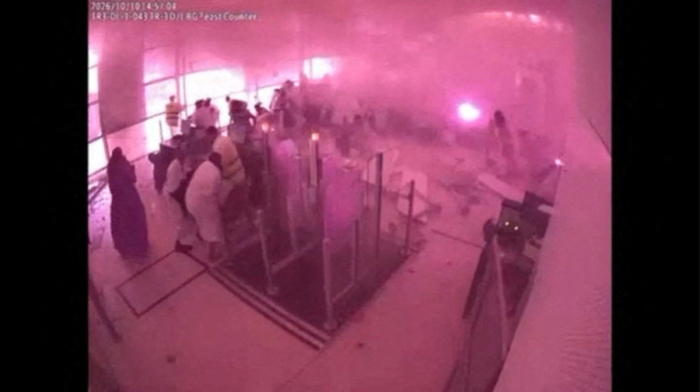
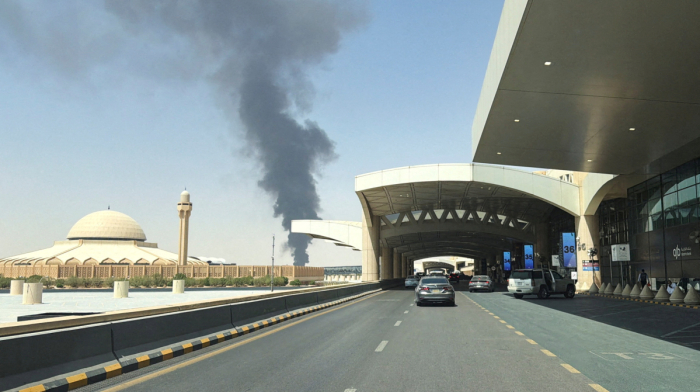
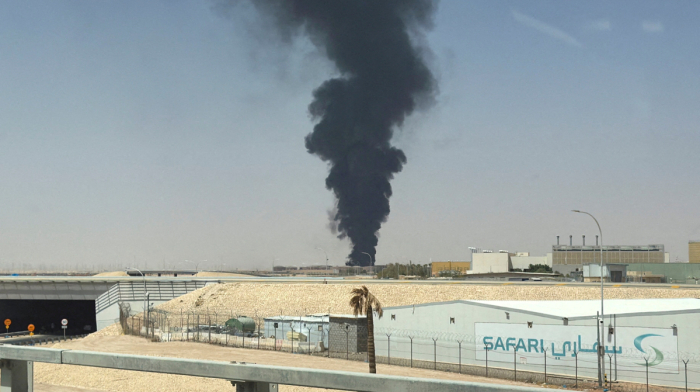
The explosion at King Khalid International Airport in Riyadh on Saturday afternoon killed at least 12 people and injured a further 309, according to Saudi Arabia’s Civil Aviation Authority. The airport remains closed until further notice.
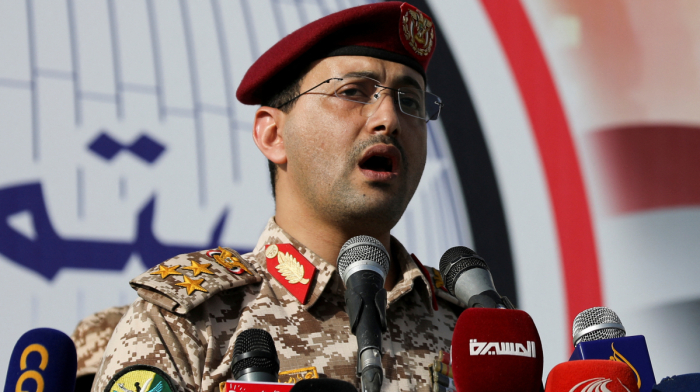
Yemen's Houthis renewed warning to airlines, airport workers, and travellers against using Saudi airports, saying the warning should be taken seriously and that the kingdom “bore responsibility for failed interceptions”, a day after an attack on Riyadh's international airport that killed 12 people.
One person was killed and nearly a dozen hurt in a new attack Riyadh's international airport on Sunday, Saudi authorities reported, a day after a strike claimed by Yemen's Houthis that killed 13 people and wounded more than 300.
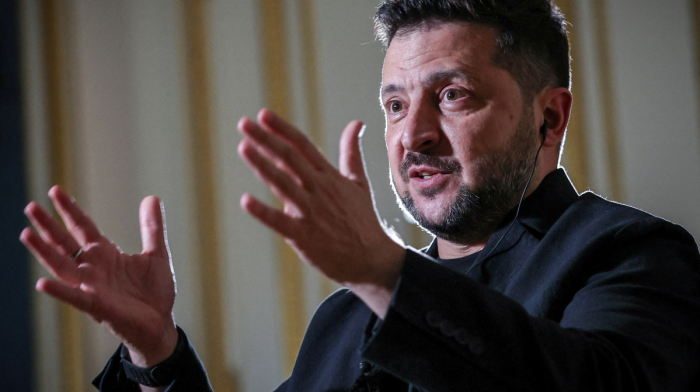
Ukraine is ready to stop attacks on Russian oil refineries if Moscow also halts strikes on Ukrainian energy infrastructure, President Volodymyr Zelenskyy said on Sunday.
One person was killed and nearly a dozen hurt in a new attack Riyadh's international airport on Sunday, Saudi authorities reported, a day after a strike claimed by Yemen's Houthis that killed 13 people and wounded more than 300.
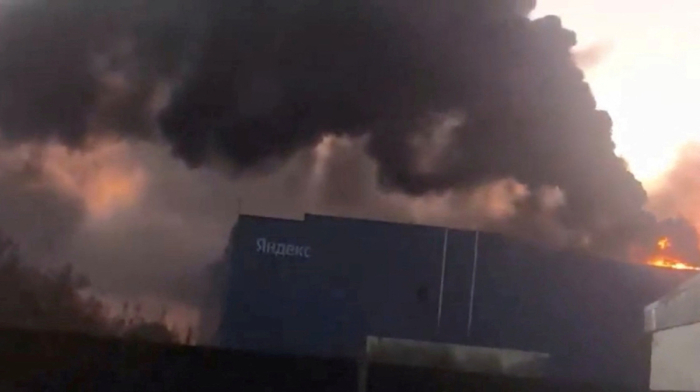
Russia's TASS news agency is reporting that Russia's defence and digital development ministries are in talks about how to protect data centres, after several Yandex centres were targeted in Ukrainian drone attacks.
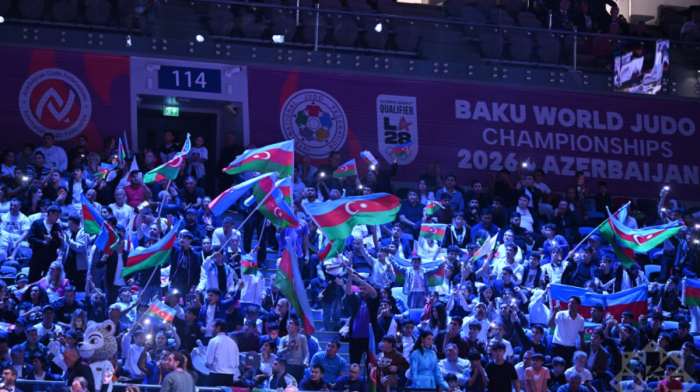
The 2026 Judo World Championships in Azerbaijan's capital came to a close with Japan claiming gold for the mixed team event of the competition, defeating Russia 4-1 in the final.
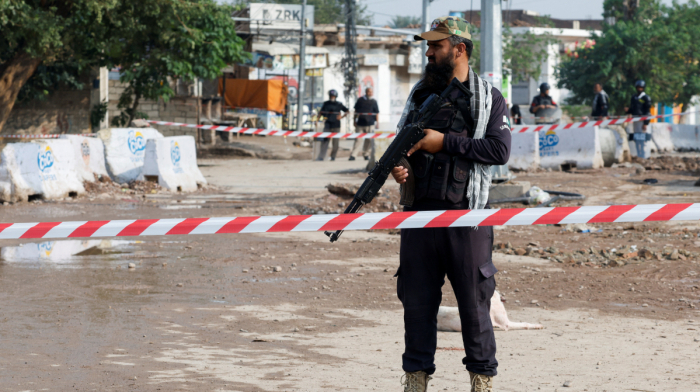
Pakistan has declared a state of emergency in Khyber Pakhtunkhwa, suspending the provincial government led by jailed former Prime Minister Imran Khan’s party. The move comes as tensions rise ahead of a planned protest calling for his release.
Yemen's Houthis renewed warning to airlines, airport workers, and travellers against using Saudi airports, saying the warning should be taken seriously and that the kingdom “bore responsibility for failed interceptions”, a day after an attack on Riyadh's international airport that killed 12 people.
Download the AnewZ app
You can download the AnewZ application from Play Store and the App Store.








What is your opinion on this topic?
Leave the first comment