President of the Republic of Azerbaijan Ilham Aliyev gave an exclusive interview to Euronews during the World Economic Forum 2026 in Davos on 20 January, reflecting on Azerbaijan’s strategy in a changing global order and the country’s evolving role in the South Caucasus and global energy markets.
President Aliyev emphasised that in today’s world, countries must base their policies on national potential while cultivating strong regional and international ties. He described Azerbaijan’s approach as pragmatic, focused on securing results that respect international law while advancing national interests.
Touching on the historic peace process with Armenia, the Azerbaijani president highlighted early progress in efforts to build cooperation.
“We have lived in peace only for five or six months; we are learning to do it… Today, the relationship between Armenia and Azerbaijan is already evolving into cooperation,” he said.
President Ilham Aliyev outlined concrete steps to strengthen regional economic ties, noting that Azerbaijan has lifted cargo restrictions and begun supplying critical commodities, including oil products, to Armenia, turning decades of conflict into opportunities for collaboration.
Regional stability was a recurring theme throughout the discussion.
“Every country, including Azerbaijan, should think about stability around and beyond its borders… Stability, predictability, and peace in the region are the biggest assets,” the Azerbaijani President noted.
He also emphasised Azerbaijan’s growing energy significance, noting that the country now supplies natural gas to 16 countries, including 10 European Union member states, ensuring stable and predictable energy flows for European consumers.
“By this coverage, Azerbaijan is number one in the world.”
Addressing criticism from the European Parliament, President Aliyev said Azerbaijan is prioritising practical cooperation with the European Commission rather than engaging in political confrontation.
“We do not react any longer… We cooperate with the European Commission, and for us, it is enough,” he noted.
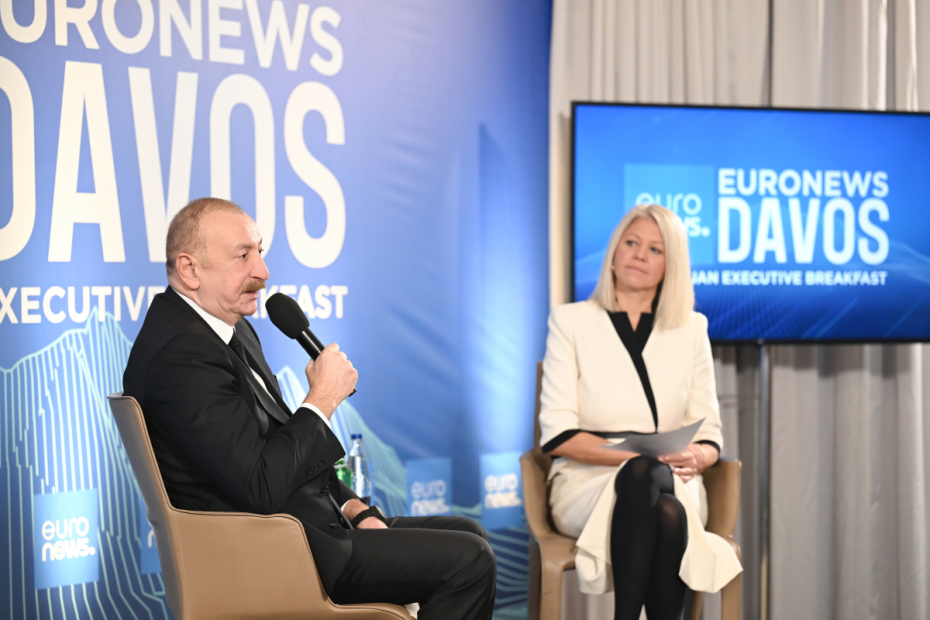
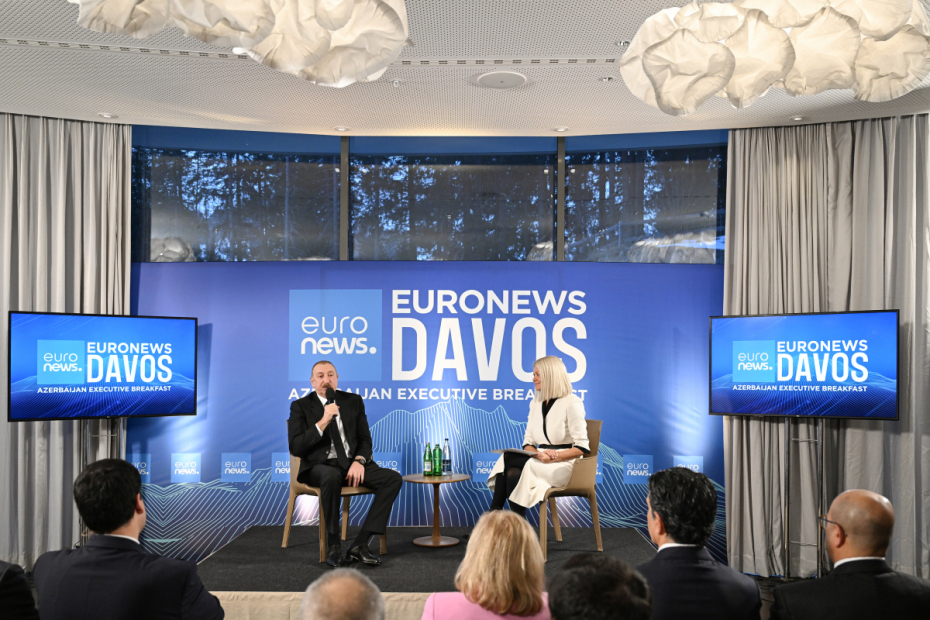
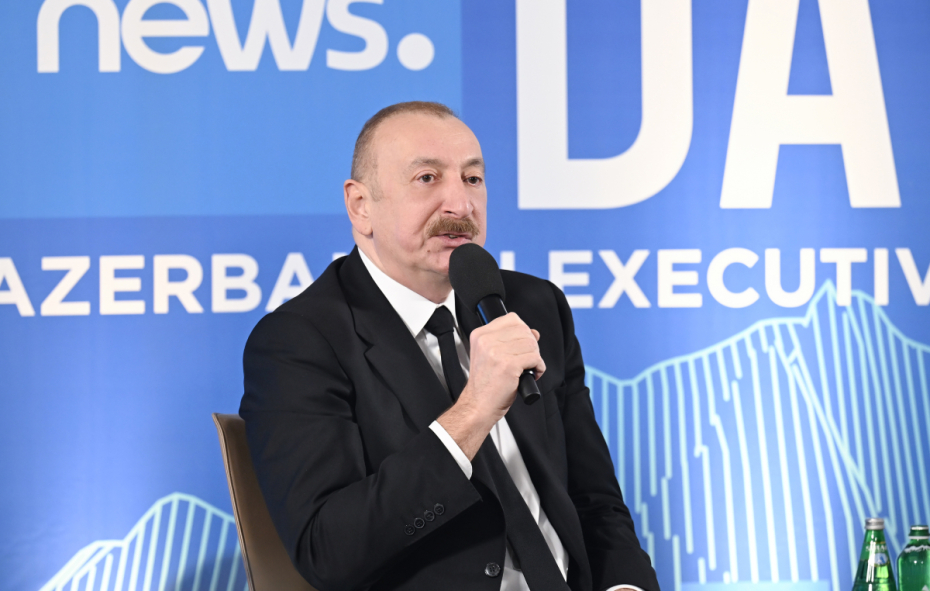
Following the interview, President of Azerbaijan took part in the “Azerbaijan Executive Breakfast,” meeting with international business leaders to discuss trade, investment and regional economic opportunities.
President Ilham Aliyev also participated in the panel titled “Defining Eurasia's Economic Identity” on the sidelines of the World Economic Forum 2026, on Tuesday, along with Armenian President Vahagn Khachaturyan, Limak Holding Chairperson Ebru Özdemir, and Serbian President Aleksandar Vučić.
The dialogue explored the shifting balance of influence and power in the Caucasus and Central Asia amid competing interests from East and West, focusing on emerging trade corridors, ambitious infrastructure projects, and heightened competition over resources.









What is your opinion on this topic?
Leave the first comment