Armenia’s Security Council Secretary Armen Grigoryan says progress in talks with Azerbaijan is helping the country manage economic and security pressures as regional conflicts and alliances shift.
Speaking at the Delphi Economic Forum in Greece on Wednesday (22 April), he pointed to recent diplomatic steps, including a draft peace agreement and the Washington Declaration, aimed at normalising relations after years of tension between the neighbours.
Armenia and Azerbaijan have fought intermittently since the late Soviet period, including wars over Nagorno-Garabagh. In recent years, both sides have moved towards a formal peace framework, backed by international mediation.
"Yerevan has come close to signing a peace agreement with Baku. The Washington Peace Declaration signed with Azerbaijan brought real peace to our region. It also increased our ability to deal with the difficulties created by regional conflicts that affect us negatively," Grigoryan said.
Energy market shows resilience
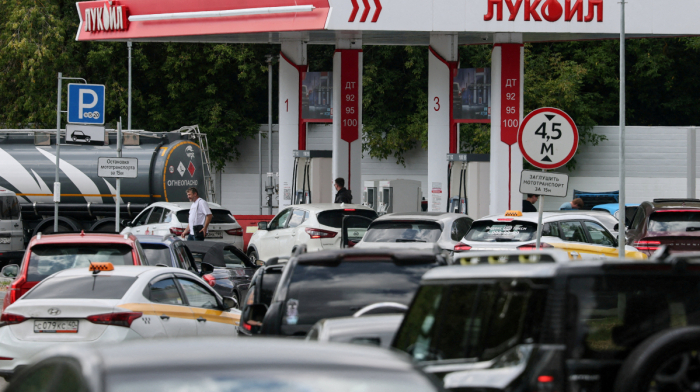
Grigoryan said Armenia’s energy market has remained relatively stable despite volatility in global prices.
Fuel costs rose earlier this year but have broadly returned to end-of-last-year levels, he said.
He said the stability was partly due to growing economic cooperation with Azerbaijan, including fuel imports that have supported domestic supply.
Heavy reliance on external suppliers
Armenia has limited domestic energy resources and has traditionally relied on Russia and Iran for gas, oil products and electricity.
That dependence has left the country exposed to external shocks.
Since the start of the war in Ukraine, Russia’s energy sector has come under greater strain, including from infrastructure strikes and rising domestic demand, which have affected export capacity.
Sanctions and restrictions linked to Iran have added further uncertainty over supply routes and pricing.
Global tensions affecting supply routes
Grigoryan said broader geopolitical tensions continue to shape energy markets.
He said developments in the Middle East, particularly involving Iran, have had a direct impact on global oil flows.
He highlighted disruptions such as the closure of the Strait of Hormuz, a key transit route for a large share of the world’s oil shipments.
Such disruptions can quickly affect fuel prices in smaller, import-dependent economies like Armenia.
Cooperation with Azerbaijan easing pressure
According to Grigoryan, closer economic ties with Azerbaijan have helped ease some of these pressures.
Fuel imports linked to this cooperation have supported supply and reduced the impact of global price swings on the domestic market.
This comes as both countries explore broader economic links alongside political negotiations.

















What is your opinion on this topic?
Leave the first comment