A series of signals from Washington, including congressional testimony, a U.S. Embassy statement and a senior diplomat's visit to Tbilisi, has given Georgia's ruling party reason to declare a diplomatic reset. But Washington's message is more nuanced than Tbilisi is suggesting.
When U.S. Secretary of State Marco Rubio appeared before Congress and said Georgia had taken positive steps towards improving ties with Washington, Georgian Dream did not wait long to turn the remarks into a headline. Within hours, senior officials in Tbilisi were citing Rubio's comments, alongside a U.S. Embassy statement and a recent State Department delegation visit, as proof that their foreign policy approach had been vindicated all along. The reality of what Rubio actually said is worth examining more closely.
What Rubio actually said
Rubio was responding to questions from Congressman Joe Wilson, who accused the ruling Georgian Dream party of supporting Iran and China and described the government's trajectory as one of rapid radicalisation. Rubio said Wilson's concerns were valid and reflected existing U.S. concerns about Georgia.
But he did not stop there. Rubio also said the Georgian government had recently taken steps signalling a desire to improve relations with Washington. He confirmed that the U.S. had presented a set of expectations to Tbilisi and had received some positive responses. Crucially, he said he hoped to see change not only in bilateral relations but also in Georgia's behaviour.
That word - behaviour - tends to be quietly omitted when Georgian Dream summarises the exchange.
Tbilisi's interpretation
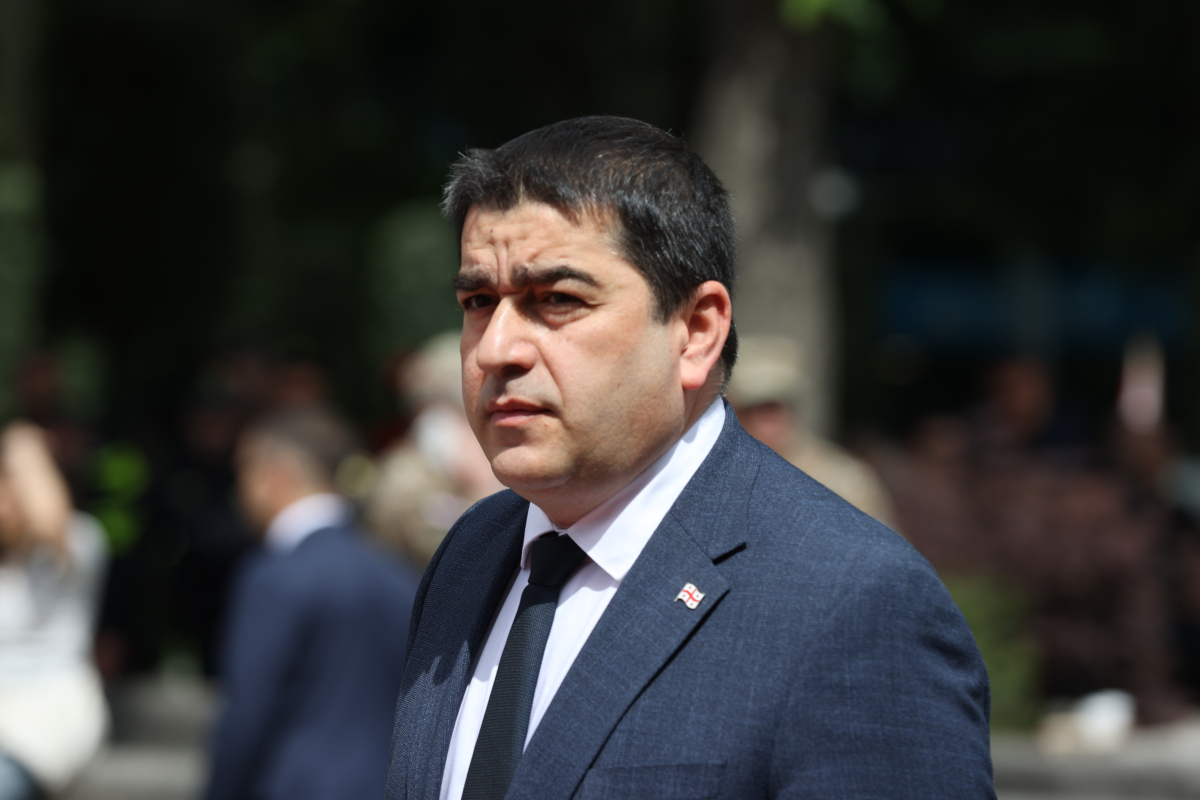
Parliament Speaker Shalva Papuashvili was unequivocal. He pointed to all three developments - Rubio's remarks, the U.S. Embassy statement following the delegation's late-May visit to Tbilisi, and the meetings themselves - as collective confirmation that Georgian Dream's vision of a reset based on shared values and national interests had become reality.
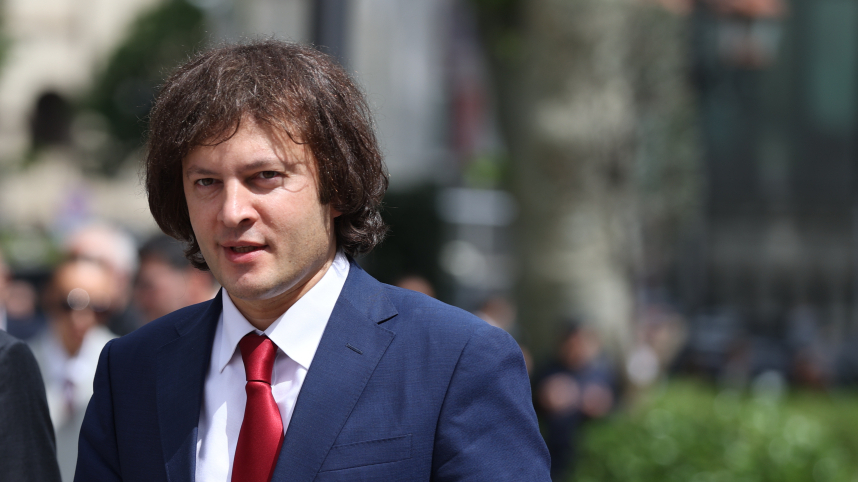
Prime Minister Irakli Kobakhidze went further, placing the blame for years of strained relations squarely on the Biden administration, which he accused of encouraging opposition boycotts and institutional sabotage. He argued that Georgia had resisted what he described as extremely difficult demands from Washington under Biden and that the contrast with the new American approach could not be starker.
Asked directly about the Iran allegations raised by Congressman Wilson, Kobakhidze was blunt: "What Georgia and Iran? Are you Joe Wilson?"
Geography as diplomacy
The warmer tone was not merely rhetorical. On 1 June, U.S. Deputy Secretary of State Christopher Landau attended a Georgia Independence Day reception in Washington hosted by Georgian Ambassador Tamar Taliashvili and used the occasion to outline Washington's strategic thinking.
He highlighted Georgia's position at the crossroads of the Caucasus, trade routes linking India, Central Asia, the Black Sea and Europe, and pointed to the ongoing Armenia–Azerbaijan peace process as further evidence that the region is firmly back on Washington's radar.
Landau said the Trump administration had encouraged a fresh look at relationships that had been frozen for years and that Georgia was among the countries where Washington saw genuine opportunity. His message was direct: he was there to shake the hand of friendship.
A reset or a reckoning?
Not everyone in Georgia is interpreting the signals in the same way. Opposition figures and civil society groups, many of whom spent months on the streets protesting what they described as Georgian Dream's democratic backsliding, argue that Washington's renewed interest has far less to do with approval of the government and far more to do with geography.
Georgia is strategically useful, they argue, and usefulness comes with conditions. Critics warn that American engagement is likely to arrive with significant demands, potentially including pressure for early elections, and that Georgian Dream may be celebrating a handshake that could quickly turn into a much more difficult conversation.
That concern is not entirely at odds with Rubio's remarks. He validated Wilson's concerns, tied progress to changed behaviour and made clear that Washington had handed Tbilisi a list of expectations, not a clean bill of health.
The door is open - for now
Georgian Dream is presenting this moment as a vindication. The U.S. Embassy statement spoke of shared values and a constructive, future-oriented relationship. Landau appeared in person. Rubio acknowledged progress. On the surface, it looks like a thaw.
But Washington has been careful not to reveal its full hand. The expectations it presented to Tbilisi have not been made public. The responses it received have not been independently verified. And the word behaviour, quietly omitted from Tbilisi's version of events, remains firmly on the record.
Rubio opened a door. Georgian Dream walked straight through it. Whether what lies on the other side is a reset or a reckoning remains, for now, an open question.



















What is your opinion on this topic?
Leave the first comment