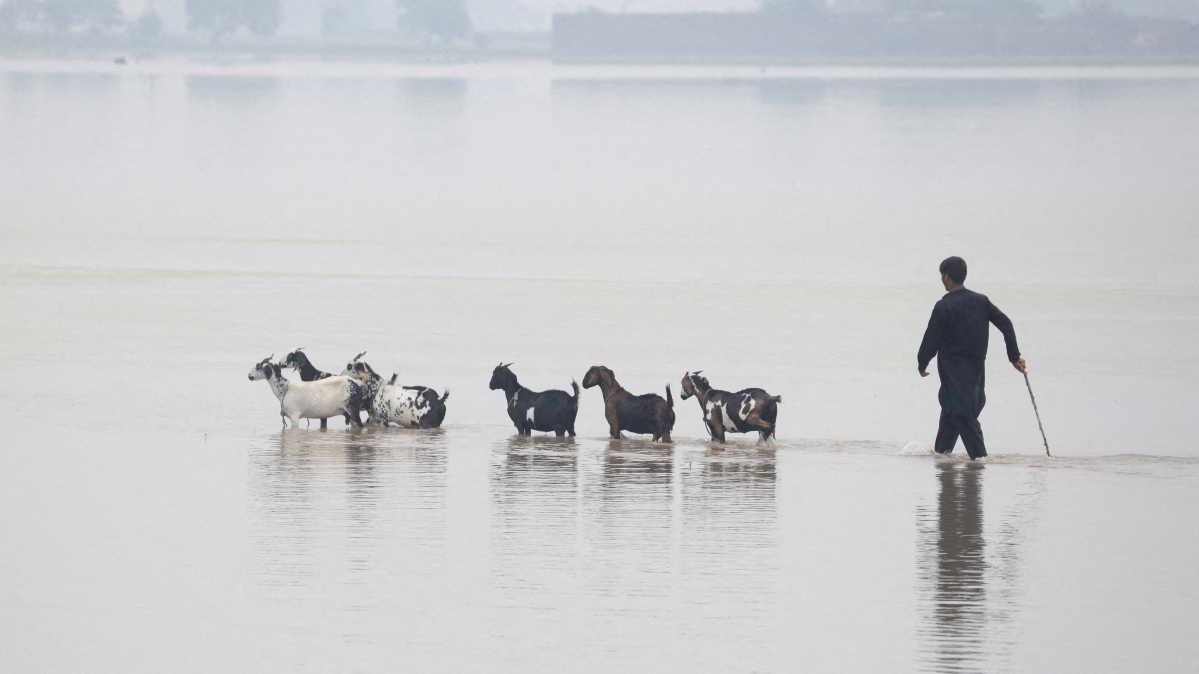
Pakistan has stepped up flood preparedness after the World Meteorological Organization (WMO) warned that El Niño is expected to strengthen from August, increasing the risk of more extreme weather worldwide as monsoon rains continue across the country.
Flood toll rises as monsoon continues
The warnings come as Pakistan battles another active monsoon season. The National Disaster Management Authority (NDMA) said 136 people have been killed and 418 injured in rain-related incidents since 26 June.
On Tuesday, the Provincial Disaster Management Authority in Pakistan's northwestern Khyber Pakhtunkhwa province reported six more deaths and six injuries caused by heavy rain and flash floods since 29 July.
Pakistan is among the countries most vulnerable to climate change despite contributing less than one per cent of global greenhouse gas emissions. The country's devastating 2022 floods submerged nearly one-third of its territory, killed more than 1,700 people and caused more than $30 billion in economic losses.
Early warning systems activated
The Pakistan Meteorological Department said its Glacial Lake Outburst Flood Monitoring Cell had identified potential flash flood risks through continuous monitoring and issued early warnings for vulnerable valleys, including Madaklasht, Reshun, Badswat, Darkut, Shimshal and Matiltan.
The NDMA warned that river levels are expected to rise over the next 24 hours. Flash flooding is possible in parts of Pakistan-administered Gilgit-Baltistan, Pakistan-administered Kashmir, Khyber Pakhtunkhwa and Balochistan.
The Flood Forecasting Division also warned of urban flooding in Islamabad, Rawalpindi, Lahore, Faisalabad, Gujranwala, Peshawar and several other cities. Landslides remain a concern in mountainous areas, while Tarbela Dam has risen to within seven feet of its maximum conservation level following sustained monsoon inflows.
El Niño expected to strengthen
The WMO said El Niño is forecast to strengthen during the August to October period, increasing the likelihood of above-normal temperatures and significant shifts in global rainfall patterns. Earlier forecasts indicated a nearly 90 per cent chance that the climate pattern would persist until at least November.
UN Secretary-General António Guterres has warned that El Niño could intensify the impacts of climate change, bringing more severe floods, droughts and heatwaves to different parts of the world.
Climate resilience under pressure
The latest warnings come nearly four years after Pakistan's worst climate disaster in recent history. Since then, authorities have expanded glacier monitoring, weather forecasting and emergency coordination to strengthen early warning systems and disaster preparedness.
Scientists say climate change is increasing both the frequency and intensity of extreme weather events. In Pakistan, where rising temperatures are accelerating glacier melt and erratic monsoon patterns are becoming more common, the challenge extends beyond responding to disasters. As another season of heavy rainfall unfolds, the effectiveness of early warning systems and preparedness measures will be tested against the growing realities of a changing climate.



















What is your opinion on this topic?
Leave the first comment