Uzbekistan is in talks with Kazakhstan and Kyrgyzstan over a joint customs system aimed at cutting border delays and speeding up freight transport. The proposed ‘One Stop’ system would eliminate duplicate inspections and simplify procedures at selected crossings.
The initiative would allow customs authorities from neighbouring countries to coordinate inspections, reducing repeated checks on goods crossing their borders.
Farhod Olimjonov, a department head at Uzbekistan's Customs Committee, said three possible models were under consideration.
Under the first model, customs authorities from both countries would work in the same building. The second would involve separate offices, with one country's customs service handling exports and the other handling imports.
The third option would allow countries to recognise each other's customs inspections, meaning freight cleared on one side of the border would not need to be checked again on the other. This would also require the two customs services to exchange information.
Five border crossings under consideration with Kyrgyzstan
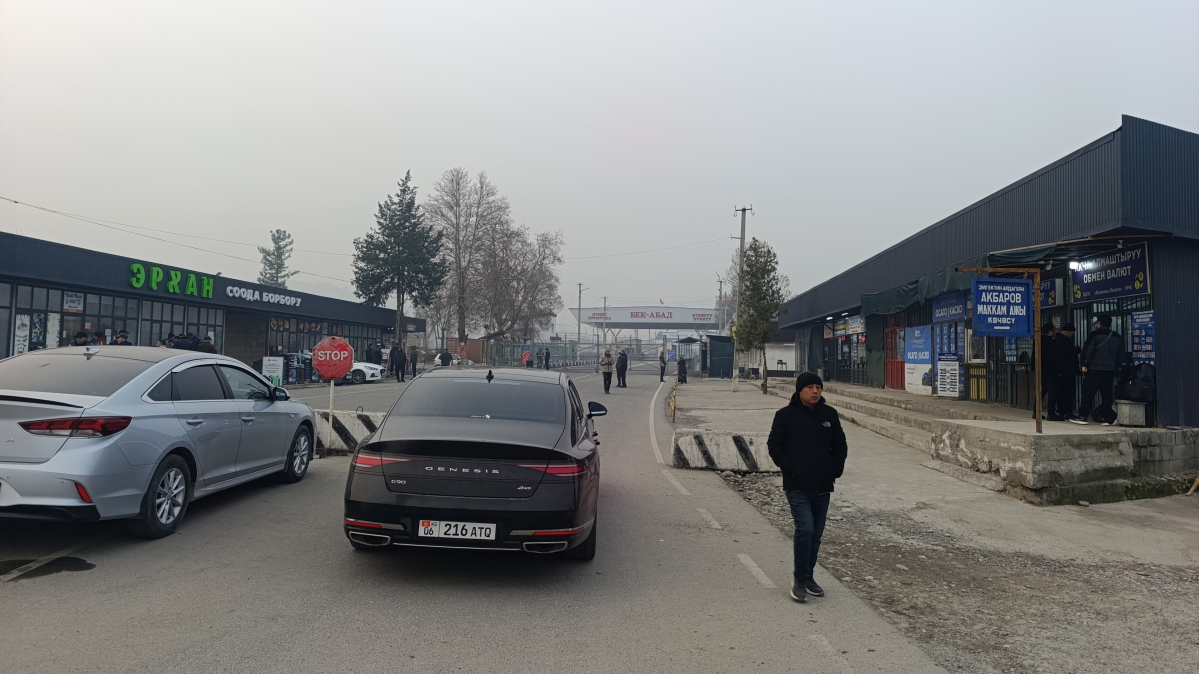
Uzbekistan aims to hold talks with Kyrgyzstan by December 2026 on introducing joint customs checks at five border crossings, as part of the New Uzbekistan Customs – 2030 strategy, approved on 27 August.
The proposed locations include four road crossings – Rishtan, Vadil, Akkiya and Chashma – as well as the Khanabad railway crossing.
Uzbekistan's Customs Committee, Ministry of Foreign Affairs and Ministry of Transport are involved in the negotiations. However, both countries must agree on the final arrangements, and no date has been set for implementation.
Similar talks are under way with Kazakhstan, although the border crossings involved have yet to be identified.
Freight surge drives border upgrades
The push to streamline customs procedures follows a sharp rise in cross-border freight traffic. Over the past three years, the number of trucks passing through Uzbekistan's border checkpoints has increased by 70 per cent to more than 5,100 a day.
Authorities aim to more than double daily capacity to 10,500 trucks by 2030, with plans to rebuild eight customs posts and construct new terminals and parking facilities at three other sites.
According to the Customs Committee, the proposed system could halve border-crossing times by removing duplicate checks and simplifying clearance procedures.
The reforms are part of a wider drive to modernise Uzbekistan's border infrastructure, boost international trade and improve transport links with neighbouring countries.
Read more:












What is your opinion on this topic?
Leave the first comment