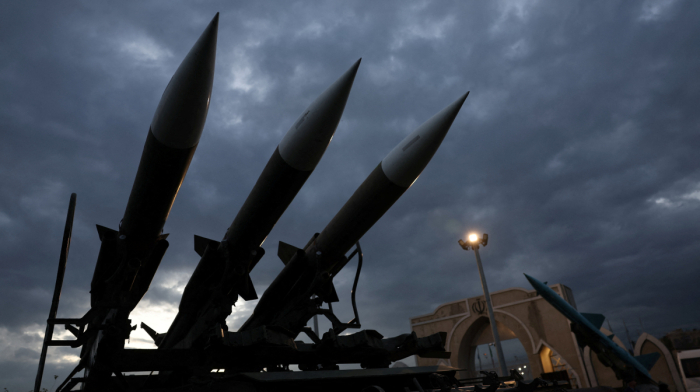
Gulf air defences have intercepted thousands of missiles and drones, but dwindling interceptor stocks are raising questions about how long that protection can last. New military agreements and closer regional cooperation could help, but significant gaps remain.
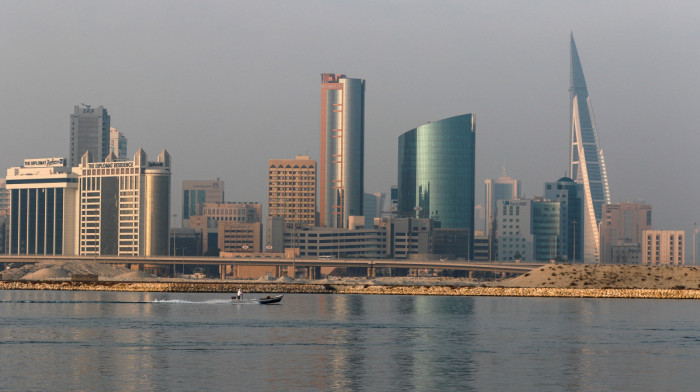
Bahrain's skies lit up again before dawn on Sunday. The Bahrain Defence Force said its air defences intercepted and destroyed several Iranian aerial threats before they reached their targets, the first such interceptions reported by Bahrain since September.
Iran's Revolutionary Guards said six drones had targeted a U.S. air-defence radar at the Al-Rifaa helicopter base, while the U.S. military said it had shot down two drones without sustaining any damage. The extent of any damage has not been independently confirmed. It was the second attack on Bahrain in three days.
The conflict began on 28 February with U.S. and Israeli strikes on Iran, followed by a ceasefire in April. But diplomatic efforts have failed to produce a breakthrough, with sporadic attacks continuing.
The renewed threat raises three pressing questions: how effectively Gulf air defences are performing, whether a new joint military headquarters in Kuwait can strengthen regional security, and what Qatar could gain from its defence agreement with Türkiye.
How effective are Gulf air-defences?
Available evidence suggests Gulf air defences have performed well, although the figures come from governments rather than independent assessments.
By 8 April, the United Arab Emirates (UAE) said its air defences had engaged 537 ballistic missiles, 26 cruise missiles and 2,256 drones. It reported ten civilian deaths and 224 injuries during that period.
In the opening weeks of the conflict, Middle East Eye calculated an interception rate of more than 92 per cent.
Bahrain says its defences have destroyed 102 missiles and 173 drones.
Despite thousands of incoming projectiles, the reported casualty figures suggest that layered defences combining Patriot, Terminal High Altitude Area Defense (THAAD) and shorter-range weapons have helped protect Gulf cities.
Why are interceptor shortages becoming a problem?
The challenge now is sustaining that protection without exhausting expensive and increasingly scarce interceptors.
Analyst Kelly Grieco estimated that the UAE spent between $20 and $28 on defence for every dollar Iran spent on drones.
But the pressure on stockpiles could prove even more serious.
The Center for Strategic and International Studies (CSIS) estimates that the U.S. inventory of Patriot PAC-3 MSE interceptors fell from more than 2,300 before the war to approximately 800.
Annual production stands at around 600, according to the assessment, while the target of 2,000 interceptors a year is unlikely to be reached before 2030.
The Jewish Institute for National Security of America (JINSA) estimates that the UAE and Bahrain, which faced approximately 44 per cent of the attacks, used more than three-quarters of their PAC-3 inventories.
Replenishing those stocks is a slow process.
A Patriot interceptor takes more than two years to build, while Iran can produce more than 200 Shahed drones a month, according to the assessments cited in this report.
Gulf countries do not manufacture Patriot or THAAD interceptors. They compete with the U.S. and Israel for supplies from the same American production lines.
Washington continues to approve sales, including a reported $25 billion Patriot package announced in May for Kuwait, Bahrain, the UAE and Qatar.
However, one analyst expects the U.S. to retain more interceptors to replenish its own depleted stocks.
An analysis by the Observer Research Foundation (ORF) Middle East argues for using lasers and interceptor drones to counter cheaper threats, while reserving Patriot and THAAD systems for more sophisticated missiles.
Sunday's reported attack highlights the dilemma. Even when a handful of drones targeting a radar installation cause little physical damage, intercepting them can drain valuable and costly defensive resources.
Can a joint Gulf command strengthen regional security?
On 10 November, Gulf Cooperation Council (GCC) defence ministers meeting in Manama approved plans to establish a forward headquarters for the GCC Unified Military Command in Kuwait and assign forces to it.
The command was established by agreement in 2013 and opened its headquarters in Riyadh in 2021.
Gulf leaders had already called for stronger joint military cooperation at an extraordinary summit in Jeddah in April.
But key details of the Kuwait plan remain unclear.
The GCC has not specified when the headquarters will open, how many personnel will be assigned or which military units will deploy.
Nor has it clarified whether the command will have the authority to make independent military decisions or simply coordinate national forces.
That could determine how effective it becomes.
Gulf militaries already share a technical foundation. Patriot systems form the core of missile defence in Saudi Arabia, the UAE, Qatar, Kuwait and Bahrain.
This makes a shared radar picture and agreed rules on which country intercepts incoming threats technically feasible.
Combining early-warning data and coordinating interceptor use across the six GCC states could help preserve dwindling stocks. But if the headquarters serves mainly as a liaison centre, its impact may be limited.
Kuwait's selection also carries political weight.
Analyst Muhanad Seloom notes that Kuwait has traditionally maintained a moderate position towards Iran but has nevertheless been attacked by both Iran and Iraq.
A forward military command there would therefore send a wider signal about Gulf security cooperation.
What does the Qatar–Türkiye defence pact mean?
On 13 November, Turkish President Recep Tayyip Erdoğan and Qatar's Emir Sheikh Tamim signed a mutual defence agreement in Istanbul.
The two countries pledged a “unified stance” against any external armed attack on either state.
Türkiye says the agreement is not directed against any particular country and has suggested that other states, including Egypt, could join.
The pact strengthens an expanding network of regional defence partnerships.
In August, Türkiye, Pakistan and Saudi Arabia signed an agreement under which an attack on one would be treated as an attack on all.
In October, Qatar, Indonesia, Pakistan and Türkiye signed the “Badr” defence cooperation memorandum.
These arrangements give Ankara defence commitments involving both Doha and Riyadh.
Qatar's close relationship with Türkiye was among the factors behind the diplomatic boycott imposed on Doha in 2017. Regional attitudes have since shifted.
Yet the latest agreement leaves crucial questions unanswered.
Published statements do not specify the circumstances that would trigger military assistance or identify any planned deployments.
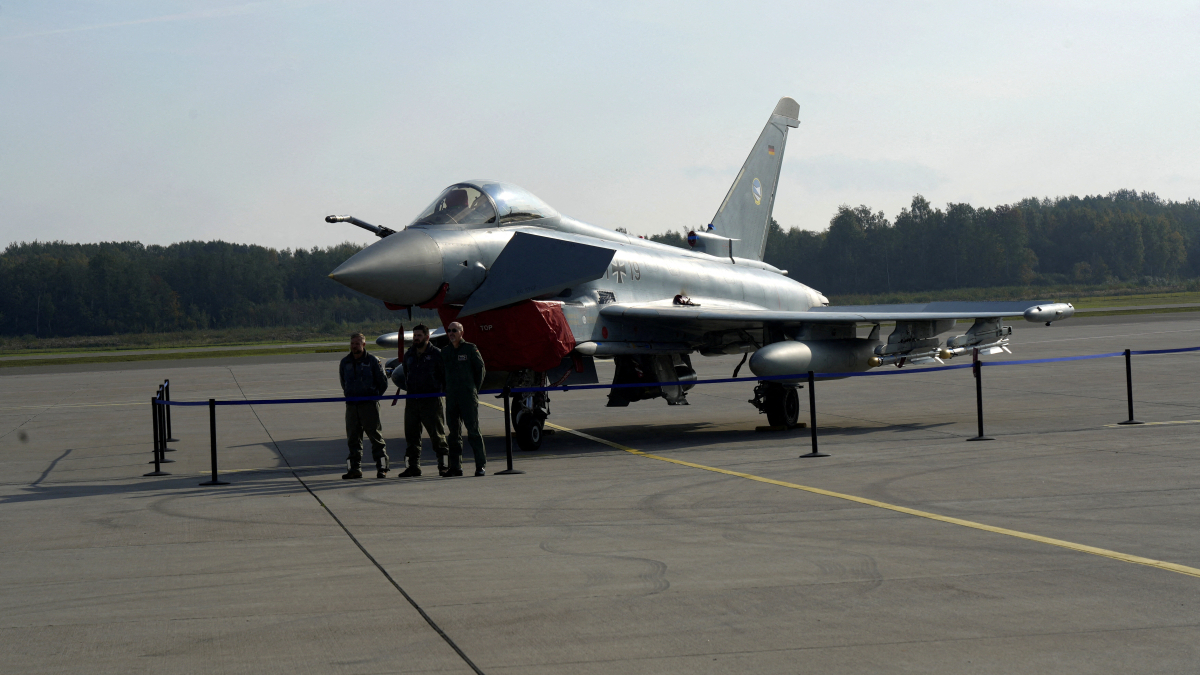
An analyst quoted by Al Jazeera suggested that Turkish weapons and air-defence systems could be deployed to Qatar in the near term.
That could give Doha additional defensive capacity beyond U.S. supply chains.
However, doubts remain over whether the agreement would lead to direct military intervention.
Yoel Guzansky of Israel's Institute for National Security Studies (INSS) notes that Türkiye already maintains a military base in Qatar.
He argues that Iran has repeatedly struck Qatar since February without a notable Turkish response, raising doubts about how much protection additional defence agreements would provide.
The key question is whether Ankara would act if Doha came under another attack, and what form that response might take.
Can the Gulf reduce its reliance on U.S. weapons?
The three developments reflect a common challenge: Gulf states need stronger, more sustainable defences against threats that are often far cheaper to launch than to intercept.
The proposed Kuwait headquarters could improve coordination among six national militaries, while the Qatar–Türkiye agreement offers another potential source of military support.
Neither, however, provides an immediate solution to the interceptor shortage.
The next tests will be whether the Kuwait headquarters receives a confirmed opening date, commander and committed forces; whether Türkiye deploys air-defence systems to Qatar; and whether Gulf states can develop their own counter-drone capabilities before U.S. production catches up.
For now, Gulf air defences have proved capable of stopping attacks. The bigger question is how long they can keep doing so.









What is your opinion on this topic?
Leave the first comment