For decades, the Strait of Hormuz has been one of the Gulf’s main gateways to the world. Now, months of disruption are pushing regional governments to invest in alternative routes and move more cargo around the strategic waterway.
UAE pursues ‘Zero Hormuz’ strategy
The shift is most visible in the UAE, which has openly adopted a “Zero Hormuz” strategy. The government says it wants to reduce the country’s dependence on the waterway regardless of whether Hormuz fully reopens. Plans include expanding ports on the Gulf of Oman, building new road and rail connections, developing pipelines and creating new trade corridors through Oman.
The UAE already has several options outside the strait. Fujairah and Khor Fakkan are operating as alternative maritime gateways, while the country is strengthening links between its western ports and the east coast by road and rail. The UAE is also working with Oman to move cargo through ports including Sohar and Duqm.
The strategy is no longer being presented solely as an emergency response to the war. UAE Foreign Trade Minister Thani Al Zeyoudi said earlier in September that the changes were becoming permanent, even if Hormuz returns to normal. The UAE has also announced plans to expand eastern ports and build additional infrastructure linking them to oil, gas and industrial facilities.
Saudi Arabia revives key oil pipeline
Saudi Arabia is taking a similar approach to its oil exports. The kingdom has restarted its 1,200-kilometre East-West pipeline, which carries crude from the oil-producing east to the Red Sea port of Yanbu.
The pipeline was shut after a September drone attack and has now resumed pumping at a low rate. Saudi Aramco is working to restore flows to around four million barrels per day, while full recovery could take six to eight weeks because three pumping stations were damaged.
The pipeline gives Saudi Arabia an alternative to shipping crude through Hormuz. At around four million barrels per day, the route can handle roughly 4 per cent of global oil supply. Its full capacity is about seven million barrels per day.
The UAE is also expanding its ability to export oil without using Hormuz. The Abu Dhabi Crude Oil Pipeline already connects oil fields to Fujairah on the Gulf of Oman.
The International Energy Agency (IEA) estimates that Saudi Arabia and the UAE together have about 3.5 million to 5.5 million barrels per day of potential alternative crude-export capacity, although the amount that can actually be moved depends on infrastructure, terminals and logistics.
Disruption spreads beyond oil
Oil pipelines, however, are only part of the picture.
The disruption has exposed how dependent the Gulf’s wider economy is on a single maritime gateway. Container traffic through Hormuz has fallen sharply, while businesses have turned to smaller ports, road transport, rail and air freight.
The Financial Times reported that shipping costs between China and the UAE have risen, alongside higher insurance costs and longer transit times as companies seek alternative routes.
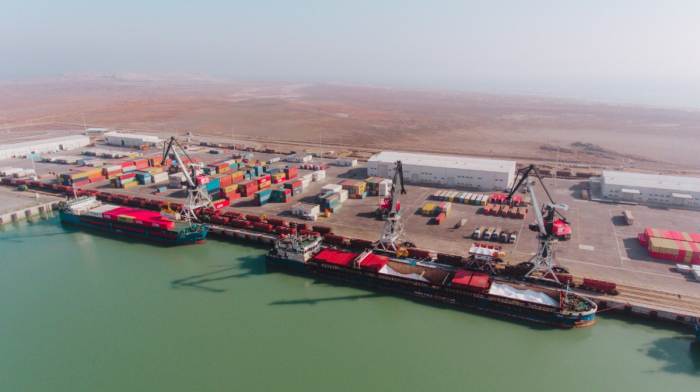
The UAE has already expanded alternative cargo operations through Fujairah and Khor Fakkan. AD Ports has deployed hundreds of additional trucks, increased rail services and expanded sea connections with Oman, India, Pakistan and Red Sea ports during the disruption.
Oman has become an increasingly important part of the alternative network. The UAE has established trade corridors with Omani ports and accelerated customs procedures for goods moving by road into Dubai. Sharjah and Oman have also developed logistics links designed to move cargo around Hormuz rather than through it.
Alternatives have limits
There is a limit, however, to how quickly the Gulf can reduce its reliance on Hormuz.
The waterway handles enormous volumes of oil, gas and other goods, and alternative ports and land corridors cannot immediately absorb all that traffic. The IEA has warned that bypass infrastructure is limited, while the logistics needed to redirect large volumes have not been fully tested.
Avoiding Hormuz also does not eliminate wider regional risks. Saudi Arabia’s route to Yanbu depends on the Red Sea, where Houthi attacks have threatened shipping and infrastructure, while the UAE’s alternative eastern ports remain exposed to the wider regional security situation.
Building resilience rather than replacing Hormuz
Rather than replacing one critical route with another, the UAE is seeking to build a wider network of ports, pipelines, roads, railways and shipping corridors. The aim is to prevent disruption in one location from bringing regional trade to a halt.
Hormuz is unlikely to lose its importance. The volumes passing through the strait are simply too large. But the current crisis is already influencing investment decisions across the Gulf.
For GCC countries, the challenge is increasingly twofold: keeping Hormuz open while making their economies less dependent on it.


















What is your opinion on this topic?
Leave the first comment