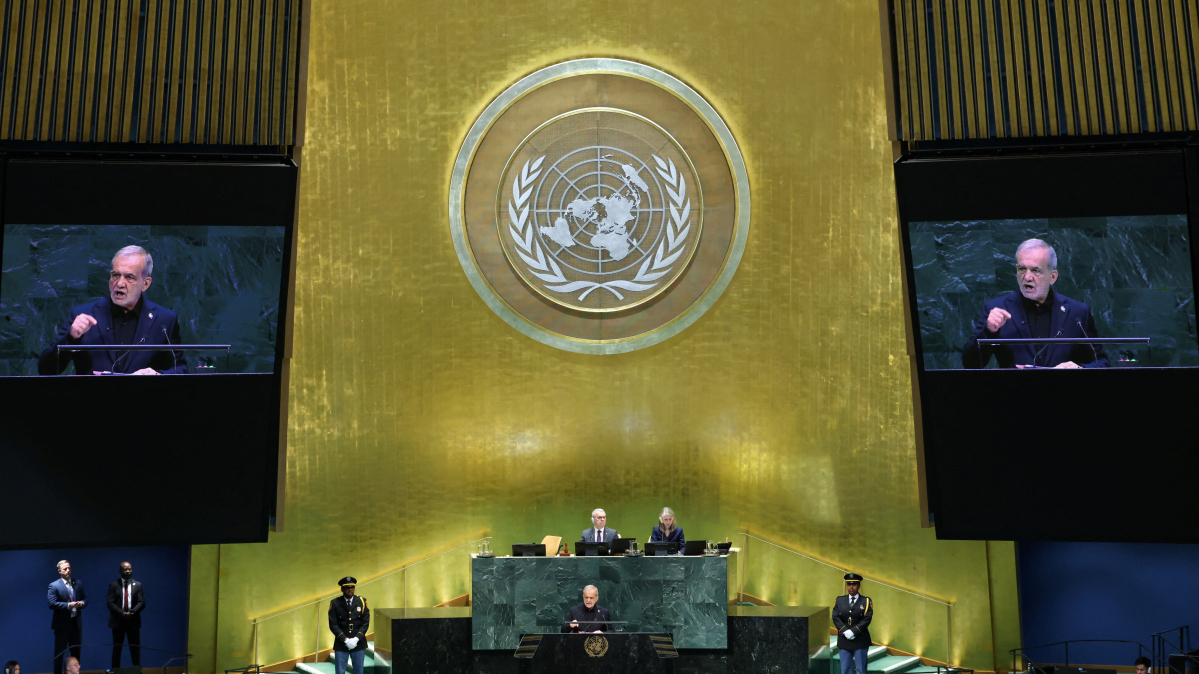
Iranian President Masoud Pezeshkian has accused U.S. President Donald Trump of having a “bullying mentality” at the United Nations General Assembly meeting in New York as Tehran and Washington remain divided over ending the war, despite holding their first indirect talks in months.
In his speech on Wednesday, Iranian President Masoud Pezeshkian condemned what he called “signs of a bullying mentality” from U.S. President Donald Trump, who had used the same forum the day before to threaten to “annihilate” Iran.
The duelling speeches at the annual UN gathering bookended the first shuttle talks between the U.S. and Iran for months, though they appeared to have yielded no concessions in the public stance of either side towards ending the war.
U.S. Secretary of State Marco Rubio told reporters on Wednesday that a deal with Iran would involve hard work over a period of time, adding that Trump also had military options.
The U.S. has also said it will impose so-called secondary sanctions against any country that allows Iranian flights after Wednesday.
Mohsen Rezaei, secretary of Iran's Supreme National Security Council, told state TV Iran would ensure neighbouring countries' airports could not function if they stop Iranian flights.
Iran says it 'will not bow to pressure'
In his address to the 193-member General Assembly, Pezeshkian homed in on the U.S. blockade of Iranian ports and on the Strait of Hormuz, a conduit for a fifth of global oil and liquefied natural gas shipments before the war.
“It cannot be the case that everyone benefits from the Strait of Hormuz while we are denied access to shipping through this waterway. The permanent deployment of hostile fleets and the expansion of the war will not lead to peace,” he said.
“The Iranian people will not bow to pressure,” he added.
Iran wants to exert control over the strait and collect fees from ships that use it. Washington rejects this and says the strait must remain fully open to international shipping.
Meanwhile, oil prices edged lower on Thursday, with Brent crude falling 94 cents, or 0.9 per cent, to $102.13 a barrel, while U.S. West Texas Intermediate (WTI) declined 59 cents, or 0.7 per cent, to $91.56.
The declines followed a four per cent rise in the previous session, after Iran said it remained open to diplomacy to end the U.S.-Iran conflict.
First indirect talks since July
Iranian and U.S. officials held their first known indirect talks on Tuesday since a ceasefire collapsed in July, with Iran's Foreign Minister Abbas Araghchi and U.S. envoys Steve Witkoff and Jared Kushner communicating through mediators.
Iranian Foreign Ministry spokesperson Esmail Baghaei said Tehran had conveyed conditions during a two-hour exchange of messages with Washington via a Qatari mediator. These included an end to the war on all fronts, a halt to U.S. “acts of aggression” and the release of frozen Iranian assets.
Strait of Hormuz remains under pressure
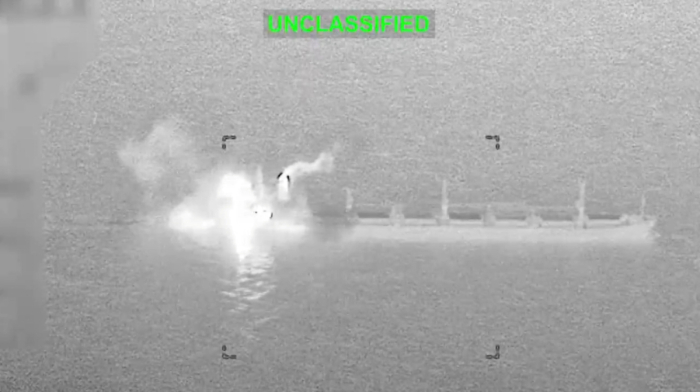
In the latest reported attack in the Strait of Hormuz, Britain's UKMTO maritime security agency said a cargo ship had been hit by projectiles, causing two casualties among the crew. The crew was evacuated, and the ship was on fire and adrift.
Despite near-daily attacks, traffic through the strait has picked up in recent weeks.
Oil producers pay shipping companies' fees of as much as a quarter of a cargo's value to take the wartime risk of sailing through the strait with transponders switched off, before transferring crude to other vessels on the far side.
Exports from the United Arab Emirates have already recovered to pre-war levels, and Saudi Arabia has sold 60 million barrels of Gulf oil for both this month and next, to be delivered beyond the strait off the coast of Oman.








What is your opinion on this topic?
Leave the first comment