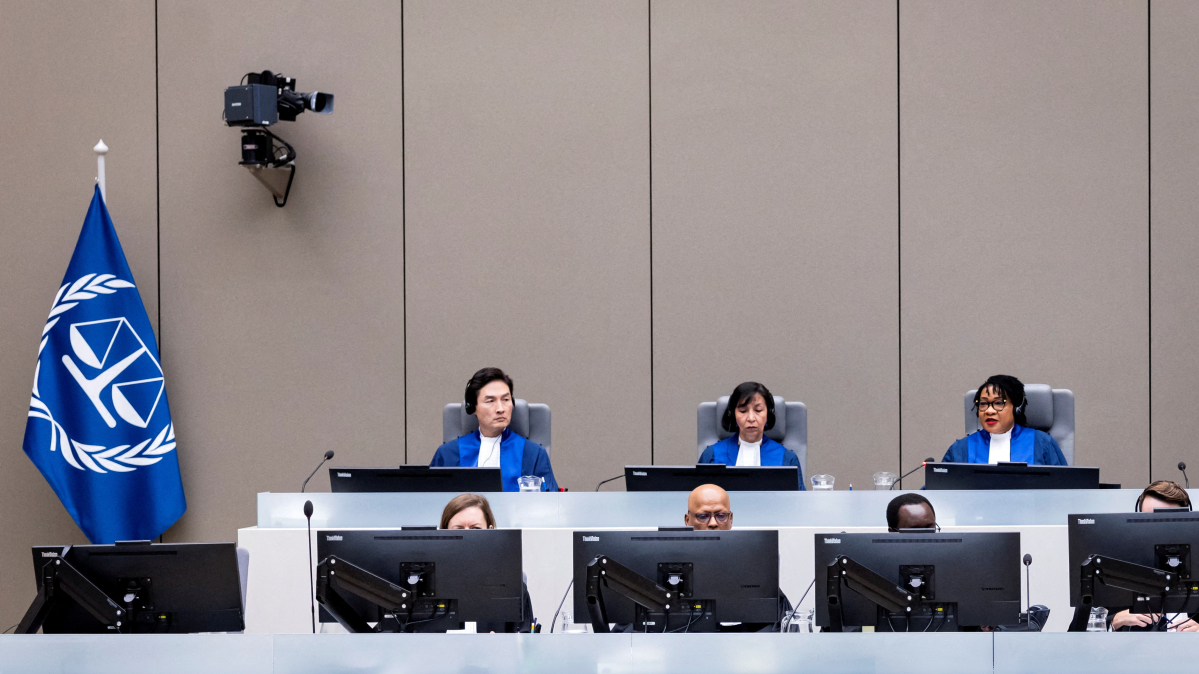
Tajikistan has become the seventh country to begin withdrawing from the International Criminal Court (ICC), the world's permanent war crimes tribunal. The court has 125 member states, seven of which have formally started the withdrawal process. It takes a year for a withdrawal to come into effect.
Who is leaving?
Tajikistan notified the United Nations on 20 November, following a vote in its lower house of parliament on 1 October. It is due to leave the ICC on 20 November 2027.
The decision follows a dispute with the court over Russian President Vladimir Putin's visit in 2025. The ICC found that Tajikistan had failed to comply with its request to arrest Putin, who is wanted over alleged war crimes in Ukraine.
Tajik officials have not directly linked the withdrawal to the ruling, but Deputy Foreign Minister Idibek Kalandar said in October that the court had repeatedly deviated from recognised standards of judicial impartiality.
In September 2025, Burkina Faso, Mali and Niger were the first to announce plans to leave. The three military-led countries then formally notified the UN between 18 and 24 June this year, accusing the ICC of being an instrument of “neo-colonial repression”.
Mali has been under ICC investigation since 2013. Burkina Faso and Niger are not publicly facing investigations.
Venezuela filed its withdrawal on 24 July, which will take effect a year later. The government accused the court of bias against countries in the Global South. The ICC is investigating possible crimes against humanity during the 2017 crackdown on anti-government protests.
The decision came under the country’s interim President Delcy Rodríguez, who has sought closer ties with the U.S.
Chad has also announced plans to leave, arguing that the court's record has been “limited and uneven”. Its Foreign Ministry accused the ICC of disproportionately targeting African countries, adding that Washington had raised concerns about the institution and urged Chad to reconsider its membership.
Naoero, the Pacific island nation formerly known as Nauru, announced its withdrawal at the UN General Assembly in September. Naoero has consistently sided with the U.S. in UN votes on Israel and Palestine.
What is driving the withdrawals?
U.S. Secretary of State Marco Rubio has vowed to dismantle the court “brick by brick,” calling it an “intolerable threat to U.S. sovereignty”. Washington is not a member of the ICC and argues that the court has no right to prosecute citizens of countries that have not joined it.
The U.S. has imposed financial sanctions and visa restrictions on ICC staff and has said it will encourage countries under its security umbrella to reject the court. Criticism of the ICC's record predates the Trump administration.
The court's early investigations were largely focused on Africa, prompting accusations that it disproportionately targeted the continent. However, most of those investigations were initiated at the request of African governments themselves.
Rights groups have also questioned the motives of some departing governments, arguing that leaders facing allegations of abuses want to shield themselves from international scrutiny. An international law academic said the withdrawals were being driven by authoritarian governments seeking to avoid accountability for crimes against their own people.
Does leaving end the court's reach?
Countries remain bound by the Rome Statute until their withdrawals take effect, and leaving does not erase obligations arising while they were members. Nor does it automatically end investigations already under way.
The ICC has said its investigation into Venezuela will continue despite the country's decision to leave.
Withdrawal is also not necessarily permanent. South Africa and Gambia announced plans to leave in 2017 but later reversed course. Hungary was due to leave on 2 June, but new Prime Minister Péter Magyar reversed the decision.
Many European governments have defended the ICC, while the European Union has urged Tajikistan to reconsider its decision.
Read more about the ICC:
















What is your opinion on this topic?
Leave the first comment