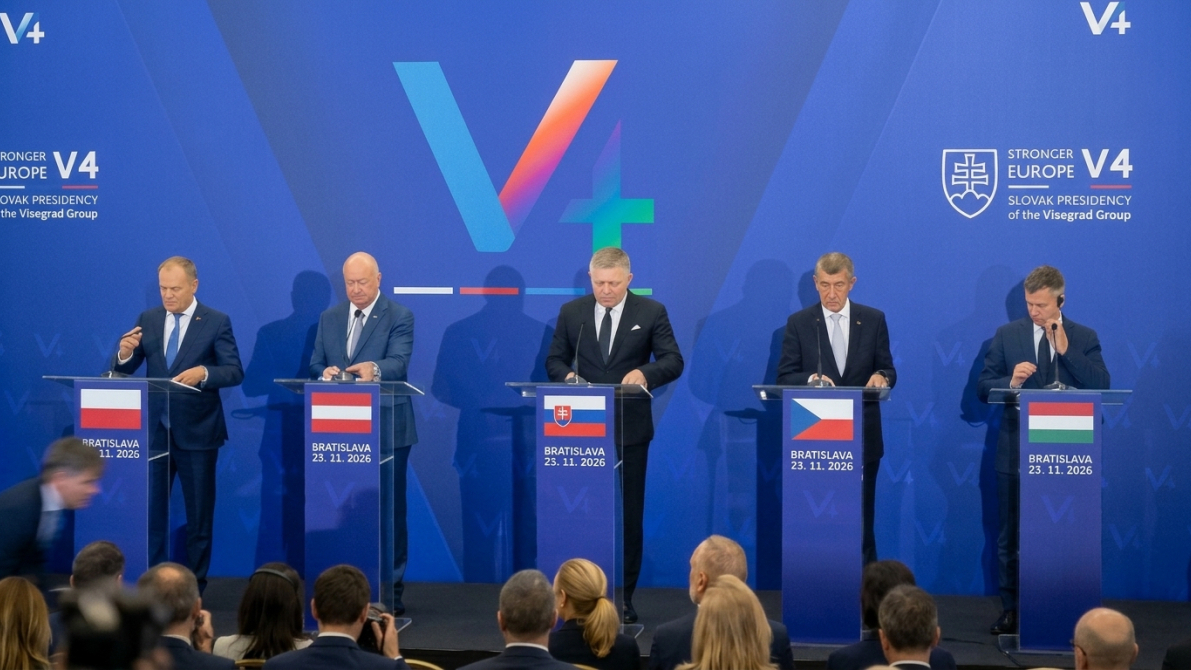
The leaders of Poland, the Czech Republic, Hungary, Slovakia and Austria have rejected the latest proposal for the European Union's 2028–2034 budget as unacceptable.
European Council President António Costa presented the proposal on Saturday (21 November). The rejection, made after a meeting in Bratislava on Monday, highlights the scale of the divide Costa must bridge before EU leaders meet for a special budget summit on 26–27 November.
The bloc hopes to narrow differences between the countries that pay more into the budget than they receive and those that benefit most, with the aim of reaching an agreement in December.
'Long way' from a deal
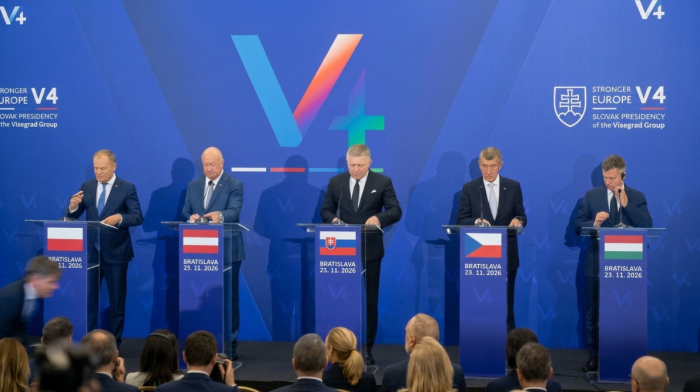
Slovak Prime Minister Robert Fico said the prime ministers of the Visegrad group, Poland, the Czech Republic, Hungary and Slovakia, considered the proposal unacceptable. He said Austria shared that view, and that there was still a long way to go before any agreement.
“I can say on behalf of all five of us that the proposal as presented by Costa on Saturday is not acceptable for us,” Fico said.
He said the four Visegrad countries, all of which receive more from the EU budget than they contribute, would take a joint approach to the talks. They would focus on cohesion funding for poorer regions and support for farmers.
Tusk: no budget that weakens the eastern flank
Polish Prime Minister Donald Tusk said he would not back any version of the budget that harmed his country's economy or security.
“I will be very firm and will not accept any version of the EU budget that would lead to higher energy prices, severe social costs, or a weakening of the defence capabilities of Poland and other countries on the eastern flank,” he said.
Czech Prime Minister Andrej Babis said earlier on Monday that the proposal was “absolutely unacceptable”. He objected to what he called an insufficient share of the budget going to member states rather than central EU programmes. He said funding for Ukraine should be kept separate from the budget.
Hungary rejects Ukraine link
Hungarian Prime Minister Peter Magyar repeated in Bratislava that Budapest did “not accept that the financing of Ukraine be linked to the seven-year budget”. He said Hungary would not accept funding for Ukraine being made an “obligation”.
Criticism from both camps
The proposal has drawn fire from net contributors as well as net recipients. Germany, the largest net contributor, says the budget is still too high. France and the European Parliament's chief budget negotiator have also objected.
Costa's plan puts the overall seven-year budget at about $1.74 trillion. That is $44 billion less than the proposal presented by the Irish EU presidency in October, and around $198.7 billion less than the European Commission's original proposal.
The EU budget funds all of the 27-member bloc's policies, from support for farmers to investment in new technology. It also backs industry and research to help them compete with China and the U.S.
Read more:













What is your opinion on this topic?
Leave the first comment