The Gulf is facing mounting pressure across aviation, defence and critical infrastructure as conflict, changing security arrangements and threats to water supplies reshape the region’s risk landscape.
Aviation security under scrutiny
Air navigation problems have affected the Gulf since conflict erupted in February 2026, while the 30 September incident involving flydubai Flight FZ1073 has brought aviation security into sharper focus.
Indian captain Smit Machchhar was praised for his actions after he opened the cockpit door despite being stabbed, allowing passengers and crew to overpower the alleged assailant. Two other pilots on board subsequently took control of the aircraft and landed safely in Tabuk, Saudi Arabia.
Israeli Prime Minister Benjamin Netanyahu praised Machchhar’s actions, calling him a “true hero”.
Warnings over Gulf airspace
The European Union Aviation Safety Agency (EASA) has strengthened its warning for Saudi Arabian airspace and extended advisories covering Iran and Iraq, as well as parts of the airspace and territorial waters of several Gulf states.
Aviation in the UAE has also faced continued disruption. Flights operated by Iranian airlines to and from the UAE have been suspended until further notice.
At the same time, the U.S. is reducing parts of its regional military footprint as Gulf states explore alternative security arrangements. Qatar has called for a new regional security framework involving Iran, while Saudi Arabia, Türkiye and Pakistan signed the Makkah Joint Defence Agreement in August.
Saudi Arabia and UAE seek to repair ties
Saudi Arabia and the UAE are also seeking to repair ties as the regional security landscape shifts. Saudi Crown Prince Mohammed bin Salman met UAE Vice President Sheikh Mansour bin Zayed Al Nahyan in Riyadh as the two Gulf powers sought to ease tensions in their relationship.
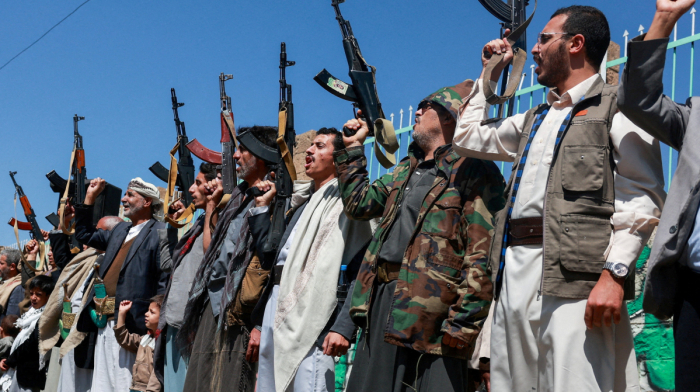
The talks came as renewed attacks by the Iran-aligned Houthis created a shared security concern.
Water security emerges as strategic risk
The war with Iran has also brought the Gulf’s vulnerability over water security into sharper focus. The region’s heavy reliance on desalination, imported food and coastal infrastructure means attacks or major disruption could have far-reaching economic and national security consequences.
Desalination facilities are particularly critical across the Gulf, where limited natural freshwater resources leave several states heavily dependent on seawater for drinking supplies.
The risks highlight how war, climate pressures and the Gulf’s economic expansion are turning water infrastructure into an increasingly important strategic asset.
















What is your opinion on this topic?
Leave the first comment