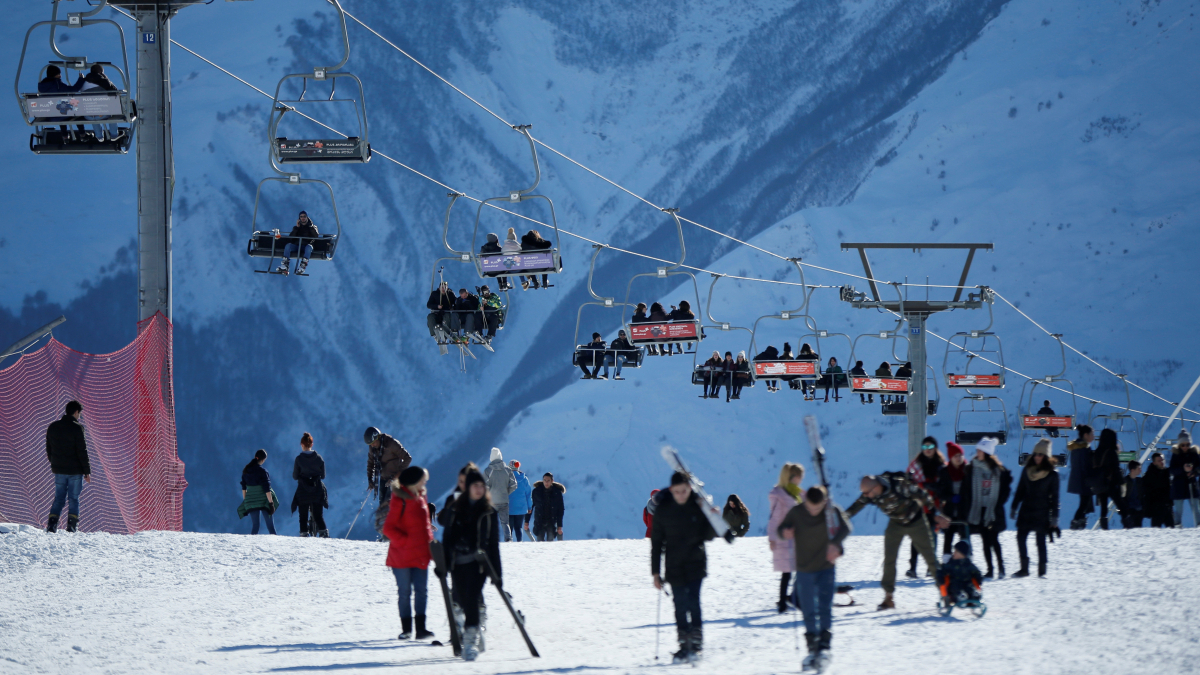
Georgia's biggest ski resort is getting ready for another winter season, with new ski lifts, additional slopes and artificial snowmaking equipment expected to improve its appeal.
But beyond the mountain, traffic congestion, waste collection and concerns over emergency medical and rescue services continue to raise questions about how prepared Gudauri is to welcome more visitors.
Located in the Greater Caucasus Mountains, around 120 kilometres from Tbilisi, Gudauri has become Georgia's main international skiing destination. The resort sits at approximately 2,200 metres above sea level, with ski areas reaching 3,276 metres. It offers around 86 kilometres of ski runs, 21 lifts and 36 trails, attracting both beginners and
experienced skiers.
The numbers reflect its growing importance. In 2024, Gudauri recorded approximately 325,900 international ski-resort visits, according to the Georgian National Tourism Administration. Domestic visitors accounted for another 201,700 visits.
For the 2026–2027 season, the government has allocated GEL 31 million ($12 million) for infrastructure upgrades.
Plans include two new lifts, additional ski runs, a covered moving carpet for beginners and artificial snowmaking systems. Night skiing is also expected to become possible following improvements to slope lighting. The Mountain Trails Agency says the works are scheduled for completion in December.
However, local tourism representatives say that expanding the skiing infrastructure is only part of what the resort needs.
Traffic congestion and transport challenges persist
One of the biggest challengers remains getting around. The journey from Tbilisi, which normally takes around two hours, can stretch to four or five hours during periods of heavy traffic and roadworks.
Tourism representatives have also raised concerns about congestion and insufficient parking inside the resort.
The situation can become particularly difficult during the New Year holidays, when visitor numbers increase. Hotelier Maia Murachashvili has described instances in which tourists had to leave their cars up to two kilometres from their accommodation and carry their luggage through the snow.
The long-awaited Kvesheti–Kobi road project is expected to improve connectivity and winter access to the region. The 23-kilometre highway, which includes a nine-kilometre tunnel, is designed to bypass the avalanche-prone Jvari Pass. Although major construction milestones have been reached, the road is not yet fully operational.
Another unresolved issue is the proposed cable-car connection between Seturebi village and Gudauri, which tourism representatives say has been suspended. They also point to limited public transport connections between nearby settlements and the resort.
Waste management and emergency services raise concerns
Beyond transport, the transfer of waste collection responsibilities to Dusheti Municipality has raised questions among local businesses about whether the service can operate efficiently during the busiest months. Last winter, traffic congestion also made it difficult for collection vehicles to reach parts of the resort according to Gega Salukvadze, the founder of the organisation “Protect Mountain Resorts,” on local media.
Meanwhile, local tourism representatives have questioned whether Gudauri's emergency medical facilities have sufficient equipment to deal with serious skiing injuries. Concerns have also been raised about the availability of
specialised mountain rescue personnel and equipment.
Infrastructure gaps could challenge Gudauri's tourism ambitions
Gudauri has clear advantages: its high-altitude location, mountain scenery and proximity to Tbilisi make it an attractive destination for international travellers. But competition with established winter resorts requires more than adding kilometres of ski slopes.
As Georgia seeks to strengthen its position on the international winter tourism market, Gudauri faces a familiar challenge: making sure that investment in attracting visitors is matched by investment in the infrastructure and services they depend on.
The new lifts may make the resort more attractive this winter. Whether the roads, public services and emergency systems are ready for the additional demand is a different question.
Read more about Georgia:












What is your opinion on this topic?
Leave the first comment