Georgia and Azerbaijan are stepping up efforts to boost trade, strengthen transport links between Asia and Europe and resolve a longstanding border dispute, as both countries seek to deepen their strategic partnership.
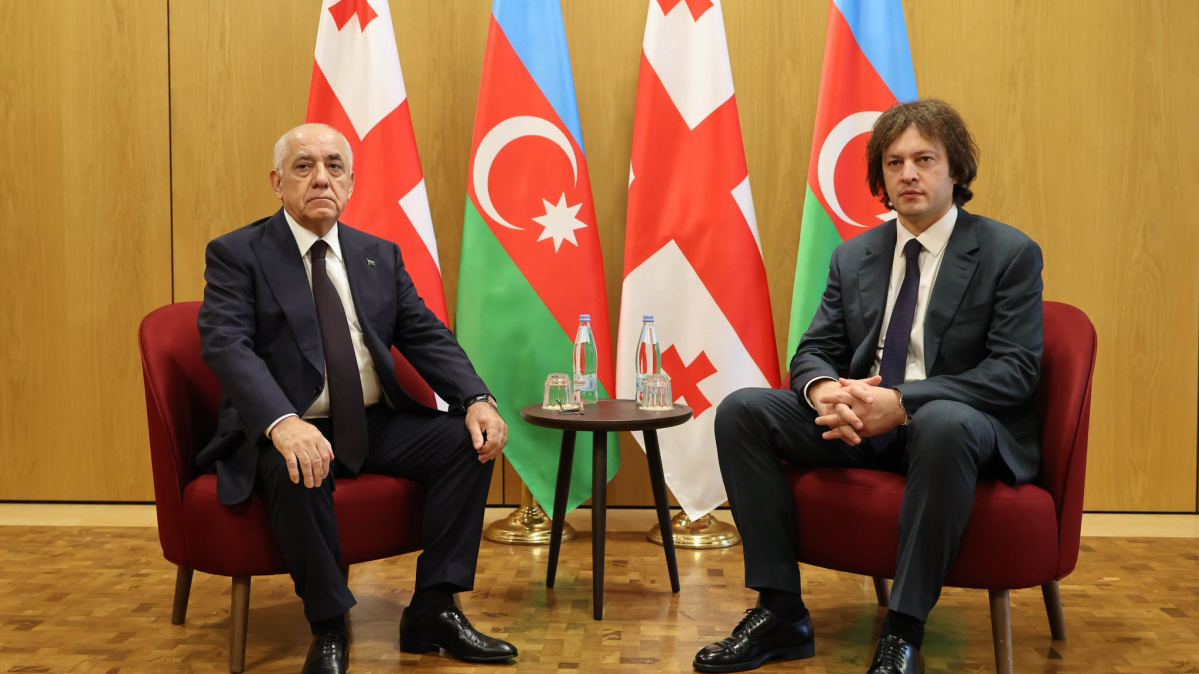
The priorities were discussed in Tbilisi, where Azerbaijani Prime Minister Ali Asadov met his Georgian counterpart, Irakli Kobakhidze, for the 11th meeting of the Intergovernmental Commission on Economic Cooperation.
The meeting followed a series of high-level exchanges in 2026, including Azerbaijani President Ilham Aliyev's visit to Georgia in April and Kobakhidze's visit to Azerbaijan in May.
Both governments say the visits have strengthened a strategic partnership spanning trade, transport, energy and regional security.
Trade tops $1 billion as investment grows
Economic ties are strengthening, with bilateral trade exceeding $1 billion in the first nine months of 2026, up more than 40 per cent from the same period last year, according to Asadov.
Azerbaijan has also invested approximately $4 billion in Georgia, he said.
“Georgia is a key trade partner for Azerbaijan,” Asadov said, describing trade and economic relations as developing with “a very positive dynamic”.
Georgia is seeking to capitalise on that growth by expanding exports, diversifying trade and attracting further investment.
Kobakhidze said his country wanted to unlock more of its export potential and encourage greater investment.
The commission also discussed tourism, agriculture, customs, healthcare and education, highlighting efforts to broaden economic cooperation beyond major infrastructure projects.
Middle Corridor drives transport ambitions
Transport and energy remain central to the partnership, with both countries seeking to strengthen their position along key trade routes connecting Asia and Europe.
The Middle Corridor, which connects Central Asia and the Caspian region to Europe through the South Caucasus, has become increasingly important as governments and businesses explore alternative routes for international trade.
Georgia provides access to the Black Sea, while Azerbaijan serves as a crucial transit hub across the Caspian.
The Baku–Tbilisi–Kars railway is a key part of this network, connecting Azerbaijan and Georgia with Türkiye and markets beyond.
Asadov said efforts were under way to increase the railway's capacity to five million tonnes.
Georgia is also developing infrastructure to expand its transit capabilities, including the East–West Highway and the planned Anaklia deep-water port.
However, the success of these projects will depend on continued investment, efficient logistics and attracting sufficient cargo volumes.
Energy projects strengthen regional links
Energy cooperation is another pillar of bilateral relations.
The Baku–Tbilisi–Ceyhan oil pipeline, the Baku–Supsa pipeline and the South Caucasus gas pipeline have established Georgia as a major transit route for Azerbaijani energy exports.
The two countries are also working with Romania and Hungary on the planned Green Energy Corridor, which aims to deliver renewable electricity to European markets.
“Energy is another significant dimension of the strategic relations between Georgia and Azerbaijan,” Kobakhidze said, highlighting the contribution of existing infrastructure to regional and European energy security.
The proposed electricity link could extend cooperation beyond oil and gas, although further technical and financial progress is needed before the project can advance.
Border dispute back on the agenda
Alongside economic cooperation, the two governments pledged to accelerate efforts to resolve their longstanding border dispute.
The commission discussed the delimitation and demarcation of the Georgia–Azerbaijan border, where negotiations have made little headway in recent years.
Kobakhidze said both sides had agreed to speed up the process, with 15 sections of the border still unresolved.
Acknowledging years of stalled negotiations, he said: “For many years, there has been no change whatsoever regarding the delimitation and demarcation of the borders.”
He added that both countries would intensify work on the outstanding sections, although no deadline for completing the process was announced.
Among the most sensitive locations is the David Gareji monastery complex, a centuries-old Georgian Orthodox site near the shared border.
Disagreements over the location of parts of the complex have added cultural and religious sensitivities to an already complex territorial issue.
The renewed commitment raises the prospect of progress, but resolving the remaining sections will require further negotiations.
Focus shifts to delivering results
Both prime ministers stressed the importance of closer ties, with Asadov saying that expanding bilateral cooperation remained a priority of Azerbaijan's foreign policy.
The two governments also reaffirmed their mutual support for territorial integrity and sovereignty in international organisations, reinforcing the political foundations of their partnership.
Growing trade, improved transport infrastructure and new energy projects could further strengthen the South Caucasus' role as a link between Asian and European markets.
Yet significant challenges remain, from delivering major infrastructure projects to settling a border dispute that has dragged on for years.
The Tbilisi meeting demonstrated a shared commitment to closer cooperation. The next test will be turning those pledges into concrete results.








What is your opinion on this topic?
Leave the first comment