Azerbaijan and Georgia are targeting more than $2 billion in bilateral trade as the neighbouring countries strengthen energy partnerships, expand transport links and pursue new investment opportunities.
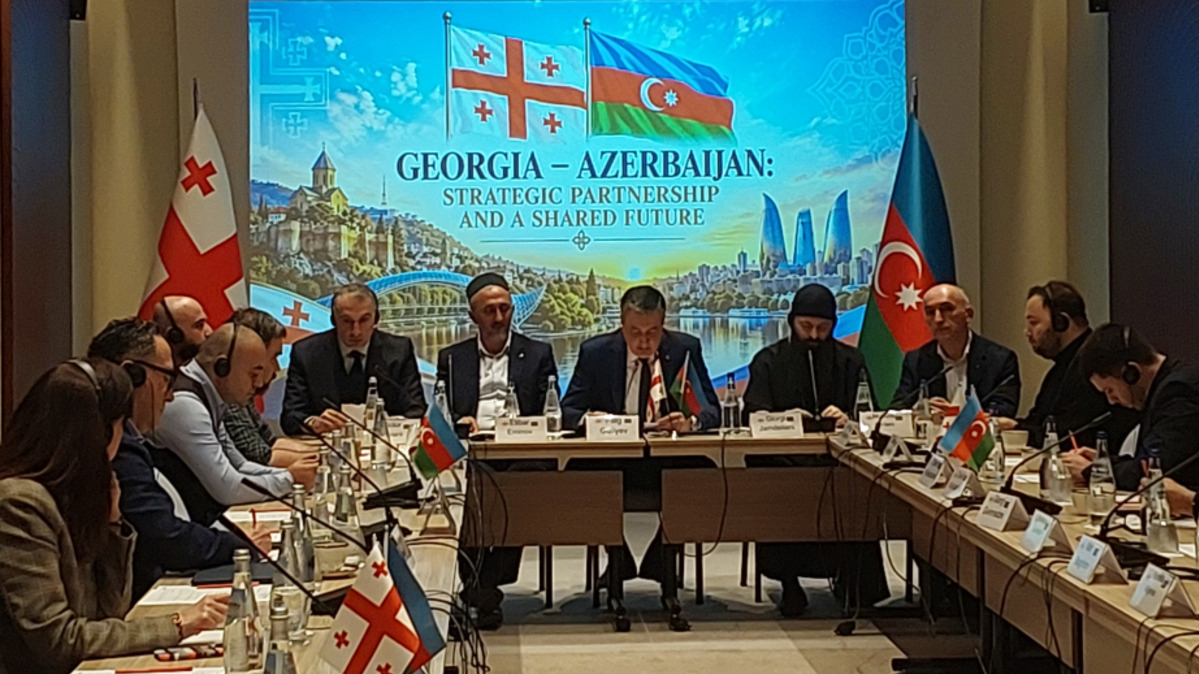
Azerbaijan's ambassador to Georgia, Faig Guliyev, outlined the ambition at a roundtable in Tbilisi on 19 October, saying bilateral trade had reached $1.4 billion in 2025.
Speaking at the event, titled “Georgia–Azerbaijan: Strategic Partnership and a Shared Future”, Guliyev highlighted the countries' economic potential and commitment to expanding commercial ties.
Achieving the $2 billion target would require trade to grow by nearly 43 per cent from the ambassador's reported 2025 figure, although no deadline has been set.
The ambition comes as Baku and Tbilisi deepen cooperation in natural gas, electricity, railway infrastructure and oil transportation.
Azerbaijan–Georgia trade reaches $888m in 2026
Official Azerbaijani figures show bilateral merchandise trade with Georgia increased by 15.8 per cent between 2021 and 2025, reaching $881.3 million.
Exports to Georgia accounted for the majority of trade throughout the period, according to the State Statistical Committee.
The latest figures from Azerbaijan's State Customs Committee show trade reached $887.95 million between January and September 2026.
Azerbaijan exported goods worth $757.49 million to Georgia, compared with imports of $130.46 million, resulting in a trade surplus of around $627 million.
This means Azerbaijan exported almost six times more to Georgia than it imported during the nine-month period.
However, Guliyev's reported $1.4 billion figure for 2025 differs from Azerbaijan's official merchandise trade statistics. The discrepancy may stem from different reporting methods or statistical definitions, but has yet to be clarified.
Meanwhile, Azerbaijan recorded $23.45 million in exports to neighbouring Armenia during the first nine months of 2026.
New energy agreements underpin economic cooperation
Energy continues to underpin the Azerbaijan–Georgia partnership.
In May 2026, both countries issued a joint communiqué setting out agreements covering natural gas supplies, electricity trade and transit, and oil transportation infrastructure.
The plans include Azerbaijan supplying electricity to Georgia and transmitting power through Georgian territory to Türkiye.
A separate intergovernmental framework establishes long-term electricity cooperation between Azerbaijan's state energy company SOCAR and Georgian energy operators.
It authorises the companies to conclude 20-year electricity supply and transit agreements from January 2027.
Longer-term natural gas arrangements are also planned, strengthening Georgia's position as both a market for Azerbaijani energy and a key transit route.
The May communiqué established 15 October 2026 as the deadline for finalising commercial agreements, although confirmation that all contracts have been signed is still pending.
While the deals could boost bilateral trade, their potential contribution towards the $2 billion target remains unclear.
Green energy projects could attract up to $7bn
The partnership is also expanding into renewable energy, with Guliyev highlighting projects that could attract between $6 billion and $7 billion in investment across both countries.
The proposed investments signal ambitions to diversify energy cooperation beyond traditional oil and gas infrastructure.
However, Guliyev did not specify which projects would receive funding, whether investment commitments had been secured or when implementation would begin.
The projected investment therefore remains an estimate rather than confirmed funding.
Middle Corridor strengthens regional trade ambitions
Transport links are another major focus of cooperation, particularly the Middle Corridor, a trade route connecting Asia and Europe through the South Caucasus and Caspian region.
Azerbaijan and Georgia have formalised the completion of upgrades to the Baku–Tbilisi–Kars railway, improving a vital transport link connecting Azerbaijan, Georgia and Türkiye.
Both countries hope to capitalise on their strategic locations to strengthen regional connectivity and increase trade flows.
Victor Kipiani, chairman of the Georgian think tank Geocase, said stronger cooperation could enhance the South Caucasus's economic competitiveness and growth potential, according to Azertac.
He also pointed to opportunities for closer ties as regional dynamics evolve.
Improved railway connections and wider transport infrastructure could generate further commercial activity. However, goods passing through either country are not necessarily included in bilateral merchandise trade figures.
What will it take to reach $2 billion?
The latest trade figures underline the strength of Azerbaijan–Georgia economic ties, with Azerbaijani exports dominating bilateral merchandise trade.
Much will now depend on whether the new energy agreements lead to signed contracts, higher trade volumes and fresh investment.
For now, the $2 billion goal remains an ambition, with no official timetable for achieving it.
Nevertheless, expanding energy cooperation, upgraded railway links and planned green investment could help both countries unlock further economic growth and strengthen their regional trade partnership.















What is your opinion on this topic?
Leave the first comment