Tajikistan's industrial economy is undergoing a shift. Manufacturing is driving expansion while mining is losing ground, revealing a changing production landscape beneath the country's double-digit industrial growth.
Industrial output reached 59.82 billion somoni ($6.48 billion) in the first 10 months of 2026, rising 13.5 per cent year-on-year in comparable prices, according to figures released by the country's Agency on Statistics on 20 November.
An AnewZ analysis of the official government report shows that manufacturing accounted for 52.9 per cent of industrial production, generating more than twice the output value of the extractive sector.
Manufacturing takes the lead
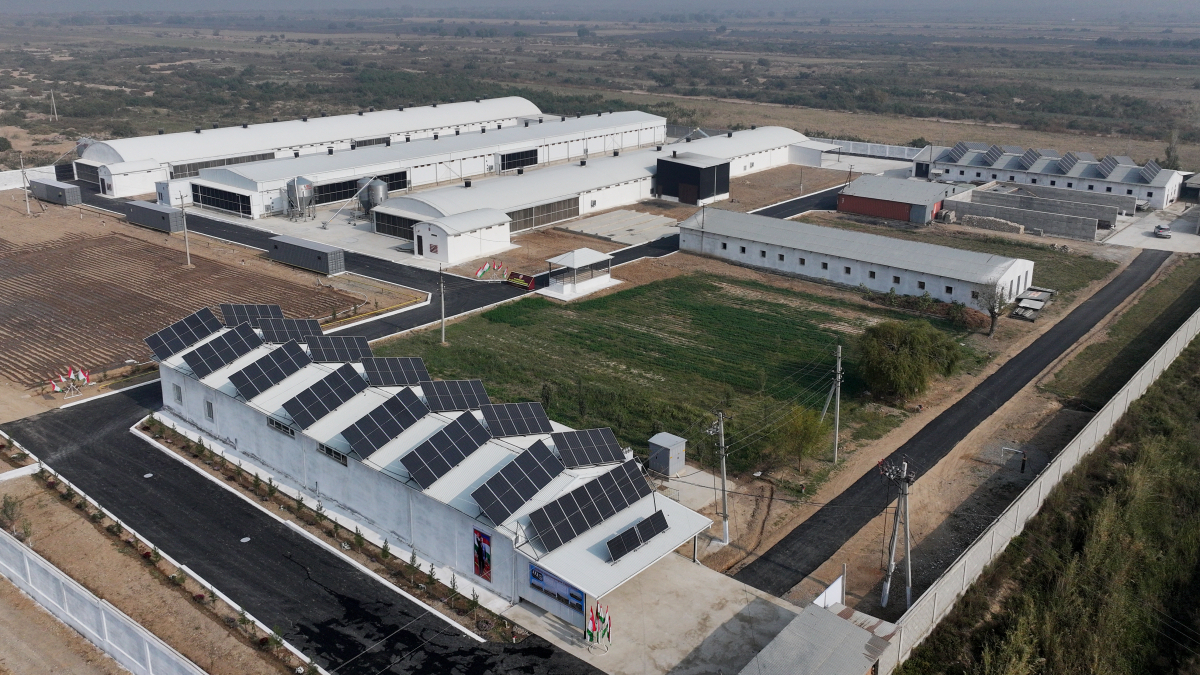
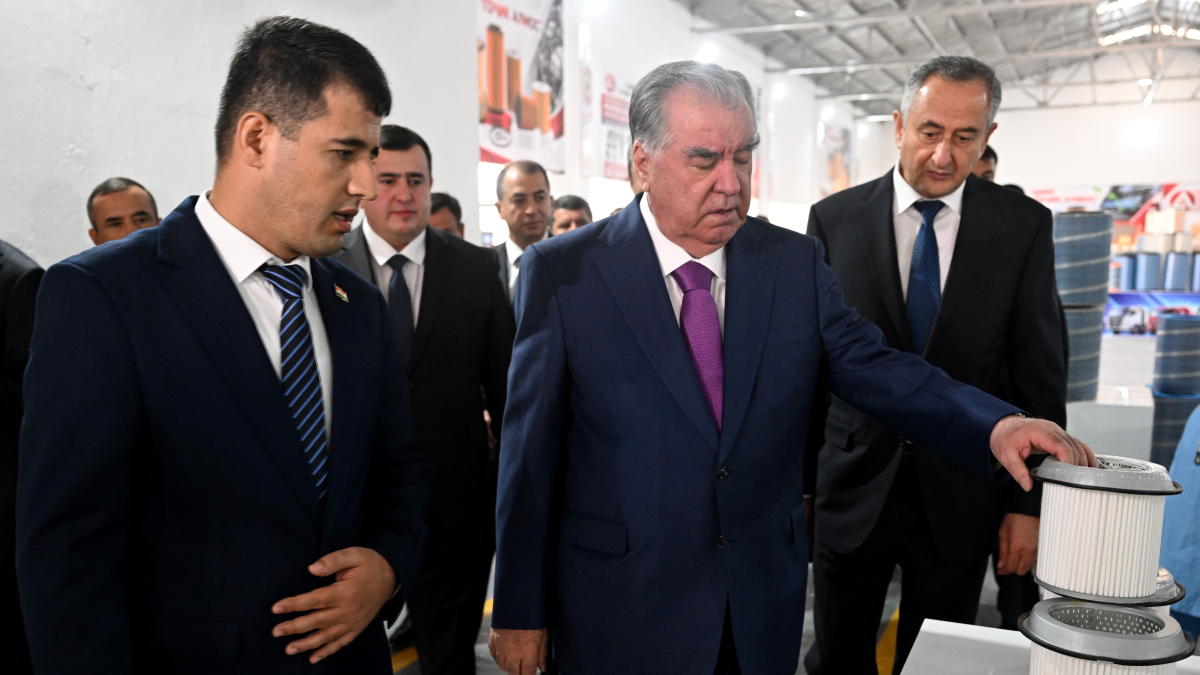
Factories and processing facilities generated 31.62 billion somoni ($3.43 billion) between January and October, recording annual growth of 19.2 per cent.
Mining and quarrying, meanwhile, produced 15.27 billion somoni ($1.65 billion), with production declining by 3.4 per cent compared with the corresponding period last year.
The divergence represents a 22.6-percentage-point difference between the performance of the two industries.
For Tajikistan, the distinction matters. Industrial expansion based on processing and manufacturing offers different economic opportunities from growth driven by extracting natural resources.
Manufacturing can support longer domestic supply chains, create demand for intermediate goods and provide opportunities for businesses to produce higher-value products.
However, stronger manufacturing figures alone do not establish whether domestic producers are becoming more competitive internationally or reducing their dependence on imported materials.
The composition of that expansion will ultimately determine how much economic value remains within the country.
Energy emerges as another growth engine
Electricity, gas, steam and air-conditioning supply generated 12.58 billion somoni ($1.36 billion) during the reporting period, expanding by 18 per cent year-on-year.
The sector accounted for approximately 21 per cent of total industrial production.
Combined, manufacturing and energy-related utilities generated 44.2 billion somoni ($4.79 billion), representing 73.9 per cent of the country's industrial output, according to AnewZ calculations.
Mining accounted for 25.5 per cent, while water supply, waste management and recycling contributed the remaining 0.6 per cent.
Energy infrastructure is particularly important to industrial development because expanding production capacity requires reliable electricity supplies.
Investment in factories without corresponding improvements in energy availability can limit the utilisation of industrial capacity.
The growth recorded in utilities therefore matters not only for its direct contribution to industrial production but also for its potential role in supporting other industries.
October exposes uneven momentum
Despite the strong cumulative figures, October's production data point to a more uneven industrial performance.
Overall industrial production grew by 6.2 per cent compared with October 2025, substantially below the cumulative growth rate recorded over the first 10 months.
Manufacturing expanded by 5.1 per cent during the month, against 19.2 per cent across the longer reporting period.
Mining registered a modest recovery, growing by 1.9 per cent year-on-year despite its cumulative contraction.
Energy-related utilities, however, maintained stronger momentum, expanding by 21.8 per cent.
Water supply and waste management recorded a 12 per cent contraction in October, reversing the positive direction observed across the cumulative period.
The figures suggest that the industries driving Tajikistan's expansion are not growing at a uniform pace.
A single month's performance is insufficient to establish a sustained slowdown, but October's weaker manufacturing growth raises questions about whether the sector can maintain its earlier momentum.














What is your opinion on this topic?
Leave the first comment