Georgia and Uzbekistan are aiming to nearly quadruple annual trade to $1 billion, up from $267.6 million in 2025, as the two countries seek to strengthen economic ties and expand transport links.
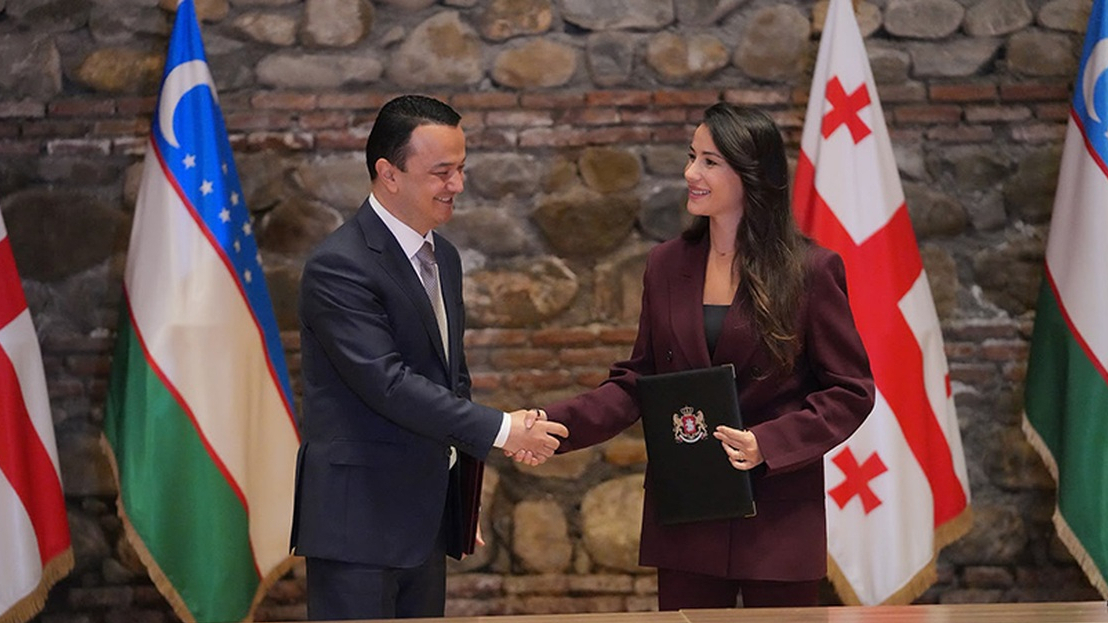
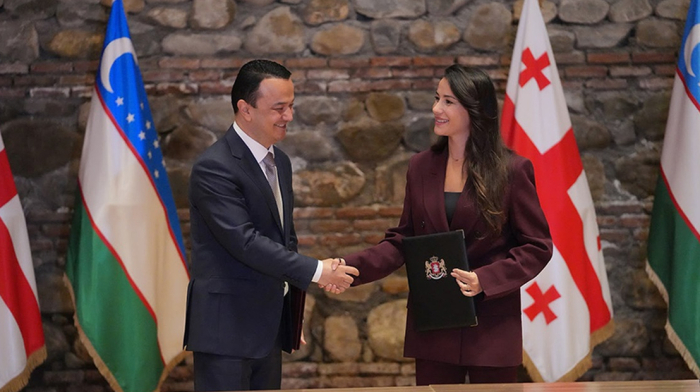
Georgia's Economy Minister, Mariam Kvrivishvili, announced the target following the 11th Intergovernmental Commission on Economic Cooperation, held in Georgia on 12 October. She co-chaired the meeting with Laziz Kudratov, Uzbekistan’s Minister of Investment, Industry and Trade.
Kudratov also met Prime Minister Irakli Kobakhidze, with discussions focusing on transport, logistics and the planned Anaklia deep-sea port.
How ambitious is the $1 billion target?
Trade between the two countries has never come close to the new target. It peaked at $326 million in 2024 before fallingto $267.6 million in 2025.
Reaching $1 billion would mean more than tripling the 2024 record and nearly quadrupling last year's trade.Officials did not set a deadline, referring only to “the near future.”
Trade between the two countries remains uneven. In 2025, Georgia exported $190 million worth of goods to Uzbekistan, mainly medicines, compared with $77 million in Uzbek exports to Georgia.
Kvrivishvili said the plan aims to increase overall trade while expanding exports of Georgian products.
Transport links key to trade growth
Improving transport connections is central to the two countries' ambitions.
Georgia sits at the western end of the Middle Corridor, a trade route connecting Central Asia with Europe via the Caspian Sea, Azerbaijan and the Black Sea, bypassing Russia.
For landlocked Uzbekistan, the corridor offers an alternative route to international export markets.
Kvrivishvili said Georgia also wants to join the new China-Kyrgyzstan-Uzbekistan transport route, currently under construction, while strengthening connections between the region and European and other markets.
Georgia is modernising its railway network to support growing freight demand, with annual capacity expected to increase from 15 million to 29 million tonnes by 2029.
The planned Anaklia deep-sea port on Georgia's Black Sea coast is also expected to play a significant role. Kvrivishvili described the project as important not only for Georgia but for all countries along the Middle Corridor.
Investment, tourism and direct flights
Beyond trade and transport, the commission explored opportunities to deepen cooperation in investment, tourism and business.
Georgia also plans to explore additional direct flights between the two countries, potentially improving connectivity and supporting closer commercial ties.
The meeting concluded with the signing of a joint protocol.
Georgian officials said the existing strategic partnership agreement has created new opportunities for political dialogue and economic cooperation.
Can the countries reach their target?
The $1 billion goal represents a major increase in bilateral trade, but achieving it will depend on progress in several key areas.
Expanding railway capacity, developing Anaklia port and improving connections along the wider Middle Corridor will be crucial to turning the ambition into reality.
Future trade figures will provide the clearest indication of whether these infrastructure plans are delivering results.
Read more:
















What is your opinion on this topic?
Leave the first comment