The European Commission has confirmed that Georgian government representatives will not be invited to next week's EU Enlargement Forum in Brussels, while offering Tbilisi lower-level participation in a separate ministerial meeting on connectivity.
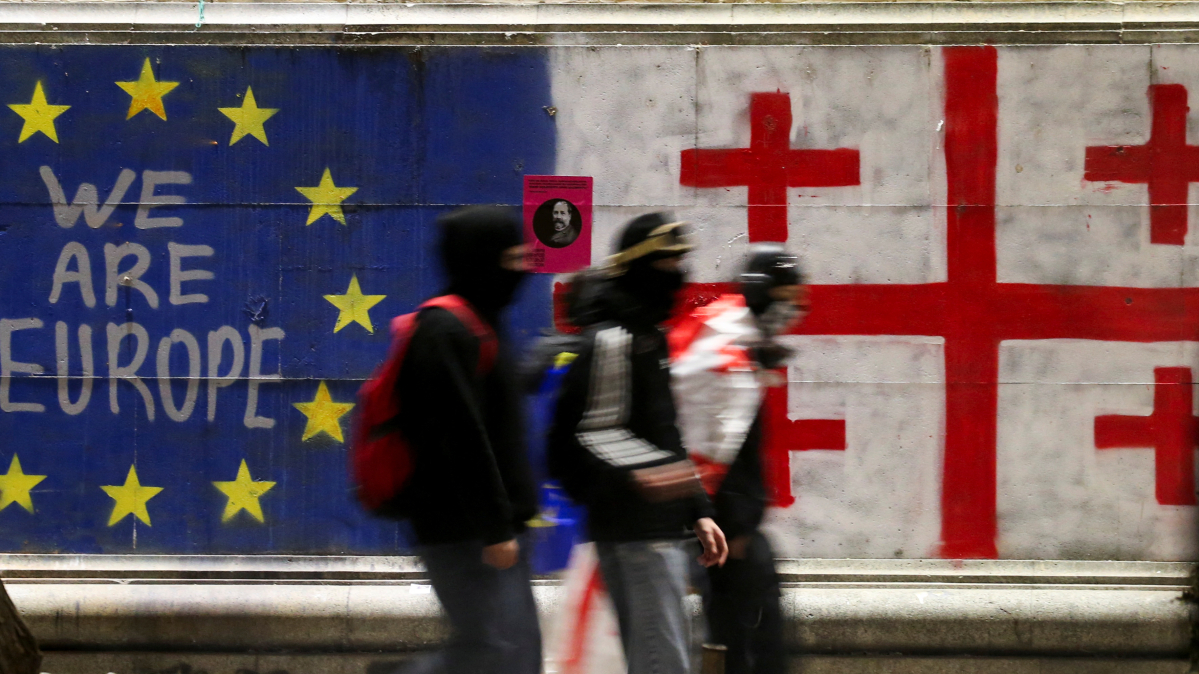
The decision marks another deterioration in relations between Georgia and the European Union, already strained by disagreements over democratic reforms, legislation and the country's stalled accession process.
European Commission spokesperson Guillaume Mercier confirmed the decision on 9 November during the Commission's daily press briefing, responding to a question from Euroscope.
“I can confirm that Georgia has not been invited to next week's meeting on enlargement,” he said.
He added that the EU's engagement with Georgian authorities would remain limited until Tbilisi demonstrates a firm willingness to change its current political course, as outlined in the Commission's latest Enlargement Report.
Invitation to connectivity meeting
Georgia has, however, received an invitation to a separate ministerial meeting on connectivity scheduled for 16 November, although at a lower level of representation. Mercier said participation in such meetings was decided on a case-by-case basis, taking EU interests into account, but did not specify which Georgian officials had been invited.
The EU Enlargement Forum, scheduled for 15-16 November in Brussels under the theme “Wider Europe – Stronger Europe”, will bring together European and candidate-country leaders to discuss enlargement, security, democratic reforms and economic cooperation. European Commission President Ursula von der Leyen, European Council President António Costa and Enlargement Commissioner Marta Kos are among the announced participants.
While Georgian government representatives are absent from the invitation list, Georgian civil society representative Nino Dolidze is scheduled to participate in a discussion on the role of civil society and local authorities in the enlargement process.
Georgia rejects lower-level representation
The Commission's announcement has prompted criticism from Georgian officials.
Prime Minister Irakli Kobakhidze had already said on 5 November that Georgia would not participate in an international meeting unless it received an invitation at an appropriate level.
Following Brussels' confirmation, Parliament Speaker Shalva Papuashvili reiterated the position, accusing the EU of disrespectful posturing towards Georgia and questioning how Brussels could discuss the Middle Corridor without involving the country.
The Georgian Foreign Ministry had also rejected the European Commission's latest assessment of the country, published on 4 November, describing its findings as containing factual inaccuracies and politically biased assessments. The ministry argued that the lack of dialogue between the two sides limited the Commission's ability to evaluate developments in Georgia objectively, while maintaining that Tbilisi remained open to constructive engagement.
Georgia's EU accession process remains stalled
The latest diplomatic disagreement comes against the backdrop of the European Commission's 2026 Enlargement Report, which described Georgia's accession process as “de facto halted” and maintained its assessment of the country as an EU candidate in name only.
The Commission cited continued democratic backsliding, restrictions on fundamental rights and civil society, concerns over the rule of law and increasingly restrictive legislation. It said Georgia continued to fall short of the nine steps identified in its recommendation for candidate status.
Georgia was granted EU candidate status in December 2023, subject to implementing the required reforms. However, in June 2024, the European Council concluded that the Georgian government's actions had effectively halted the accession process. Later that year, the government announced its decision to suspend pursuing EU accession negotiations until 2028.
The latest report does not revoke Georgia's candidate status. The Commission says the country's European path could resume if the authorities change course and recommit to democracy, the rule of law and fundamental rights.
For now, the absence of Georgian government representatives from the Enlargement Forum adds another sign of the widening gap between Brussels and Tbilisi, with no clear indication of when high-level political dialogue will be restored.
Read more:









What is your opinion on this topic?
Leave the first comment