


Kyrgyzstan’s economic boom: What’s driving growth and can it last?
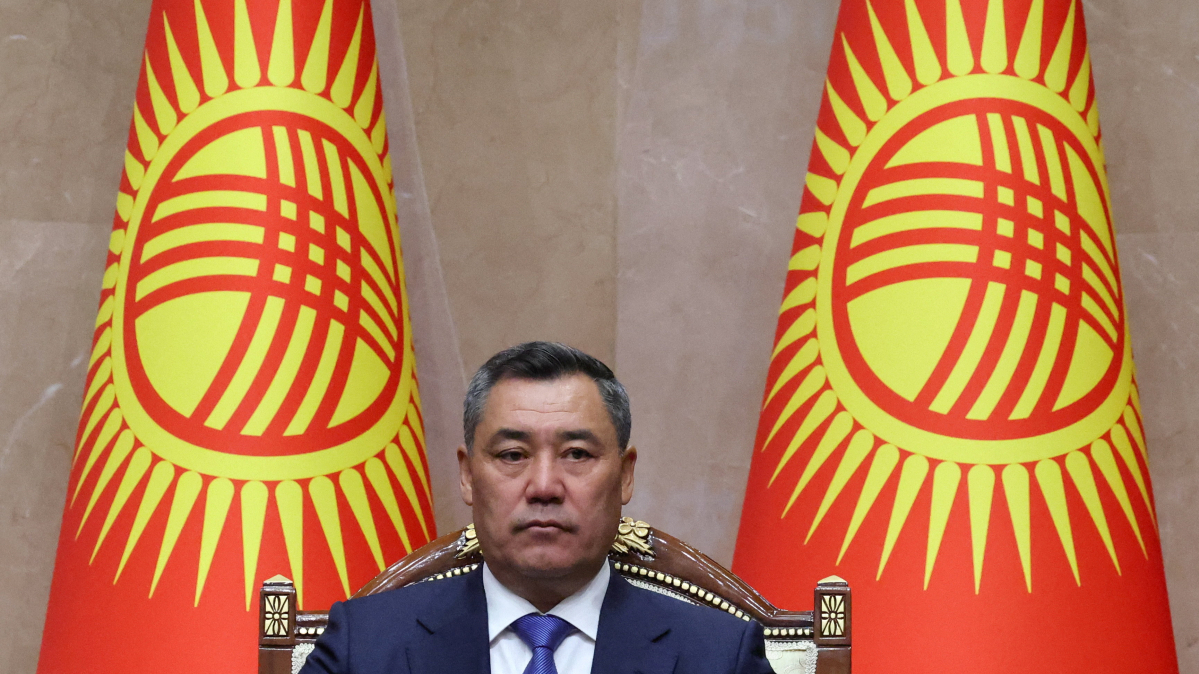
Kyrgyz President Sadyr Japarov attends a signing ceremony following talks with Chinese President Xi Jinping in Bishkek, Kyrgyzstan, 31 August 2026.
Reuters


Kyrgyzstan has emerged as Central Asia’s fastest-growing economy, fuelled by a construction boom, public investment and trade linked to Russia. But with Western sanctions tightening, can the country sustain its rapid growth?
A surge in domestic investment and housing construction has helped transform the economy of the landlocked nation of 7.4 million people, which once relied on remittances from workers abroad for nearly a third of its GDP.
Russia’s war in Ukraine has also provided an unexpected economic boost, turning Kyrgyzstan into a transit hub for goods and money flowing into Russia despite Western sanctions.
But renewed efforts to crack down on sanctions evasion are raising questions about how long the boom can last.
How fast is Kyrgyzstan growing?
Kyrgyzstan has recorded “impressive” GDP growth in recent years, Farid Talishli, the International Monetary Fund (IMF) Resident Representative in the Kyrgyz Republic, told AnewZ.
The economy grew by nine per cent in 2023, 11.5 per cent in 2024 and a preliminary 11.1 per cent in 2025.
The Asian Development Bank (ADB) expects growth to ease to 8.9 per cent in 2026 and 8.4 per cent in 2027.

Participants and spectators attend the opening ceremony of the VI World Nomad Games, an international cultural and ethnic sporting event, in Bishkek, Kyrgyzstan, 31 August 2026.
Reuters
In a statement published in April, the bank attributed the projected slowdown to weaker growth in construction and trade.
“The Kyrgyz Republic is well positioned to sustain strong growth over the medium term, underpinned by continued public investment and resilient domestic demand,” Zheng Wu, ADB Country Director for Kyrgyzstan, said.
The European Bank for Reconstruction and Development (EBRD) has issued a similar forecast, predicting growth of 8.7 per cent in 2026 and seven per cent in 2027.
What’s driving the growth?
A housing construction boom, backed by substantial public investment, has been the biggest engine of Kyrgyzstan’s economic expansion, according to Talishli.
He said construction activity had surged by 62.2 per cent, contributing 4.2 per cent to overall economic growth.
Re-exports and stronger domestic demand have also helped fuel the expansion.
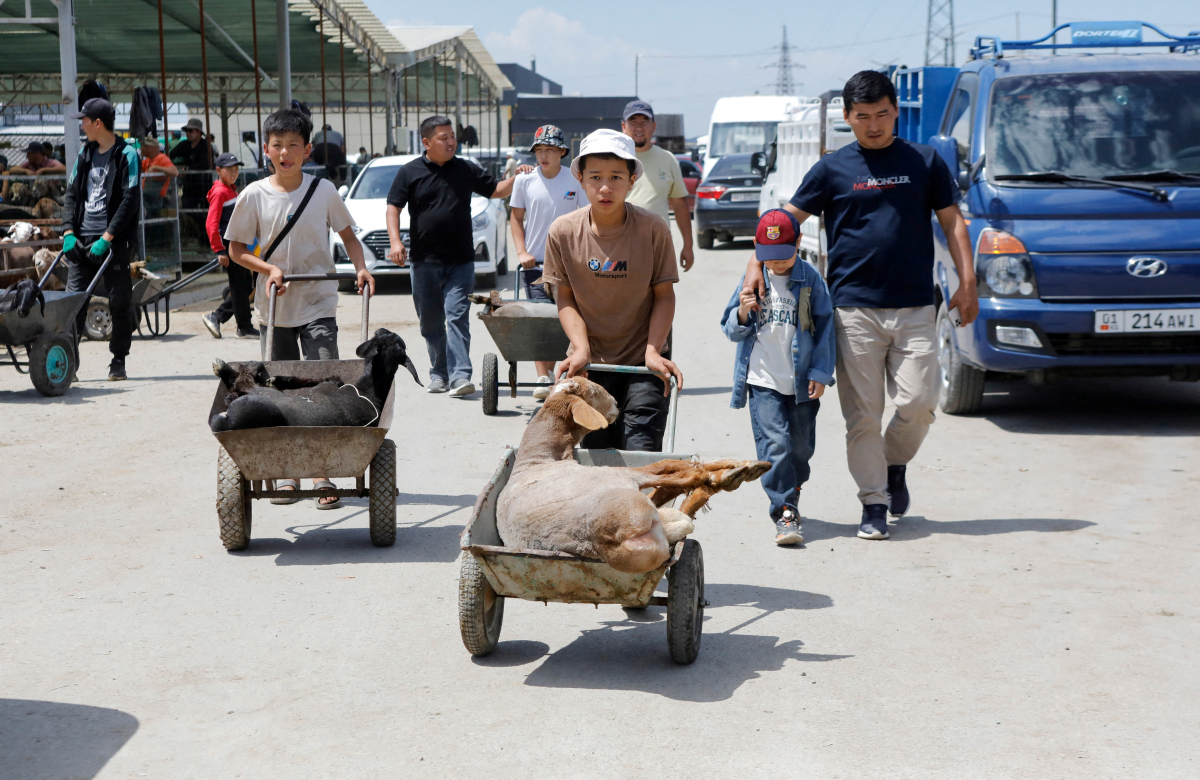
People visit a cattle market ahead of the annual Eid al-Adha celebration on the outskirts of Bishkek, Kyrgyzstan, 26 May 2026.
Reuters
“The driver of growth has evolved over time. Initially, trade provided a significant boost as the Kyrgyz Republic became an important hub for re-exports, supporting trade-related activity and services.
“More recently, domestic demand has also played a larger role, supported by higher wages and remittance inflows, although remittances weakened somewhat in 2026,” he said.
Investment in transport, mining and energy infrastructure has provided another boost, according to the EBRD.
Major projects, including the China-Kyrgyzstan-Uzbekistan railway and the Kambarata-1 hydropower plant, are expected to contribute an additional 0.25 per cent to growth in 2025 and 2027, according to a 2025 IMF report.
The Russia-Ukraine war uplift
Russia’s war in Ukraine has brought unexpected economic gains for Kyrgyzstan, particularly through trade.
Following the imposition of Western sanctions on Moscow, Kyrgyzstan emerged as a major transit point for goods re-exported to Russia, helping the country bypass trade restrictions.
In June 2022, the U.S. Department of Commerce’s Bureau of Industry and Security identified Kyrgyzstan and several other Central Asian countries as transit hubs for restricted goods destined for Russia.
A 2023 Financial Times investigation found that at least $1 billion worth of goods with both civilian and military applications had reached Russia after being shipped from the European Union to Kyrgyzstan, Armenia and Kazakhstan since February 2022, despite EU export controls.
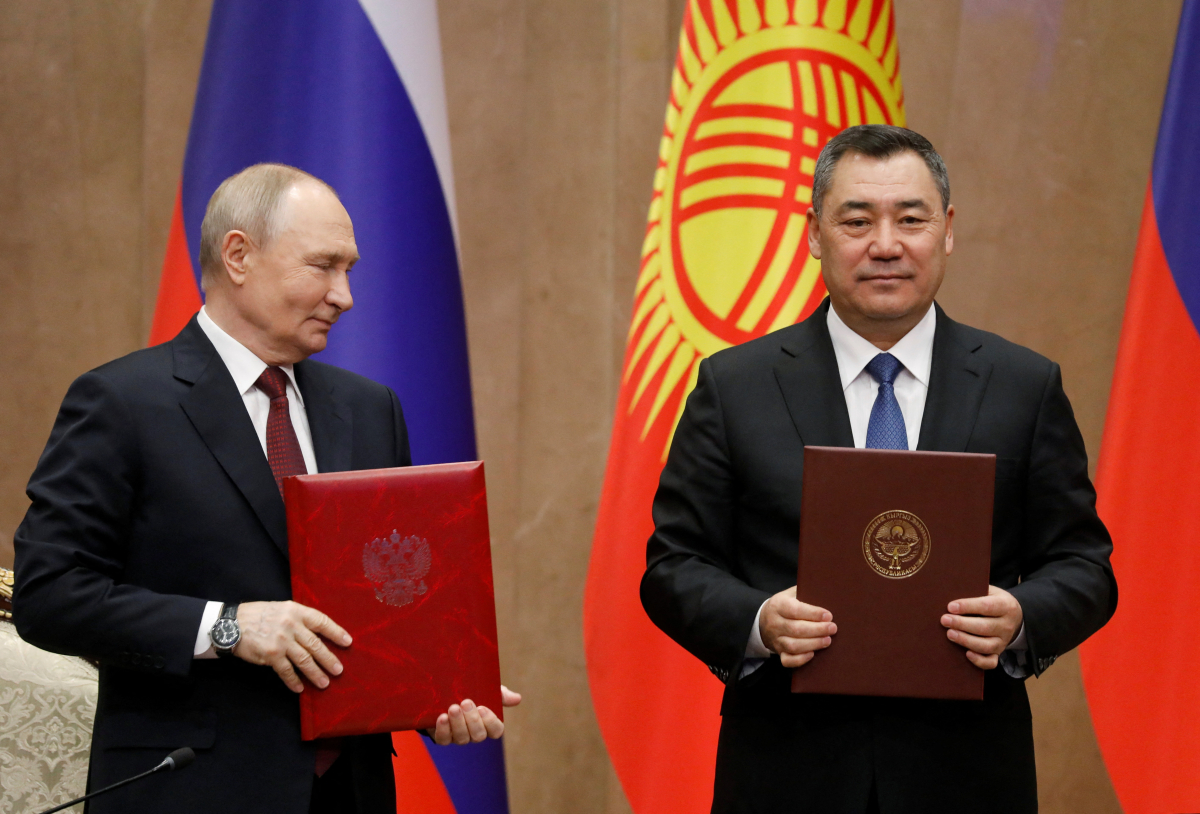
Russian President Vladimir Putin and Kyrgyz President Sadyr Japarov attend a joint press conference following a meeting in Bishkek, Kyrgyzstan, 26 November 2025.
Reuters
The ADB estimated that re-export activity accounted for 30 to 40 per cent of Kyrgyzstan’s economic growth over the previous four years, according to a September report in The New York Times.
As evidence of sanctions circumvention mounted, the EU banned exports of certain products to Kyrgyzstan, including computer numerical control machines that can be used to manufacture components for defence equipment.
Cryptocurrency transactions have also come under scrutiny. In 2025, the U.S. and EU imposed sanctions on Kyrgyz-registered cryptocurrency exchange Grinex over allegations that it facilitated transactions linked to sanctions evasion.
Can the economic boom last?
Kyrgyzstan now faces a difficult balancing act: maintaining its economic momentum while Western governments intensify efforts to stop restricted goods and financial flows reaching Russia.
Tighter sanctions enforcement could weaken the trade activity that has helped drive growth since 2022. An end to the war in Ukraine could also have consequences for the economy.
“A lasting peace in the region…may also unwind some of the trade and financial flows that have boosted growth in recent years,” a 2025 IMF report noted.
Talishli said slowing trade growth highlighted the need to build stronger, more sustainable sources of economic expansion.
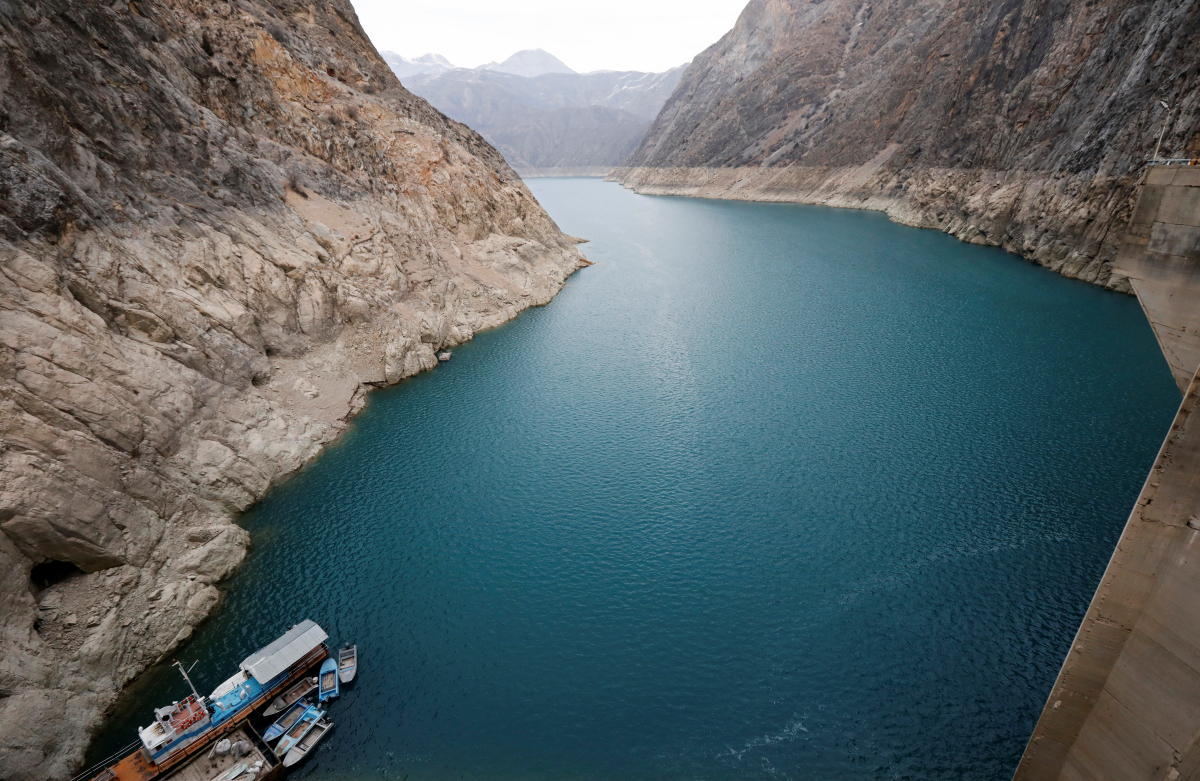
A general view from the dam of the Toktogul hydropower plant (HPP) in the Jalal-Abad Region, Kyrgyzstan, 21 January 2025.
Reuters
“Trade growth is now moderating, highlighting the importance of developing more durable domestic sources of growth,” he said.
However, an end to the conflict could bring other benefits. A stronger Russian rouble could increase the value of remittances sent home by hundreds of thousands of Kyrgyz workers employed in Russia.
Inflation presents another challenge. With prices rising at around 11 per cent, the cost of living is eroding some of the benefits of rapid economic growth for ordinary Kyrgyz citizens.
“Strong demand is adding to inflationary pressures, underscoring the importance of preserving macroeconomic stability,” the IMF’s Talishli told AnewZ.
He said creating a stronger environment for private businesses would be crucial to sustaining growth in the years ahead.
“Priorities include reforming state-owned enterprises, strengthening competition, improving the business environment, and reinforcing governance and the rule of law. These reforms would help raise productivity and support more inclusive and sustainable growth.”
Read more from Kyrgyzstan:
- Kyrgyzstan plans major expansion of protected natural areas by 2035
- Kyrgyzstan doubles fuel production as Russian refinery disruptions hit supplies
- Pakistan and Kyrgyzstan target $200 million trade as they push South-Central Asia connectivity







What is your opinion on this topic?
Leave the first comment